Article 11 min read
How to Use AI in Recruitment in 2026: A Stage-by-Stage Guide That Actually Fills Roles
5.0/5 - (25 votes)
 11 min read
 11 min read
A 12-person home services company posts a dispatcher role on Indeed at 7 PM on a Thursday. By Friday morning, 87 applications are sitting in the inbox. The owner, who also runs estimates and payroll, plans to "go through them this weekend" and reopen the file on Wednesday. By the time real screening begins, the four strongest applicants have already accepted offers elsewhere. This is what hiring looks like for most service businesses without a dedicated recruiter. The volume is real, the time is not, and the cost of slow follow-up shows up as missed hires and longer vacancies. The data backs this up. According to industry surveys compiled in 2025, 43% of organizations worldwide used AI for HR and recruiting tasks last year, up from 26% in 2024. Insight Global's 2025 survey of 1,005 hiring managers found that 99% of hiring leaders use AI in some capacity already. For owners and operations managers without a dedicated HR team, the question in 2026 is no longer whether to use AI in recruitment. It is where to plug it in for the fastest payoff. This guide explains how to use AI in the recruitment process at every stage, what each tool actually handles, and how to pick a setup that fits how your business already runs.
Before adopting a tool, it helps to understand what AI in recruiting actually does. The use of AI in recruitment goes well beyond keyword-matching on resumes. Modern artificial intelligence recruitment tools combine natural language processing, machine learning, and conversational AI agents that hold a back-and-forth with applicants the way a junior recruiter would.
A traditional applicant tracking system stores resumes and tags applicants. Useful, but passive. AI recruiting tools read each resume, score it against the job requirements, surface the strongest candidates first, and start a conversation with them on SMS or chat. They confirm availability, location, and salary expectations before a recruiter ever picks up the phone. When a candidate texts back at 11 PM saying they are interested but only available weekends, an AI system logs that, updates the candidate record, and books an interview slot that fits both calendars. A static ATS waits for a human to do the same work the next morning.
The real value of AI in recruiting shows up when the tools tie into systems a business already runs. An AI agent builder approach lets operators define intake logic, screening questions, and escalation rules using a visual flow editor, so every applicant moves through the same recruitment process regardless of when they apply. The result is consistency that small teams cannot manually maintain. Every applicant gets a reply, every shortlist is built against the same criteria, and every booked interview lands on the recruiter's calendar with the dispatch details already filled in.
The hiring process for service businesses has specific operating demands that generic HR software was not designed for. The best AI recruiting software handles the parts that actually slow teams down: high-volume screening process, scheduling, and follow-up across nights and weekends. A short list of uses of AI in recruitment worth evaluating before signing up for any platform:
Consistency is the factor that gets underestimated. AI handles applicants the same way at 9 AM on a Monday and at midnight on a Saturday. For owners without dedicated HR support, that means every qualified candidate gets the same fair shot from first contact through onboarding, which lifts the candidate experience even when the team is small.
The seven stages below cover the full hiring process from job descriptions to onboarding. You do not need to adopt all of them at once. The fastest payoff usually comes from picking the one stage where the bottleneck is worst and starting there.
A clear job description shapes everything downstream. Generative AI can take five bullet points about the role and produce a polished posting in under a minute. The recruiter edits for tone and accuracy. Watch for biased phrasing. Words like "rockstar," "ninja," or "aggressive" tend to skew applicant pools toward narrow demographics. AI-based job description scanners flag these patterns and suggest neutral alternatives, which helps reduce unconscious bias before a single resume comes in.
AI sourcing tools scan public profiles, job boards, and existing applicant databases to surface people who match the job requirements. They look at skills, certifications, location, and availability, which matter for service businesses that need qualified candidates already living within commuting distance. Over time, an AI system also helps recruiters build a richer talent pool of past applicants worth re-engaging when a similar role opens. A founder running a 30-person home services company recently shared that they doubled qualified applicant flow after switching from manual LinkedIn searches to an AI sourcing tool. The time spent on sourcing dropped from four hours a week to twenty minutes, freeing the recruiter to focus on relationship-building.
Advanced AI screening pays for itself the fastest. The system reads each resume, extracts skills and experience, and ranks applicants against the job description. Eightfold AI's 2025 benchmarks show teams using AI screening report up to 40% faster time-to-shortlist for high-volume roles. The most reliable approach is to use AI to surface the top 20% and have a human recruiter review the shortlist. AI can evaluate candidates on hard criteria like years of experience, certifications, or licenses; humans judge cultural fit, motivation, and red flags in work history. AI helps with the volume; people make the hiring decisions.
Once you have a shortlist, an AI agent can run a first-pass conversation over SMS or web chat. The agent asks five to seven questions about availability, salary expectations, location, transportation, and any role-specific qualifiers. It logs the answers, applies the same criteria to every applicant (which helps cut bias from the early funnel), and flags only the candidates worth a recruiter's full attention. This is where conversational AI shines for service businesses. CogniAgent's autonomous AI agents let a non-technical operator set up an SMS qualifier in an afternoon using prompts instead of code. Candidates get a reply within seconds; recruiters get clean data instead of a notes file. Job seekers also tend to prefer speed: LinkedIn's 2024 data shows 81% of candidates are willing to interact with an AI-powered recruiting assistant when it speeds up communication.
Calendar back-and-forth is one of the most universally hated parts of the interview process. AI scheduling agents check the recruiter's calendar, send the candidate three time slots, confirm the booking, and send the calendar invite. The math adds up quickly. Five hires a year times three interviews each is 7.5 hours of pure scheduling friction handed back to the recruiter. That is time spent on actual candidate conversations instead of inbox tennis.
Throughout the hiring process, candidates want updates. AI handles the routine ones: "We received your application." "You have moved to round two." "Thanks for your time. We are moving forward with another candidate." Each message can pull in the candidate's name, role, and stage automatically, which helps personalize communication at scale without writing a custom note for every applicant. Generative AI also drafts rejection messages that are kind without being generic. For service businesses, this matters because today's rejected applicant may be tomorrow's referral source or a returning candidate for a different role.
The onboarding process is mostly paperwork: I-9, W-4, direct deposit, background check forms, and employee handbook acknowledgement. AI can collect these via SMS or email, send reminders, and verify completeness before day one. CogniAgent's business workflow automation handles document collection, reminders, and verification without a developer. When this is set up correctly, a new hire walks in on day one with paperwork sorted and a full orientation calendar. Use of AI in Recruitment: Common Cases The table below summarizes where AI fits at each stage of the recruitment process, what tools handle the work, and the typical outcome a service business can expect. Use it as a quick reference for matching pain points to solutions.
|
Stage of the Hiring Process |
What AI Handles |
Common AI Tools |
Typical Outcome |
|
Job descriptions |
Drafting, bias scanning |
Generative AI writers |
60% faster job posting |
|
Candidate sourcing |
Profile matching, candidate database searches |
AI sourcing platforms |
2x larger qualified applicant flow |
|
Resume screening |
Parsing, ranking, shortlisting |
AI recruiting software |
40% faster time-to-shortlist |
|
First-pass screening |
SMS/chat Q&A, basic qualifiers |
Conversational AI agents |
75% reduction in recruiter screening time |
|
Interview scheduling |
Calendar sync, reminders |
AI scheduling assistants |
Bookings in minutes, not days |
|
Candidate communication |
Status updates, rejections, FAQs |
AI chatbots, email automation |
Higher candidate experience scores |
|
Onboarding process |
Document collection, reminders |
Workflow automation agents |
New hire ready on day one |
For a deeper look at specific vendor options, CogniAgent's AI tools for recruitment page breaks down which tools fit which size of business.
The right AI recruitment tools depend on where the actual breakdown is happening in your recruiting process, not on which demo looks most polished. Operators with a high-volume role and a slow first-pass screening problem should start with conversational AI that can run SMS qualification. The setup pays for itself in saved recruiter hours within weeks. Teams already running an applicant tracking system that handles screening but lacks scheduling automation get the fastest payoff from an AI scheduling agent layered on top. Service businesses dealing with multiple service lines, after-hours applications, or seasonal hiring spikes get more from a connected platform like CogniAgent that handles intake, screening, scheduling, and follow-up in one place. Stitching together separate tools for each stage usually creates more recruiter work, not less, especially when candidate data lives in three different systems. A few practical filters that help narrow the choice:
The best AI recruiting setup is the one that handles your actual recruitment workflow consistently, connects to your existing tools, and runs without constant oversight from HR professionals or operations leads.
Slow follow-up and inconsistent screening have a direct cost, and for most service businesses, that cost compounds quietly every month in missed hires and longer vacancies. CogniAgent is built to close that gap. It is an AI-powered platform designed to handle the full recruitment cycle: writing job descriptions, qualifying applicants, booking interviews, managing communication throughout the hiring process, and supporting onboarding around the clock.
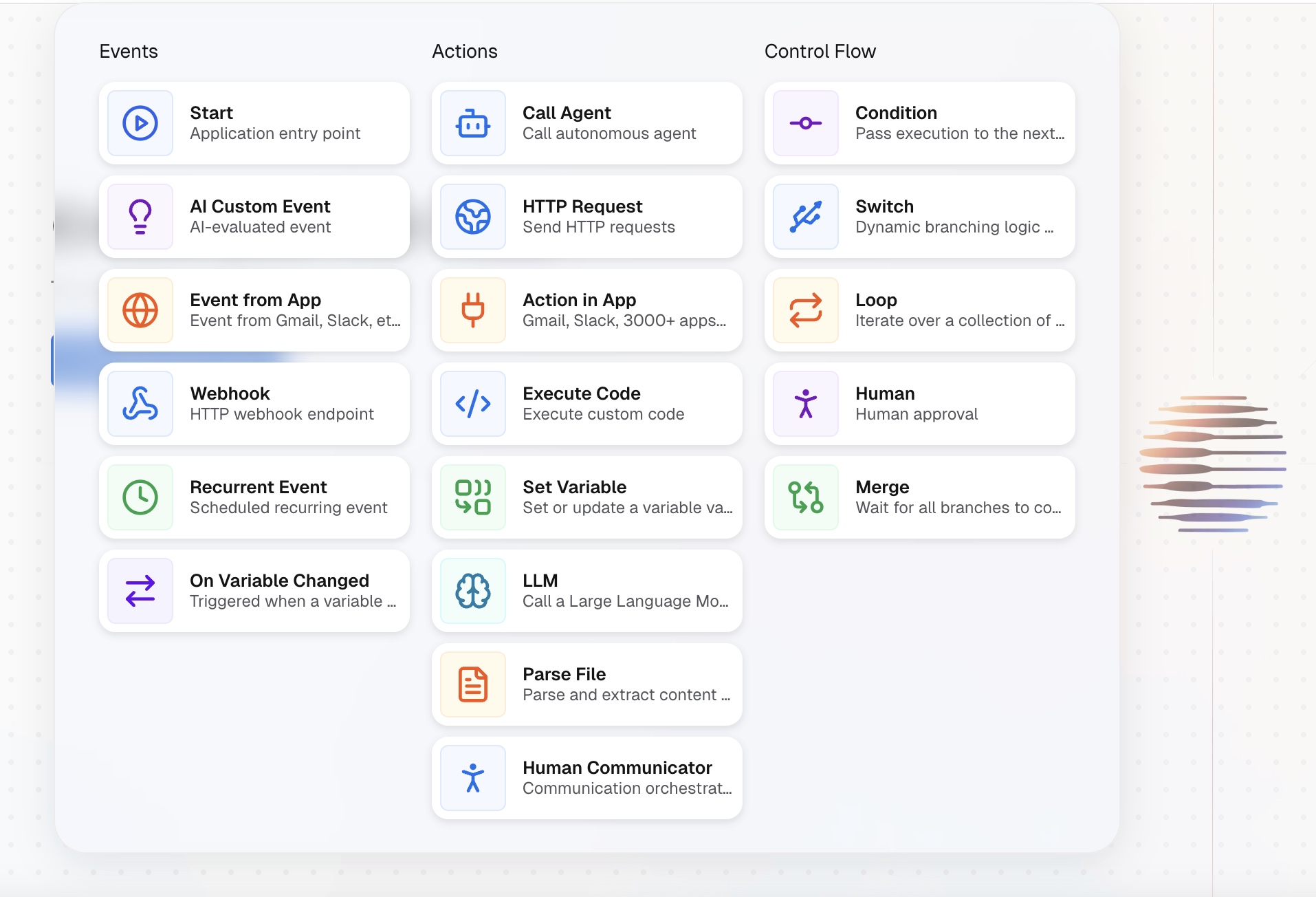
Unlike single-stage tools, CogniAgent runs across voice, chat, email, and SMS through one connected system, synced with the ATS, calendar, and HR tools your team already uses. AI agents handle inbound applications and outbound follow-up, so a candidate who applies at 11 PM on a Saturday gets the same fast response as one who applies at 10 AM on a Tuesday. Every interaction is logged, every shortlist is built against the same criteria, and every applicant moves through a hiring process that stays consistent even when the team is busy on a job site. For owners and operations managers without a dedicated HR team, CogniAgent provides the coverage of a full front-office hiring function without adding headcount. The platform scales with the business, fits how your existing recruitment workflow already runs, and replaces fragmented manual work with consistent, fair, AI-driven intake. Request a demo and see how CogniAgent fits your recruitment process.