Article 10 min read
AI Solutions for Security Companies Ready to Cut Response Times and Reduce False Alarms
4.9/5 - (16 votes)
 10 min read
 10 min read
When a prospect fills out a quote request on a security company's website at 9 PM, odds are no one will respond until the next morning. You believe no one expects you to reply immediately, but 89% of customers actually do. Suppose you are running a 40-guard patrol company and fielding 200 calls a day. You might be easily caught in a constant tug-of-war: a high-value client inquiry on one line and a frantic shift-swap request on the other. Before you can breathe, alarm activations pile up alongside the incident reports you’re already behind on. And this entire mountain of chaos is likely to collapse onto just two or three people, usually you, your dispatcher, or a receptionist who’s already buried in billing. Today, even sales ops teams spend 73% of their time on non-sales tasks (up from 39% in 2019), delaying responses and hurting pipeline velocity. AI solutions for security companies can lessen the burden. They can undertake business communication: lead intake, client onboarding, dispatch messaging, shift coordination, incident reporting, and more. Let’s discover how AI fits into security operations and how to get started without overhauling the systems you already rely on.
Physical security is a communication-heavy business. Every shift generates a coordination event: confirmation, change, report, or client update. Every alarm creates a triage decision, and every new lead triggers a qualification conversation that someone needs to have, ideally within minutes. For small and mid-size guard companies, these interactions converge on a handful of people. The ops manager answers the dispatch phone, fields prospect emails, confirms shift replacements, and reviews incident reports. When inbound volume spikes, response times stretch, leads go cold, and clients notice. The Security Industry Association reports that security staffing turnover ranges from 100% to 300% annually. This means the communication burden falls on whoever stays. New hires need onboarding. Coverage gaps require last-minute coordination. And clients are not going to lower their expectations just because of your company's internal staffing struggles. Sure, AI can be helpful with video analytics or access-control integration. But it can also penetrate the communication layer—the phone calls, chat messages, and emails that sit between the company and its clients, guards, and prospects. That layer is where most of the daily operational friction lives, and it's where AI delivers the fastest, most measurable relief.
Back in 2023, AI adoption across business operations was rather experimental. In 2026, AI tools automate daily tasks that consume the most labor hours. Around 79% of enterprises achieving full-scale AI deployment saw positive ROI within 18 months. If we are talking about high-volume, repetitive communication workflows, that payback period often compresses to under 12 months. Security companies deal with exactly this type of workload: repeating the same qualification calls, shift confirmations, and incident-reporting sequences dozens of times a day. The five areas below are where AI produces measurable results fastest.
You build an AI agent for your company's website so it can answer after-hours phone calls or respond to chat inquiries around the clock. It asks qualifying questions, for example, how many sites need coverage, what type of service the prospect needs, what timeline they're working with, etc. Once done, it routes qualified leads to a sales rep with full context attached. Security companies lose prospects when response time exceeds a few minutes. An AI agent bridges that gap entirely.
New clients come with details: site addresses, access protocols, emergency contacts, preferred communication channels, and billing information. Collecting all these details manually burns dispatcher time and creates inconsistency. An autonomous AI agent walks new clients through a structured intake flow via chat, voice, or SMS and pushes completed records directly into the company's CRM or scheduling system.
The scheduling software can assign the shift. But it can’t manage a chain of texts, calls, and follow-ups to confirm it. A conversational AI platform, aka agent, can handle shift confirmations, no-show follow-ups, and last-minute replacement requests across SMS, voice, and chat. When a guard can't make a shift, the AI can contact qualified replacements from a pre-approved list, confirm availability, and update the schedule—all without a dispatcher picking up the phone.
When an alarm fires, the clock starts. The best AI agents can triage the inbound notification, confirm the nearest guard's availability, send dispatch instructions with site-specific details, and log the entire interaction within seconds. This directly addresses the two problems in this article's title: faster response times through instant coordination and fewer false alarms escalated to human staff because the AI has already filtered and categorized the alert.
Guards who fill out incident reports at the end of a shift often work from memory, producing inconsistent documentation. Right after an event, an AI agent helps guards complete a structured report by voice or chat. It records who, what, when, where, and what action was taken, formats the report in a consistent way, and sends it to the company's reporting system. Instead of chasing down incomplete reports, supervisors look over finished ones.
There are two main types of AI that security companies use. Platforms for managing a workforce automate things like scheduling, tracking patrols, and reporting from the field. Conversational AI platforms handle incoming calls, leads, client intake, and dispatch coordination all on their own. In the end, most security companies will use both. Here are five platforms that are worth looking into, grouped by what they do.
TrackTik is a purpose-built security workforce management platform with AI-powered scheduling, GPS-verified guard tours, incident reporting, dispatch tools, and real-time client portals. It's built for midsize to large operations, managing complex multi-site contracts. TrackTik only homes in on field operations and logistics for workers. It doesn't qualify leads that come in, have conversations with new clients, or automate communication beyond sending out scheduling notifications.
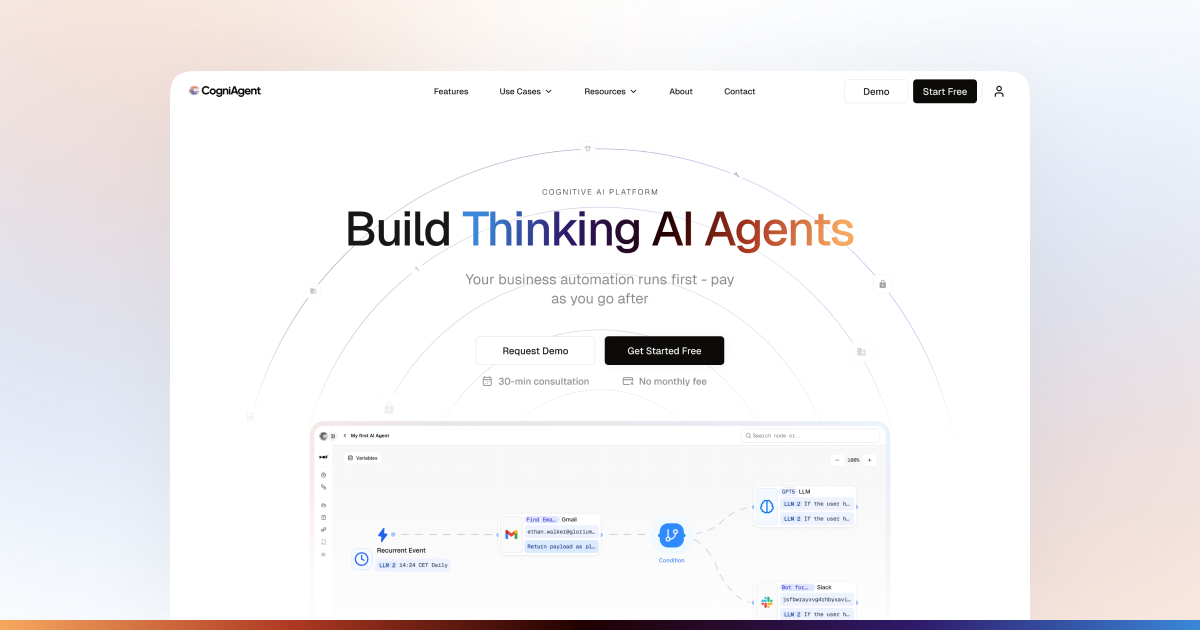
CogniAgent is a cognitive AI platform that uses voice, chat, and SMS agents to handle inbound lead qualification, client onboarding, dispatch coordination, shift-related communication, and incident report capture. It connects to 2,700+ platforms, including CRMs, scheduling tools, and reporting systems, and comes with guided expert onboarding rather than a DIY setup process. CogniAgent automates communication before and around field operations: lead response, service intake, alarm triage messaging, shift confirmations, candidates first prescreening, and structured reporting. Think of it as the AI that handles the front desk and the dispatch phone while your workforce management tool handles the field.
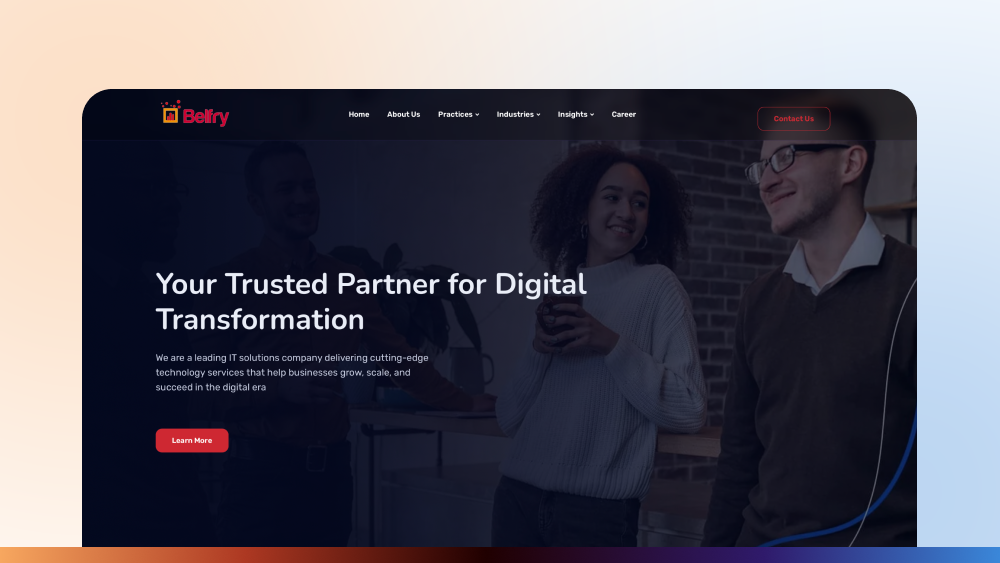
Belfry combines shift scheduling, time tracking, payroll processing, digital incident reporting, and certification management in a single mobile-first platform. It fits small- to mid-size guard firms (10–200 officers) looking to replace spreadsheets. However, please note that communication features are internal and officer-facing. There isn't any AI-based automation for client intake, lead response, or dispatch conversations.
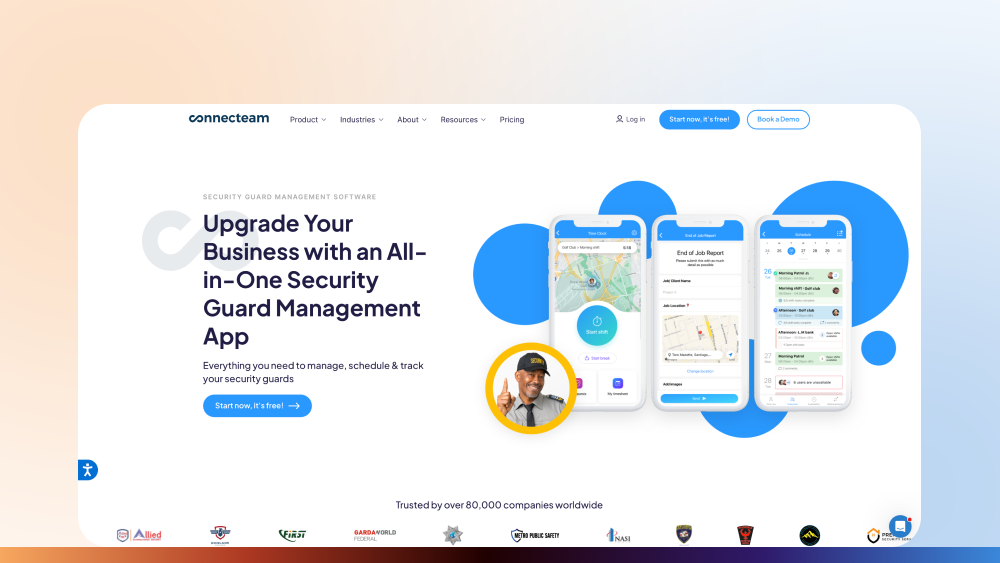
Connecteam is a mobile-first workforce management tool that lets you schedule shifts, send messages within the app, fill out digital forms, and onboard new employees. It serves many different industries, which makes it flexible but limits its depth in terms of security. It doesn't have patrol tracking, advanced dispatch workflows, or AI-powered communication tools for clients that are specifically designed for security operations.
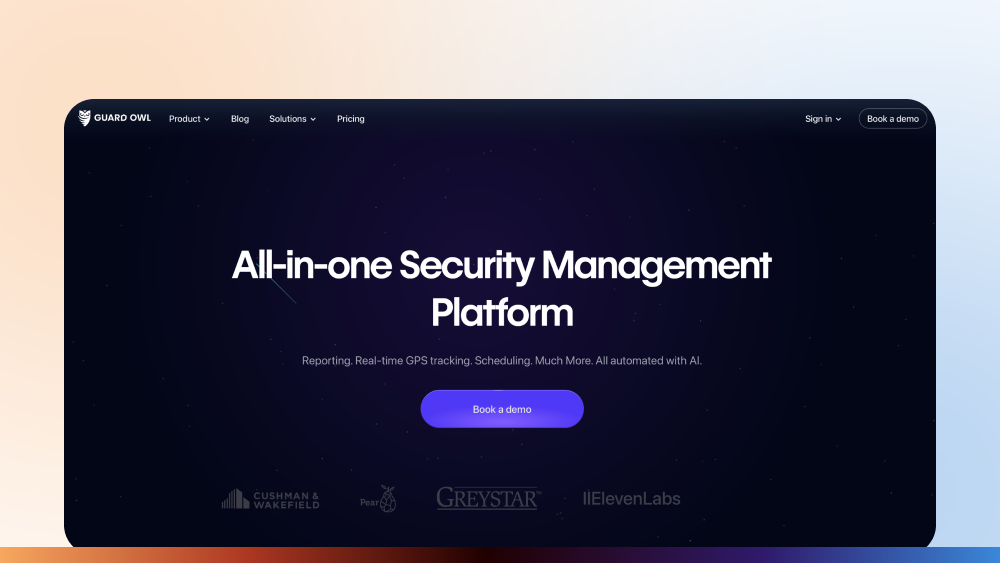
Guard Owl is a newer entrant offering AI-driven shift assignment, conflict detection, GPS-verified attendance, and real-time incident reporting. It's designed for guard companies with 20–200 officers who want AI-first scheduling. It does a good job of handling internal operations, but its capabilities don't cover client communication, lead qualification, or structured onboarding workflows.
The market is full of AI vendors, but security operations have requirements that generic chatbot platforms don't address. Before committing to any platform, run it through these filters:
Here's where the difference becomes concrete. The table below compares manual processes against AI-assisted workflows across the five operational areas covered earlier.
|
Workflow |
Manual Process |
AI-Assisted Process |
|
Inbound lead inquiry |
Response in 2–4 hours (or next business day); no structured qualification |
Response in under 60 seconds, 24/7; automated qualification with context passed to sales |
|
Shift scheduling confirmation |
5–8 calls/texts per shift change; dispatcher manages each one |
AI confirms, follows up on no-responses, and finds replacements autonomously |
|
Alarm notification triage |
Dispatcher reviews alert, calls guard, relays site details manually |
AI triages alert, confirms guard availability, sends dispatch instructions in seconds |
|
Incident report |
Guard writes report end-of-shift from memory; inconsistent formatting |
AI guides real-time structured capture via voice or chat; report auto-filed |
|
Client onboarding |
Multiple calls and emails over 3–5 days to collect site and service details |
AI walks the client through a structured intake in one session; data syncs to CRM |
The same thing happens in every row: AI doesn't replace the team. It removes the repetitive coordination work that prevents the team from focusing on security delivery, client relationships, and business development.
Small and mid-size security companies need to stop losing leads to slow response, burning dispatcher hours on repetitive confirmations, and chasing guards for incomplete reports. That's exactly the work that artificial intelligence for security companies automates. Businesses that apply AI to high-volume, repetitive communication workflows see payback in under 12 months, given they are running 200+ daily interactions. CogniAgent makes the starting point easy. Its AI agents manage inbound leads, client onboarding, scheduling communication, and incident capture across voice and chat. It plugs into the CRM and scheduling platforms your team already uses through 2,700+ integrations. CogniAgent's expert team handles configuration, so there's no DIY setup phase and no dependency on internal IT. Your first agent can be live in days. The question isn't whether AI belongs in your security operation. It's how many hours you're willing to keep losing before you put it to work.