Article Updated Nov 04, 2026
 11 min read
AI Receptionists for Cleaning Companies: Software Comparison and Buying Checklist
Updated Nov 04, 202611 min read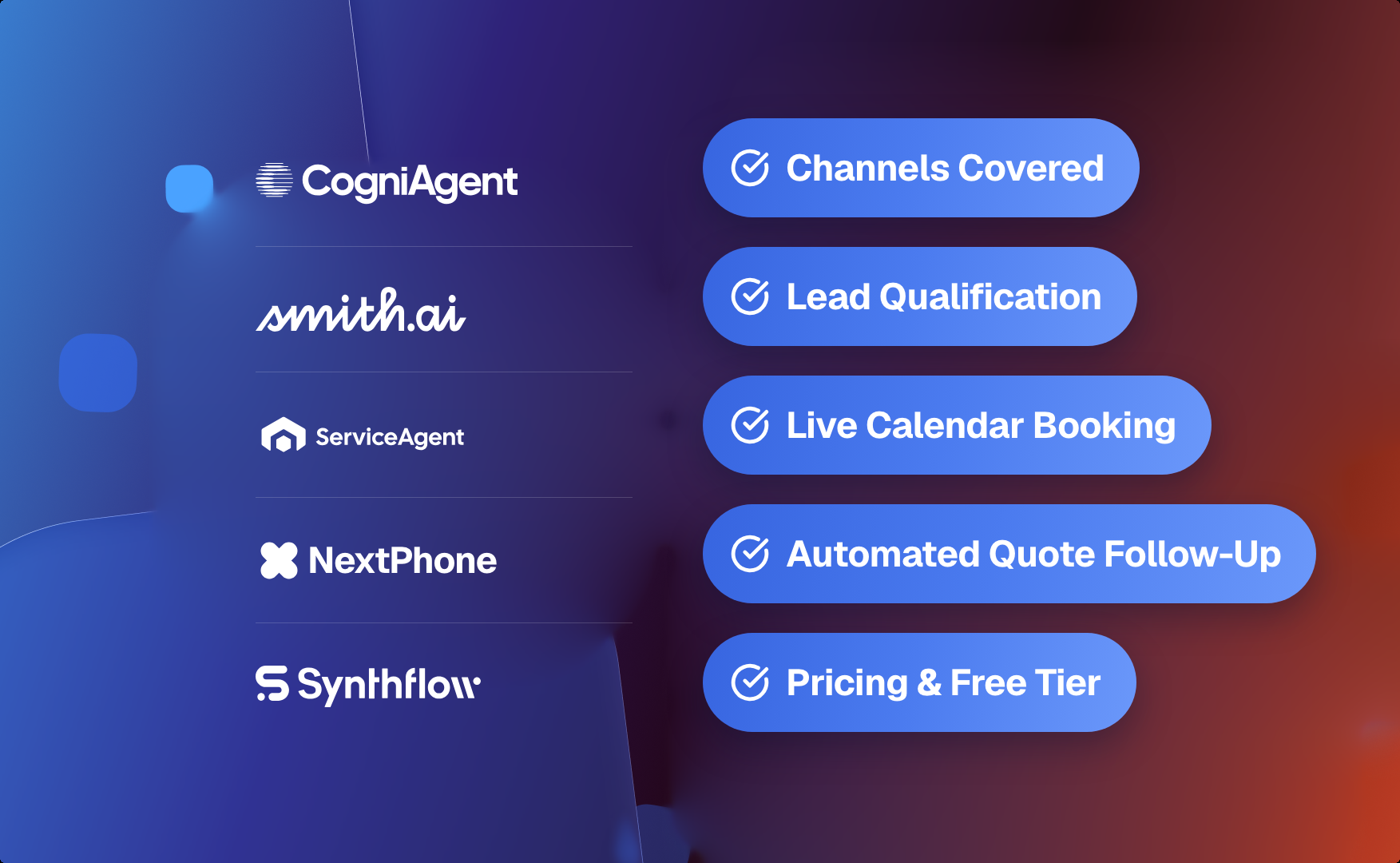 Updated Nov 04, 202611 min read
An AI receptionist for cleaning companies can answer inquiries, collect job details, and arrange the next step. Whether it can confirm a cleaning appointment depends on its connected systems, permissions, and scheduling rules. Answering a call, preparing an estimate request, and assigning an available crew are different capabilities.
Start by deciding what a completed interaction should produce: a message for your office, a qualified lead, an appointment request, or a booking confirmed by your scheduling system. Then compare software against that outcome.
A useful intake process should establish:
Keep the questions proportional to the request. An existing customer asking about arrival time should not have to repeat a complete new-customer questionnaire.
For detailed intake design, separate residential lead qualification from scheduling. A complete property brief can support an estimate without establishing that a cleaning visit is booked.
These four outcomes should remain distinct:
|
Outcome |
What has actually happened |
|
Message taken |
Contact details and the reason for the inquiry have been recorded. |
|
Information collected for an estimate |
The business has enough information to assess the request or identify missing details. |
|
Appointment requested |
A preferred time or walkthrough request has been submitted for approval. |
|
Booking confirmed |
The scheduling system has accepted the appointment under the required rules. |
A free calendar slot does not necessarily mean a suitable cleaning crew is available. Check duration, service area, travel time, equipment, skills, and team size before allowing automatic confirmation.
Commercial work may require a walkthrough or procurement discussion before an estimate. The commercial lead qualification guide describes collecting a facility brief for an estimator; that should not be confused with approving a contract or confirming crew availability.
Comparison methodology: CogniAgent publishes this article and is included below. We reviewed official public product pages, documentation, and pricing on October 18, 2026. We did not conduct hands-on product testing. The cards are not a ranking, and capabilities depend on the product, plan, connections, and configuration.
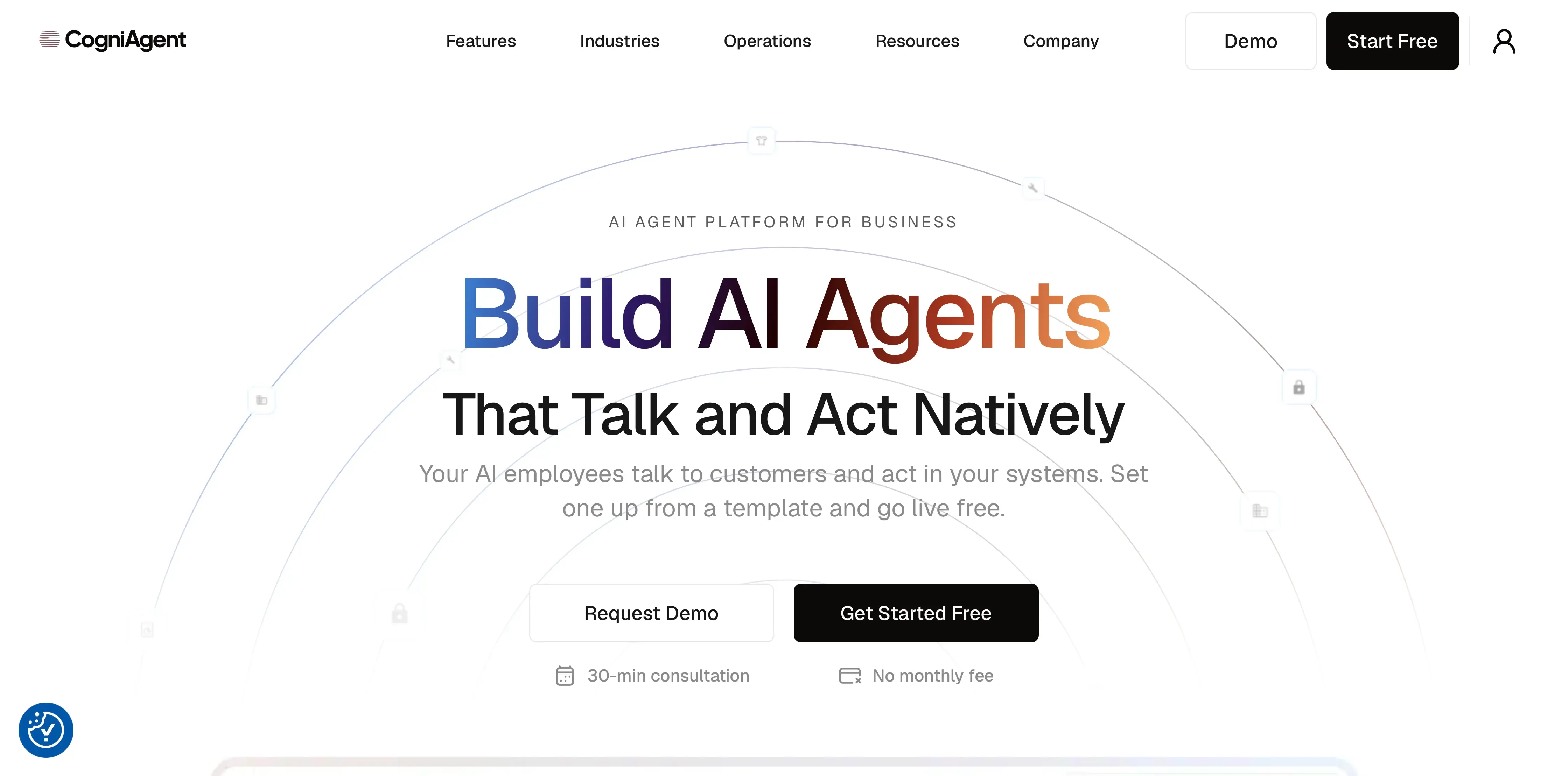
CogniAgent’s cleaning-company offering is a configurable agent-and-workflow approach rather than a receptionist that arrives with every cleaning operation already connected.
Its published receptionist guide describes a phone workflow using Google Calendar for permitted appointments, Google Sheets for logging, and Gmail for notifications. Each action requires a connected account, enabled operation, and defined conditions. Creating an event does not, by itself, prove live availability was checked. See the receptionist implementation guide.
Phone and SMS currently use Twilio; other documented channels include a website widget, email, and WhatsApp Business. Provider accounts and charges remain relevant.
Consider it when your team wants to configure intake and connected actions. Verify the exact scheduler operation before promising crew assignment, final pricing, CRM updates, or scheduled follow-up. The documented email-escalation workflow is not evidence of a live telephone transfer. Payment is credit-based, with separate usage considerations described below.
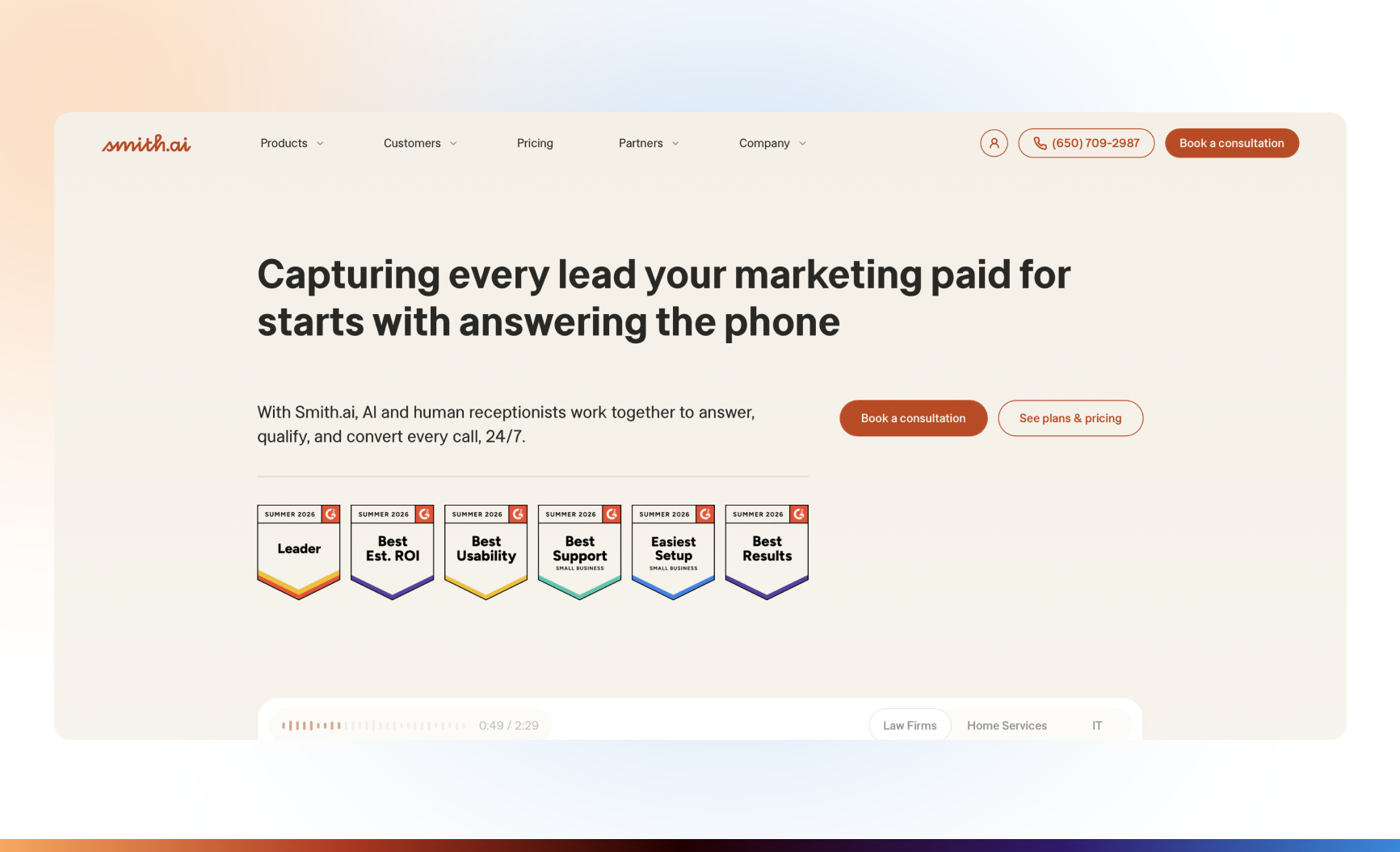
Smith.ai AI Receptionist offers call answering, qualification, scheduling, and warm transfers. It also provides testing and configuration tools. It should not be described as exclusively managed software that customers cannot configure themselves.
The current AI Receptionist plans distinguish self-service options from Enterprise setup and ongoing optimization. Smith.ai also offers a separate Hybrid service, combining AI and live receptionists under an agreed handling model.
Consider it when phone intake and access to human receptionists matter. Confirm which situations reach your staff versus Smith.ai’s live-agent network, and which involvement attracts additional charges.
Scheduling and integration availability must match the selected product. The integration directory distinguishes AI Receptionist, Virtual Receptionists, Web Chat, and Outreach Campaigns. A connection listed for one is not automatically included in another. Billing is call-based; do not combine separate products into one assumed package.
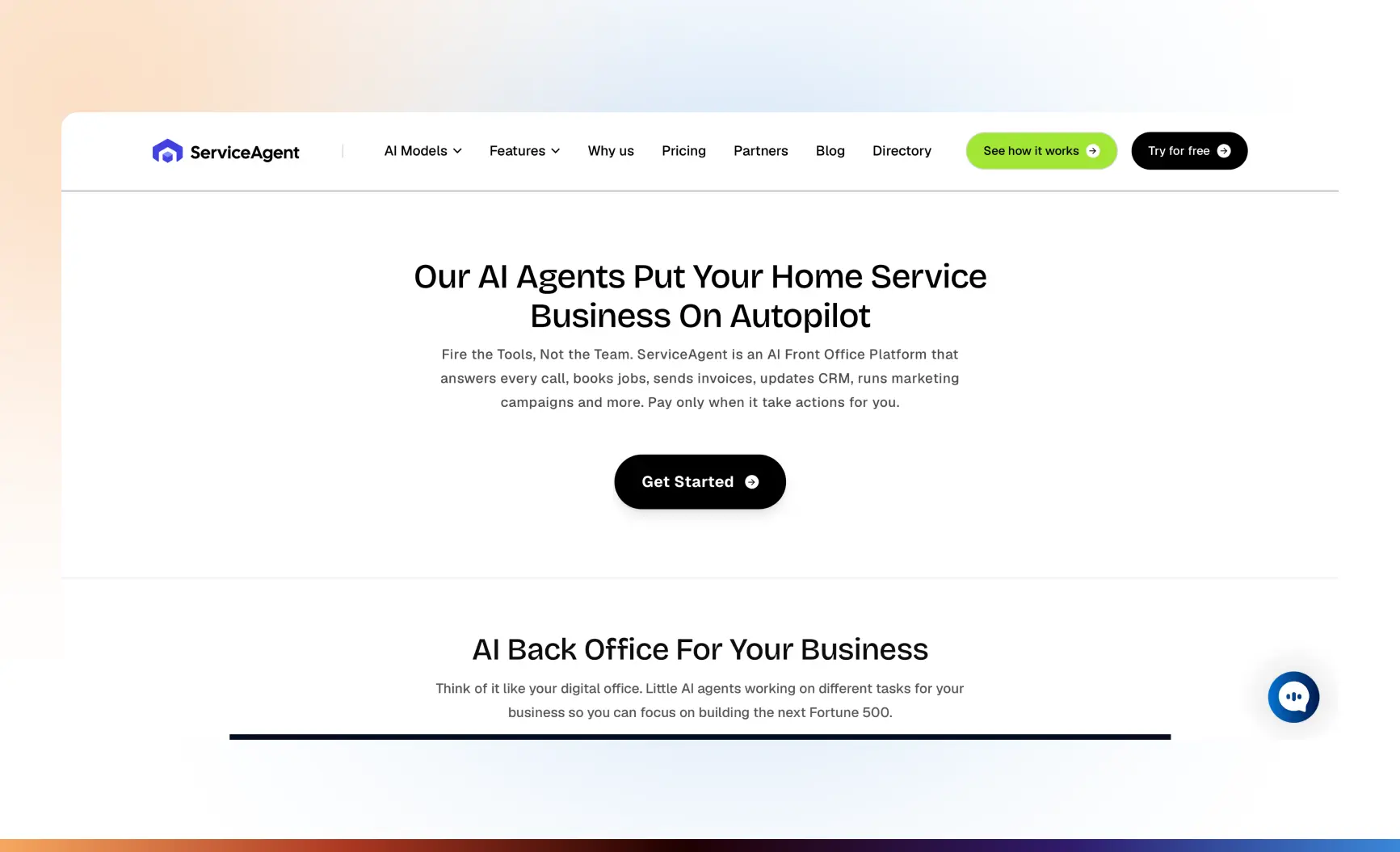
ServiceAgent now presents a broader front-office and back-office platform, not merely a voice answering layer. Its public materials advertise calling, messaging, scheduling, CRM functions, and follow-up.
However, the reviewed homepage also displays a notice that the service launches soon and invites visitors to a waitlist. That makes current production availability an essential verification step.
Treat it as a conditional candidate rather than an immediately deployable recommendation. Ask for a demonstration of qualification, booking, staff escalation, and the exact channels available to your account. Live call transfer and crew-resource scheduling were not confirmed in reviewed documentation.
The pricing page describes subscriptions, usage credits, and plan-specific automation and API access. Free website chat is listed as manual, while AI-powered chat appears on higher plans. Confirm launch access, implementation responsibilities, and an applicable written quote before comparing it with a production-ready service.
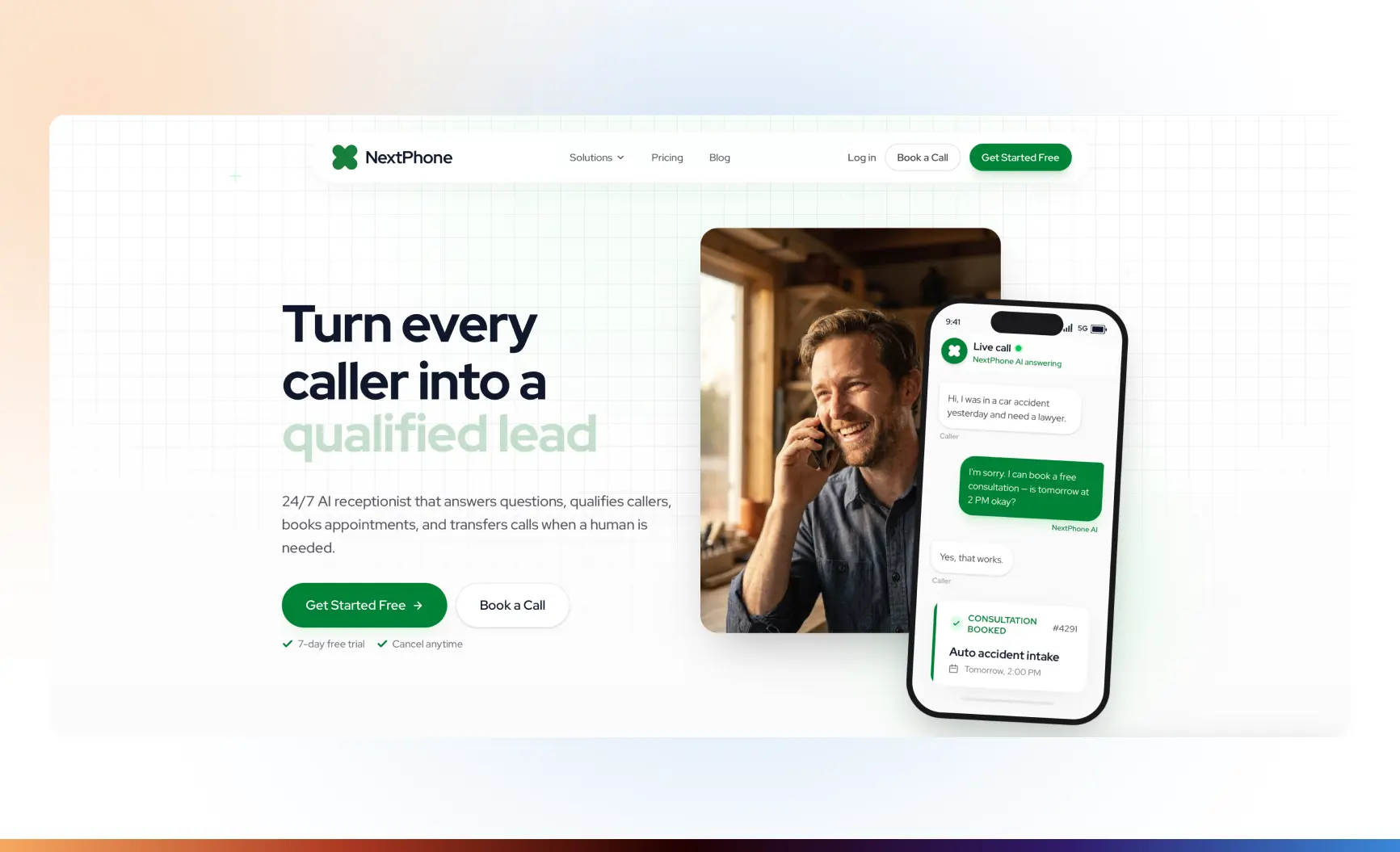
NextPhone explicitly describes qualifying callers, checking a calendar, offering available times, booking during the call, and texting confirmation. It is inaccurate to reduce its qualification to basic routing or claim it cannot book mid-conversation.
Its documented calendar support includes Google Calendar and Outlook. Warm transfers can introduce the caller and explain the reason for the call before connecting your team.
Consider it for phone-first intake, overflow, or after-hours coverage. Its plans distinguish self-setup from vendor-built configurations, with CRM and custom integration scope varying by tier.
Confirmation texts are not the same as a two-way customer messaging service: the pricing FAQ places two-way SMS on Scale. Calendar booking also does not establish cleaning-specific crew allocation. Ask the vendor to demonstrate your duration, travel, and resource rules. Payment is a flat monthly subscription with advertised unlimited calls, rather than per-call billing.
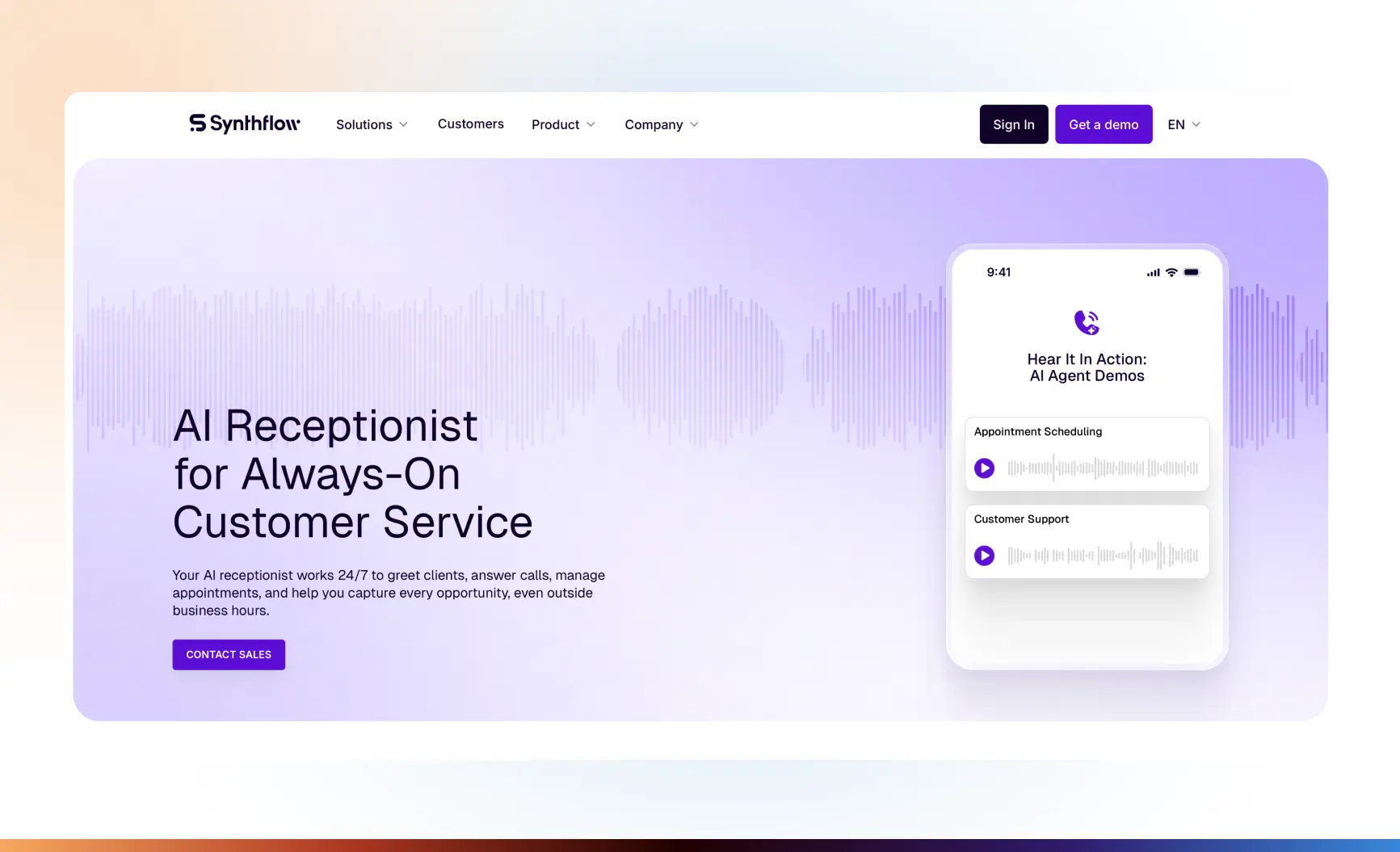
Synthflow is a configurable voice-agent platform whose current public pricing emphasizes enterprise deployment. It should not be presented using the older inexpensive self-service subscription figures.
Its action documentation describes real-time booking, information extraction, HTTP and MCP actions, call transfers, in-call SMS or WhatsApp, and post-call messaging. These are configurable building blocks, not proof that a cleaning workflow is ready without implementation.
Consider it when your organization needs a designed voice workflow and can support an enterprise implementation. Define qualification questions, booking actions, escalation destinations, and failure handling before launch.
A calendar connector does not establish crew-aware scheduling, and in-call messaging does not prove every standalone messaging scenario is included. The enterprise pricing page makes volume, concurrency, telephony, integrations, security requirements, and launch support part of contract scoping. Obtain the actual allowances and implementation responsibilities in writing.
NC means Not confirmed in reviewed documentation, not a demonstrated absence. ServiceAgent entries describe advertised capabilities; current production access remains unconfirmed.
|
Criterion |
CogniAgent |
Smith.ai |
ServiceAgent |
NextPhone |
Synthflow |
|
Main channels |
Connected widget, phone, SMS, email, WhatsApp Business |
Phone; verify messaging by product |
Advertises phone, SMS, email, chat, WhatsApp |
Phone; confirmation texts; two-way SMS on Scale |
Voice; documented in-call SMS/WhatsApp |
|
Custom questions |
Configured actor instructions |
Call playbooks and intake settings |
Confirm available intake controls |
Custom intake questions |
Prompts, variables, extraction |
|
Qualification |
Configured workflow |
Documented screening and intake |
Advertised; demonstrate |
Documented caller qualification |
Configured conversational actions |
|
Calendar booking |
Enabled integration actions; availability checks need verification |
Documented scheduling; product-specific connections |
Advertised calendar booking/sync |
Documented in-call booking |
Real-time booking actions |
|
Cleaning crew/resource allocation |
NC |
NC |
NC |
NC |
NC |
|
Human handoff |
Configured notifications; live call transfer NC |
Warm transfers and live-agent options |
Live call transfer NC |
Warm transfer to your team |
Configured call transfers |
|
Integration method |
Connected actions and HTTP requests |
Native, automation-platform, or custom connections by product |
API/webhooks listed on Franchise; verify other connections |
Calendar connections; CRM, automation tools, API by tier |
Integrations, HTTP, MCP, webhooks |
|
Follow-up |
Configure permitted actions and timing |
Confirm required sequence and product |
Advertised workflows; plan-dependent |
Confirmation and post-call texts; verify sequence |
Post-call actions and configured workflows |
|
Implementation |
Self-configured; Enterprise assistance |
Self-service or managed, depending on offering |
Advertises self-service and assisted options |
Self-setup or vendor-built |
Configurable platform with enterprise support |
|
Payment model |
Credits and applicable provider costs |
Call allowances, overages, human-service conditions |
Subscription plus usage credits |
Flat monthly subscription |
Scoped annual enterprise contract |
|
Main buying constraint |
Verify each action and external result |
Separate product and plan entitlements |
Verify launch access first |
Booking is not proven crew dispatch |
Define scope, capacity, and implementation |
Sources and product boundaries are linked in the corresponding cards. None of these entries establishes compatibility with every cleaning scheduler.
Compare a representative workload, not just an advertised starting amount. Include normal inquiries, long calls, transfers, repeat contacts, unsuccessful booking attempts, and follow-up.
As checked on October 18, 2026:
Exact dollar amounts for Smith.ai and NextPhone are omitted here because the reviewed pricing pages did not explicitly identify the currency code.
Ask each provider to specify:
For a credit-based platform, measure usage during representative tests. Do not convert a credit package into a number of completed cleaning bookings without measured assumptions.
Only missed calls need coverage: compare phone answering and message delivery first. NextPhone and Smith.ai document these functions; test forwarding from your existing number.
Complex callers need a person: examine Smith.ai’s Hybrid offering or documented transfers to your own staffed team. Define what happens when nobody answers.
Messages and forms dominate: evaluate the actual channel connection and the resulting lead record. CogniAgent documents multiple connected channels; a form still needs an implemented intake path.
Residential leads need assessment: prioritize a complete property brief and an explicit estimate or callback outcome.
Commercial leads need a walkthrough: collect facility information and arrange the next assessment step without inventing a final price.
Bookings require resource allocation: require a demonstration against your scheduling system. No reviewed source established cleaning-crew allocation across all the necessary constraints.
You can configure workflows: evaluate CogniAgent or Synthflow against your team’s implementation capacity.
You want managed setup: compare the relevant Smith.ai, NextPhone, or Synthflow offering—not the vendor name alone.
For post-service communication, separate complaint handling from an honest review request. Do not invite only satisfied customers to review publicly: Google prohibits selectively soliciting positive reviews.
Use controlled records and verify the external outcome, not just the conversation. The AI agent testing checklist provides a broader evaluation method.
|
Scenario |
Expected behavior |
Evidence to inspect |
|
Standard residential inquiry |
Collect required scope and contact details |
Accurate lead brief |
|
Commercial request needing inspection |
Request assessment rather than promise a final quote |
Correct estimator handoff |
|
Address outside the service area |
Apply your exclusion rule |
Recorded disposition; no unauthorized booking |
|
Missing information |
Ask for the necessary detail |
No guessed values |
|
Unknown price |
Explain that assessment is required |
No invented amount |
|
No suitable time |
Offer an approved alternative or callback |
No unsupported appointment |
|
Repeat inquiry |
Reconcile existing information |
No duplicate lead or booking |
|
Change or cancellation |
Use only authorized actions, otherwise escalate |
Correct external status |
|
Calendar unavailable |
Record a request or callback |
Failure logged; no success claim |
|
Booking result unknown |
Check status before retrying |
One confirmed record, not duplicates |
|
Human requested |
Transfer or create an acknowledged callback |
Transfer result or assigned task |
|
Unsupported service requested |
Explain the boundary and route appropriately |
No unauthorized commitment |
Do not tell the customer a cleaning visit is booked until the connected system confirms the operation and the relevant resource rules are satisfied.
Start with one realistic inquiry from your own business. Follow it through the conversation, the connected action, and the final record before expanding the agent’s responsibilities.