Article 10 min read
6 Best AI Tools for Property Management in 2026
4.6/5 - (20 votes)
 10 min read
 10 min read
A leasing inquiry that waits until Monday can cost a landlord a week of vacancy. A maintenance ticket that sits overnight often turns into a bad review before it turns into a repair. AI tools for property management now handle both, along with the screening and hiring work that used to require a second full-time hire, for anywhere from free to a few hundred dollars a month.
Property managers are adopting AI to handle rising tenant expectations and control labor costs. The same tools also reduce vacancy time without forcing operators to expand their teams. Three pressures explain the shift toward property management AI.
The first is tenant expectations. The 2024 NMHC/Grace Hill Renter Preferences Survey, which covered 172,000+ residents, found that email was overwhelmingly preferred by respondents, even for setting up property tours and non-emergency maintenance requests.
Renters expect quick digital responses on those channels. Independent landlords without a round-the-clock team struggle to meet that standard.
The second is labor cost. Hiring an additional leasing agent or maintenance coordinator can cost a small PM business $60,000 or more per year.
AI agents handle the same volume of routine work at a fraction of that cost, which is why AI-powered property software has moved from a luxury to a budget item for operators of all sizes.
The third is vacancy. The U.S. Census Bureau's Q1 2026 Housing Vacancies report put the national rental vacancy rate at 7.3%, up from 7.1% the same quarter the prior year.
Each month a unit sits empty typically costs 1.5 to 2 times the monthly rent when accounting for lost income, mortgage carry, taxes, and turnover, according to NARPM research. Slow lead response and missed renewal conversations both extend that window. The best AI for property management in 2026 combines tenant communication, maintenance coordination, and leasing automation into workflows that match how independent PMs already operate. The list below covers seven AI property management tools, ranging from purpose-built platforms to general AI assistants used for property tasks. Each entry explains what the tool does, where it fits best, and how it compares to alternatives in the AI-powered property software market.
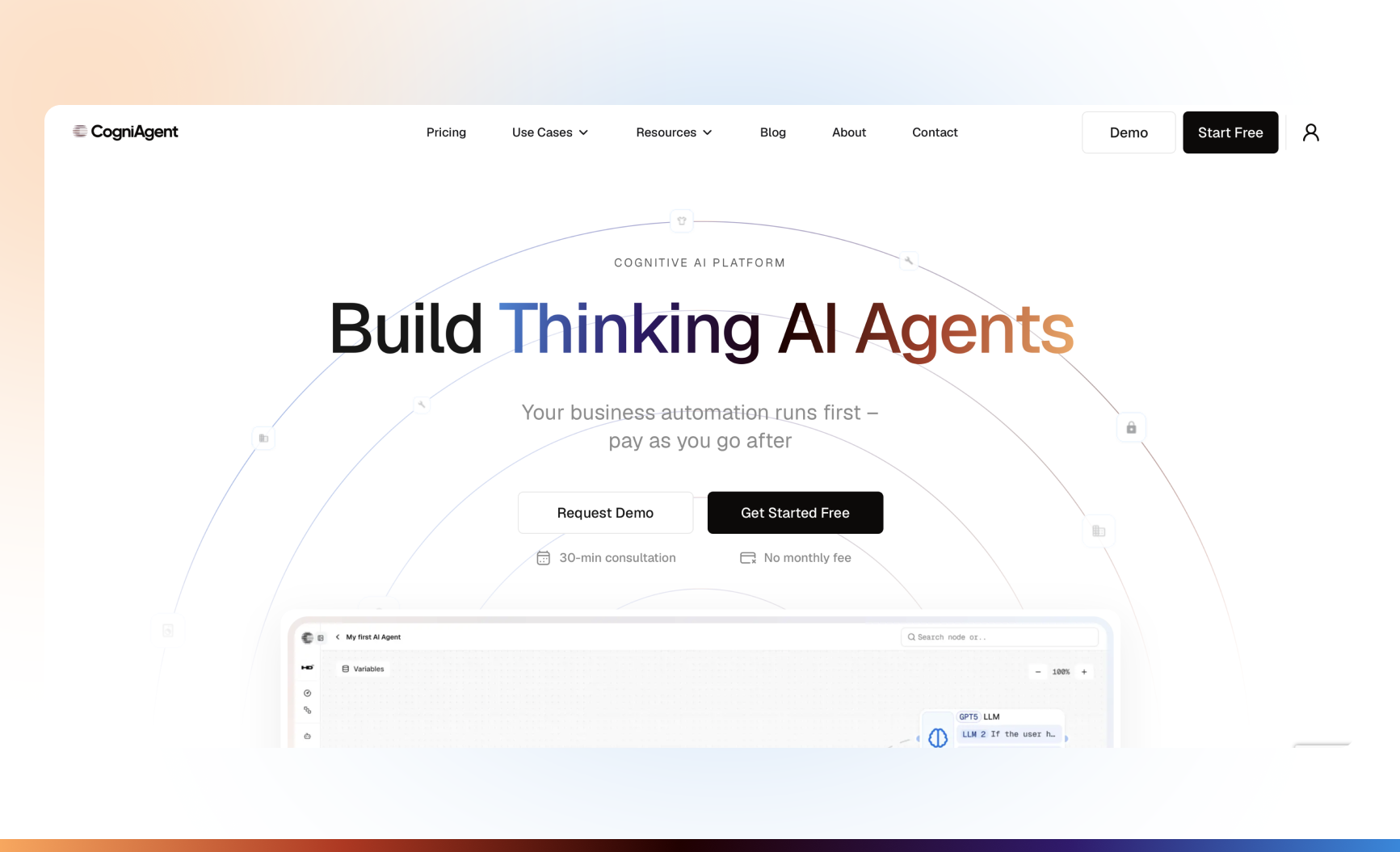
CogniAgent is an AI agent platform built for service businesses. Property management operators use it to automate tenant communication and back-office workflows. CogniAgent deploys conversational AI agents that handle inbound tenant messages and qualify prospective renters, then dispatches maintenance requests to the right vendor based on issue type. What sets CogniAgent apart for property managers is workflow flexibility. The platform can be configured to mirror existing processes, from intake forms to vendor SLAs, without forcing operators into a rigid template. CogniAgent property management deployments often replace fragmented tools across email, SMS, and call answering with a single AI layer. Key features:
Best for: Independent PMs and small property management firms that want one AI system covering communication and maintenance follow-up. It also handles hiring workflows. Pricing: Starts free. Business tier available at custom pricing based on usage volume.
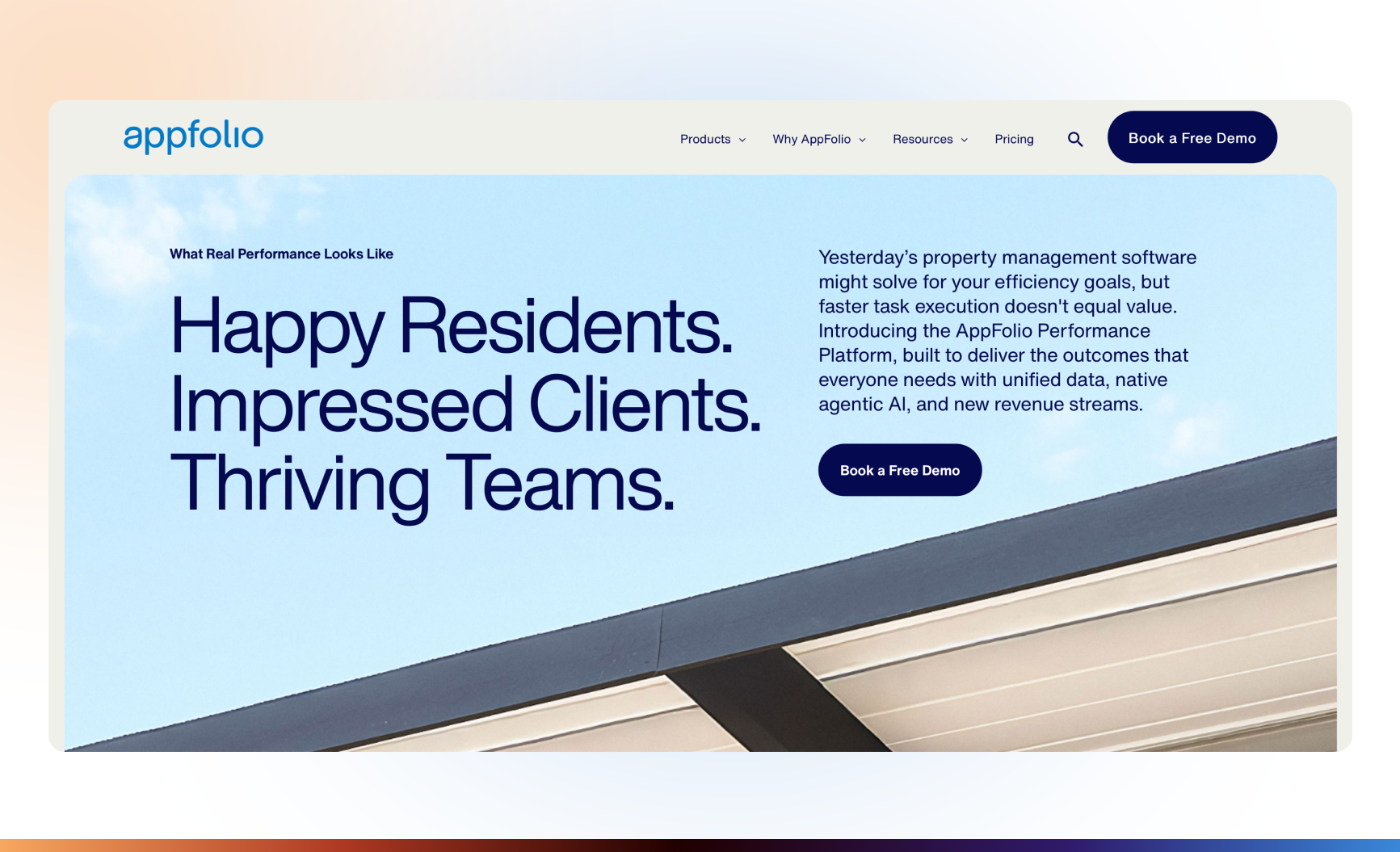
AppFolio is one of the most widely used property management systems in the U.S., with AI features layered on top of its core PMS. Its AI handles leasing conversations, maintenance prioritization, and owner reporting. The strength of AppFolio AI is integration. Because the AI sits inside the same system that holds leases, payments, and unit data, it can pull context automatically. The tradeoff is commitment: operators have to adopt AppFolio as their PMS, which involves migration and training. Key features:
Best for: Mid-to-large portfolios already running on AppFolio, or operators willing to switch their PMS. Pricing: Custom quote.
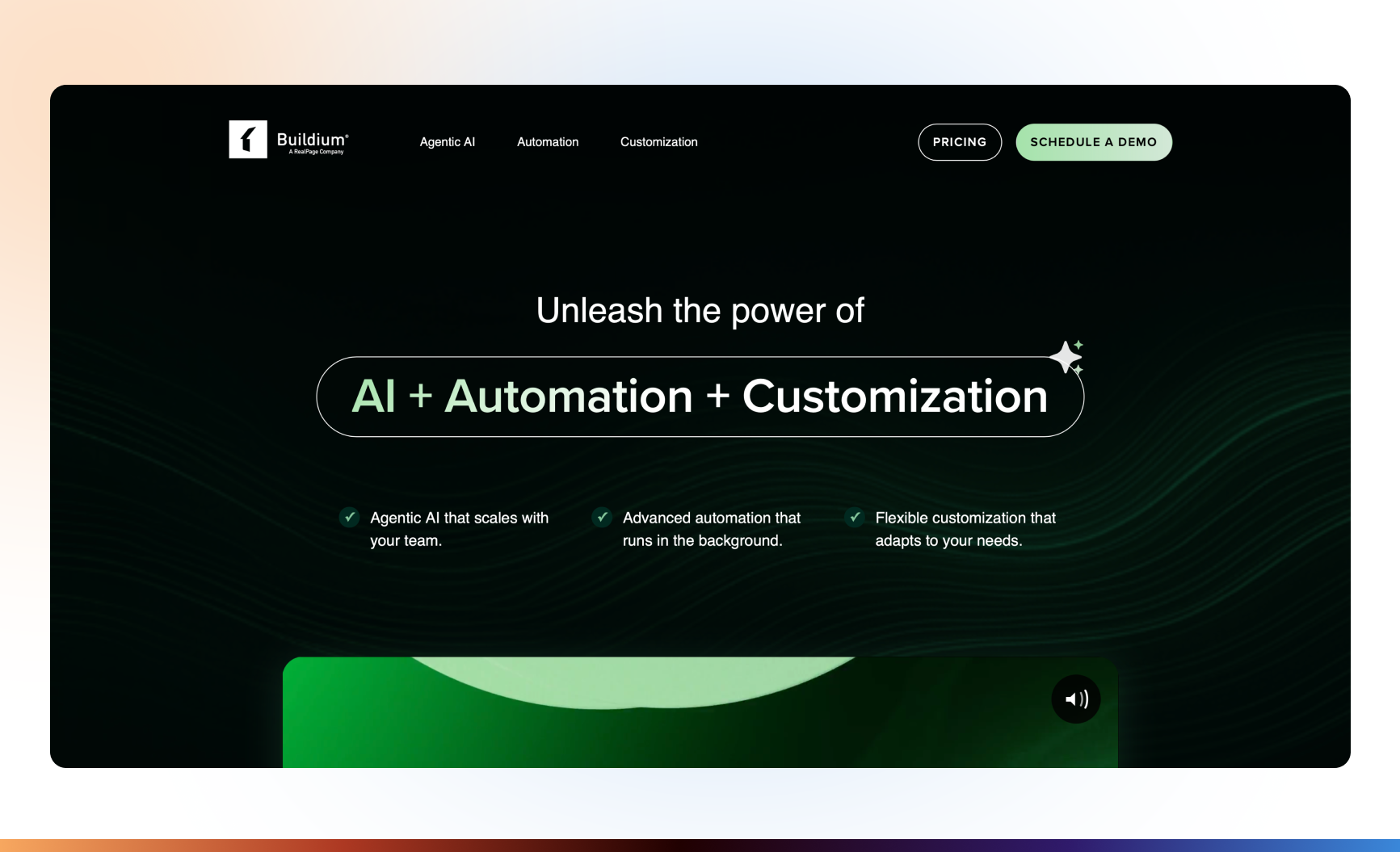
Buildium is a property management platform popular with growing portfolios in the 50 to 5,000 unit range. Its AI workflows cover tenant screening, lease tracking, and automated reminders for renewals and late payments. Buildium suits operators who want a mature PMS with built-in AI features. Its screening flow pulls credit, background, and eviction data, then applies configurable rules to recommend approve or decline outcomes. Key features:
Best for: Growing portfolios that want a PMS-first approach with AI as a supporting layer. Pricing: From $62 per month for the Essential plan.
TurboTenant focuses specifically on independent landlords managing a small number of units. Its AI features cover listing syndication, applicant screening, and rent collection. For an owner with 5 to 20 units who does not want a full PMS, TurboTenant covers the core leasing workflow at low cost. Its AI screening pulls reports and surfaces flags, while its listing tool pushes vacancies to dozens of rental sites automatically. Key features:
Best for: Independent landlords with fewer than 20 units who want simple AI for landlords without enterprise overhead. Pricing: Free core plan, with premium plans from $12.42 per month billed annually.
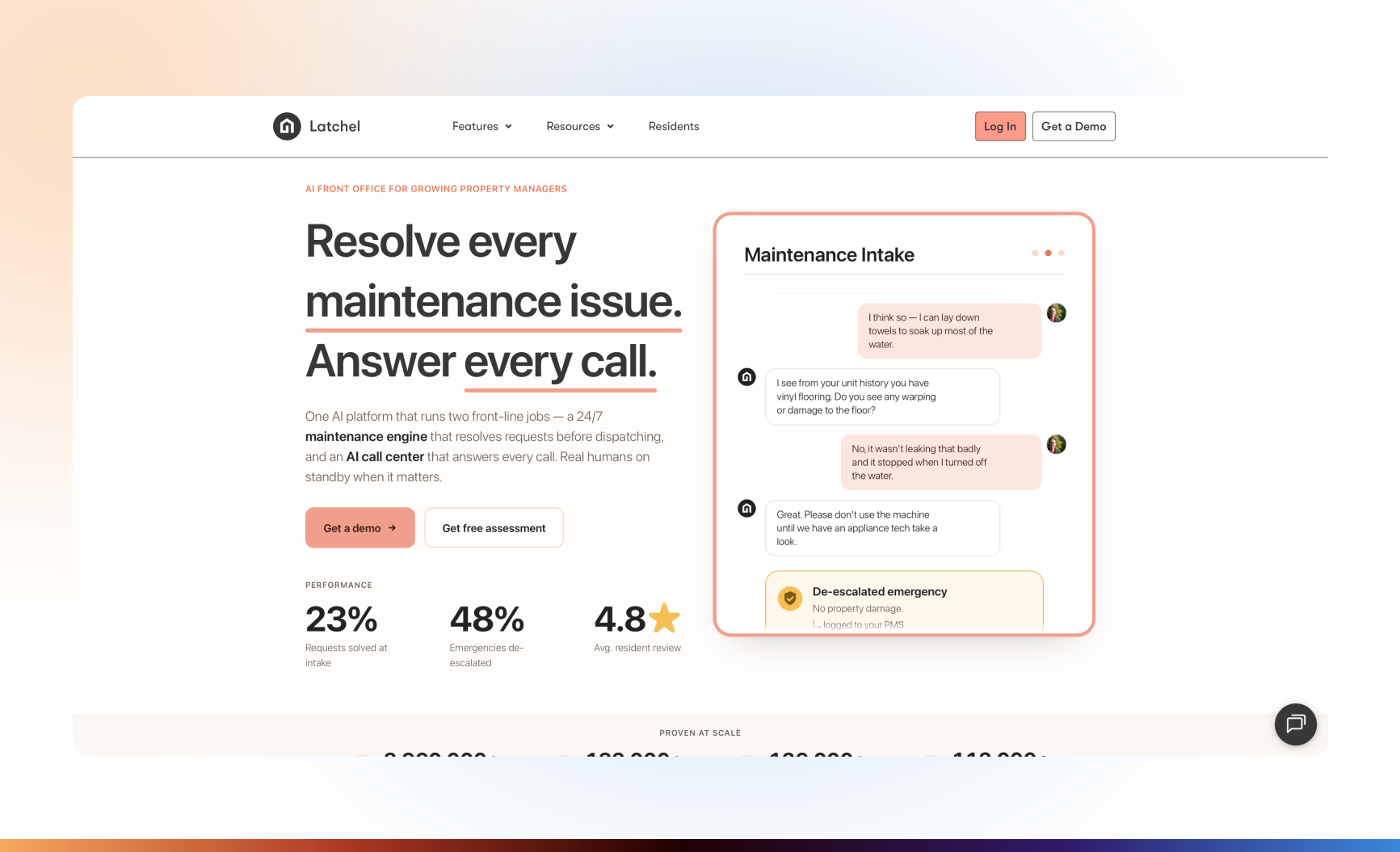
Latchel is a maintenance-specific platform that uses AI to triage tenant maintenance requests, troubleshoot common issues before dispatching, and coordinate vendors. The platform handles calls 24/7, which removes after-hours pressure from the PM team. For property managers whose biggest pain point is maintenance, Latchel reduces the volume of issues that reach a human. Industry case studies report that 30 to 50% of maintenance requests can be resolved without a vendor visit through AI-guided troubleshooting. Key features:
Best for: Maintenance-heavy portfolios where work orders dominate the workload. Pricing: Custom quote based on unit count.
Knock CRM is a leasing-focused platform designed for multifamily properties. Its AI assistant handles prospect inquiries, follow-up sequences, tour scheduling, and lead nurturing across email, SMS, and chat. Knock works well for operators whose primary challenge is leasing velocity. Its AI keeps prospects engaged through long decision cycles and prevents leads from going cold. Key features:
Best for: Multifamily operators focused on leasing efficiency at the unit level. Pricing: Custom quote.
Before moving on to selection criteria, the table below puts all seven tools side by side on features, fit, and pricing.
|
Tool |
Main Features |
Best For |
Pricing |
|
CogniAgent |
Tenant comms AI, maintenance follow-up, hiring automation |
Communication and hiring |
Free tier; Business pricing on request |
|
AppFolio AI |
AI leasing, maintenance, owner reporting |
Mid-to-large portfolios |
Custom quote |
|
Buildium |
Screening, lease tracking, AI workflows |
Growing portfolios |
From $62/month |
|
TurboTenant |
AI screening, listing sync, rent collection |
Independent landlords |
Free / from $12.42/month |
|
Latchel |
AI maintenance coordination, vendor dispatch |
Maintenance-heavy PMs |
Custom quote |
|
Knock CRM |
AI leasing assistant, prospect follow-up |
Multifamily leasing |
Custom quote |
|
|
|
|
|
The best AI for property management depends on portfolio size, the operator's biggest pain point, available budget, and compatibility with the existing PMS. Four criteria help narrow the choice.
Independent landlords with under 20 units rarely need a full enterprise PMS. A lightweight screening tool or a general AI assistant often covers most of the workload. Above 50 units, the calculus shifts. Larger portfolios usually justify either a dedicated AI communication layer or an integrated PMS that ties leasing, accounting, and maintenance into one system.
Operators buried in after-hours tenant messages should prioritize conversational AI that answers around the clock. Those overwhelmed by work orders need maintenance-focused triage and vendor dispatch. Leasing-heavy operators get the most value from AI that keeps prospects warm through long decision cycles.
Per-unit pricing scales cleanly with portfolio growth but can add up fast at volume. Flat-rate plans favor operators with larger door counts. Custom-quote tools tend to deliver more value at scale, though they require a sales conversation before you see real numbers.
If a PMS is already in place, look for AI tools that integrate with it. Property management automation works best when the AI layer can read from and write to the system of record. CogniAgent, for example, integrates with most major PMS platforms while keeping communication workflows centralized. For PMs whose biggest gaps are tenant communication and hiring, rather than accounting, CogniAgent's business workflow automation typically delivers the fastest ROI. A short conversation with the team can confirm fit before committing.
AI in property management has moved from a luxury for enterprise firms to a practical lever for independent landlords and small PMs. The right AI tools for property management save hours each week and reduce vacancy time. Modern AI property management tools also keep tenants happier without forcing the team to grow. The fastest path forward is to pick the single workflow costing you the most time right now, whether that is tenant communication, maintenance, leasing, or screening, and automate that one first. A focused deployment shows measurable ROI faster than a broad rollout across every process at once. For most independent operators, that first gap is tenant communication and follow-up.
Is that where you are losing the most ground? CogniAgent is worth a closer look. Book a demo and see what it can do for your portfolio.
There is no single winner. The right choice depends on which task is eating your week. For tenant communication and hiring, CogniAgent is the strongest fit. For applicant screening and lease tracking, Buildium leads. For portfolios where maintenance requests dominate, Latchel is built for exactly that.
Absolutely. A landlord with 5 to 20 units can lean on general AI assistants to draft leases and tenant emails, then layer CogniAgent on top for live tenant messaging and maintenance triage. None of this requires an enterprise budget or a technical background anymore.
Pricing spans a wide range. General AI assistants start free, purpose-built platforms run from roughly $50 per month, and full enterprise deployments move to custom quotes. In practice, most independent operators land somewhere between $50 and $500 per month based on portfolio size and the features they turn on.
Yes. CogniAgent is designed for service businesses that handle heavy inbound communication, which is exactly what property management looks like day to day. Its AI agents answer tenant messages, follow up on maintenance, and screen candidates, all configured around how you already run things. The CogniAgent AI use cases in real estate page shows real examples.