Article Updated Nov 04, 2026
 12 min read
Conversational AI in Healthcare: 9 Platforms and Tools Compared
Updated Nov 04, 202612 min read Updated Nov 04, 202612 min read
A patient asking about office hours, a clinician preparing a consultation note, and a person exploring symptoms need different kinds of tools. The first task may use an administrative conversation workflow. The second calls for clinical documentation software. The third may involve a specialized symptom-assessment product with its own intended use and oversight requirements.
This comparison of conversational AI in healthcare looks at nine platforms and tools by their primary task, implementation needs, data considerations, and commercial availability. It is designed to help healthcare operations, IT, and digital-health teams build a shortlist—not to establish which product is clinically safest or most accurate.
Start with the work to be done, rather than assuming every healthcare chatbot is a substitute for every other one:
These categories are a way to organize the comparison, not an exhaustive account of each vendor’s products. A configurable workflow builder is not automatically a clinically validated symptom-assessment tool, and a documentation assistant is not automatically a patient-facing service desk.
The table summarizes primary use cases and practical questions. “Contact vendor” means no comparable public price for the particular deployment was established in this review; it does not mean no pricing exists.
|
Tool |
Primary task or category |
Implementation needed |
Important boundary |
Pricing availability |
|
CogniAgent |
Configurable administrative conversations and workflows |
Configure knowledge, conversation logic, actions, and review process |
PHI deployment, BAA, clinical intended use, and specific EHR operations require confirmation |
Public pay-as-you-go and enterprise information |
|
Microsoft Dragon Copilot |
Clinical documentation and clinician workflow |
Assess clinical workflow, user roles, EHR, and regional availability |
Note drafting is not a symptom-checker diagnosis |
Deployment terms require vendor confirmation |
|
Google Cloud Healthcare API + Dialogflow CX |
Health-data infrastructure plus conversation layer |
Engineering, cloud configuration, integrations, permissions, and review |
Components are not a complete ready-made clinic application |
Component pricing and deployment costs vary |
|
Rasa |
Configurable conversational platform |
Choose edition, deployment, integrations, and support |
Deployment control does not establish clinical validation |
Check edition and commercial terms |
|
Infermedica |
Symptom assessment and triage |
Select product/API, intended use, integration, and oversight |
Validate use in the relevant setting and jurisdiction |
Contact vendor |
|
Kore.ai |
Payer-facing member and operations conversations |
Connect relevant payer data and configure authorized workflows |
A benefit inquiry is not itself a clinical or claims decision |
Contact vendor |
|
Ada Health |
Symptom assessment and care navigation |
Determine consumer or enterprise use, integration, and region |
Assessment is not a final medical diagnosis |
Enterprise terms require confirmation |
|
Buoy Health |
Consumer symptom conversation and care navigation |
Confirm intended audience and availability; ask about enterprise options |
Enterprise API and commercial scope were not established |
Enterprise pricing not verified |
|
Fabric |
Care access and virtual-care workflows |
Assess the specific solution, systems, and implementation |
Product scope and outcomes require solution-specific review |
Contact vendor |
This overview draws on public vendor pages and documentation reviewed on October 30, 2026. CogniAgent publishes this article and is one of the vendors included. The nine entries are retained from the earlier review; they are not a complete market inventory.
The order does not represent a ranking. We did not conduct hands-on tests of clinical accuracy, usability, throughput, or return on investment. Vendor descriptions are identified as such, and a provider’s marketing claim is not treated as an independent measurement. Some tools can complement one another rather than compete for the same task.
CogniAgent is a no-code AI builder platform for configuring conversations and business workflows. Its conversational AI platform and AI agent builder are relevant to teams evaluating a bounded administrative process, such as answering questions from approved public service information or collecting a non-clinical request.
Building a process requires suitable knowledge, conversation logic, configured actions, and a procedure for staff to handle exceptions. The capabilities documentation describes platform building blocks; it does not prove an available operation for every EHR. Production use with protected health information (PHI), a business associate agreement (BAA), specific EHR access, and clinical intended use were not established by this review and require direct confirmation.
Current CogniAgent pricing describes pay-as-you-go credits and enterprise terms. Credits are not equivalent to a fixed number of patient visits or completed cases. The publisher’s confirmed product context is that native live human handoff is not currently available; plan an existing staff process rather than assuming a live takeover.
Microsoft Dragon Copilot is positioned for clinical documentation and clinician workflow. It is a candidate to investigate when the question is how clinicians create and review notes, rather than how a patient-facing chatbot handles administrative requests.
Assess the intended specialty, available functions in the relevant region, clinician review process, and the specific EHR workflow before selection. A generated note must be checked through the organization’s clinical process; an ambient documentation capability is not proof that the record is complete or error-free. Commercial terms and the applicable deployment scope should be confirmed with Microsoft. This is not the same category as a consumer symptom-assessment interface.
The Cloud Healthcare API addresses the storage and exchange of health data in Google Cloud. Dialogflow CX provides a conversation layer. A healthcare organization can evaluate these as components of a custom architecture, but they are not one preconfigured clinic application.
The implementation team must define which data moves between systems, configure identity and permissions, select the relevant operations, and test the resulting behavior. Do not assume that an EHR supports a particular read or write simply because an API is available.
Google’s Dialogflow documentation lists HIPAA support for Dialogflow CX. Whether a particular deployment meets applicable obligations depends on the agreement, services used, configuration, and the organization’s own responsibilities. Cost depends on the components and usage rather than a single verified price per patient interaction.
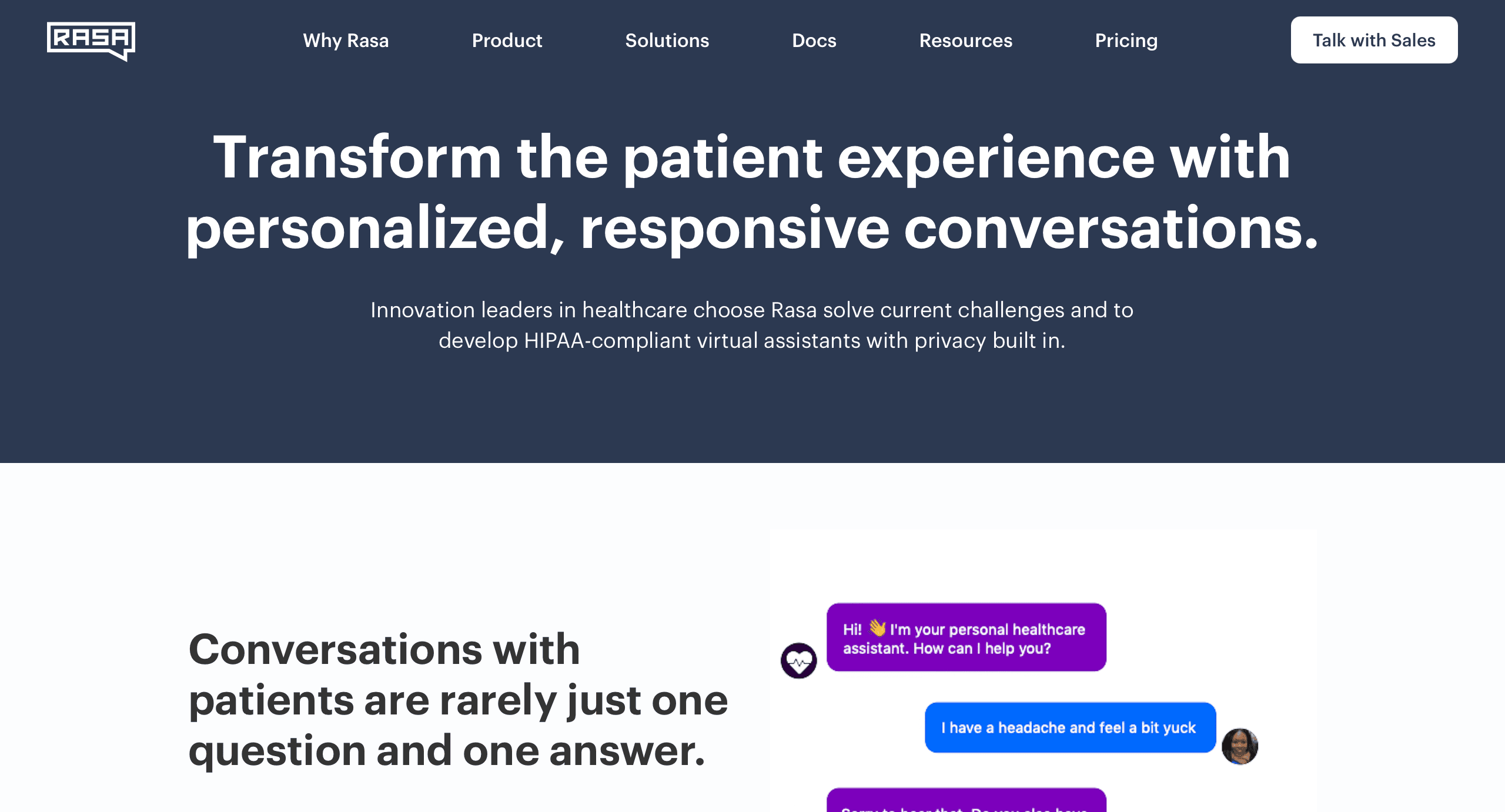
Rasa provides a configurable conversational platform for organizations building their own interactions and connected workflows. Its healthcare page presents healthcare use cases, while selection requires a separate assessment of the actual workflow, environment, data access, and review process.
Distinguish the current commercial offering and Developer Edition from older Rasa Open Source deployments. Check the license, version, hosting options, support agreement, and the release and maintenance policy that applies to the version under consideration. The end of support for one release does not establish that the entire platform is unsupported. Control over deployment also does not, by itself, establish clinical validation or compliance. Commercial terms depend on the chosen offering.
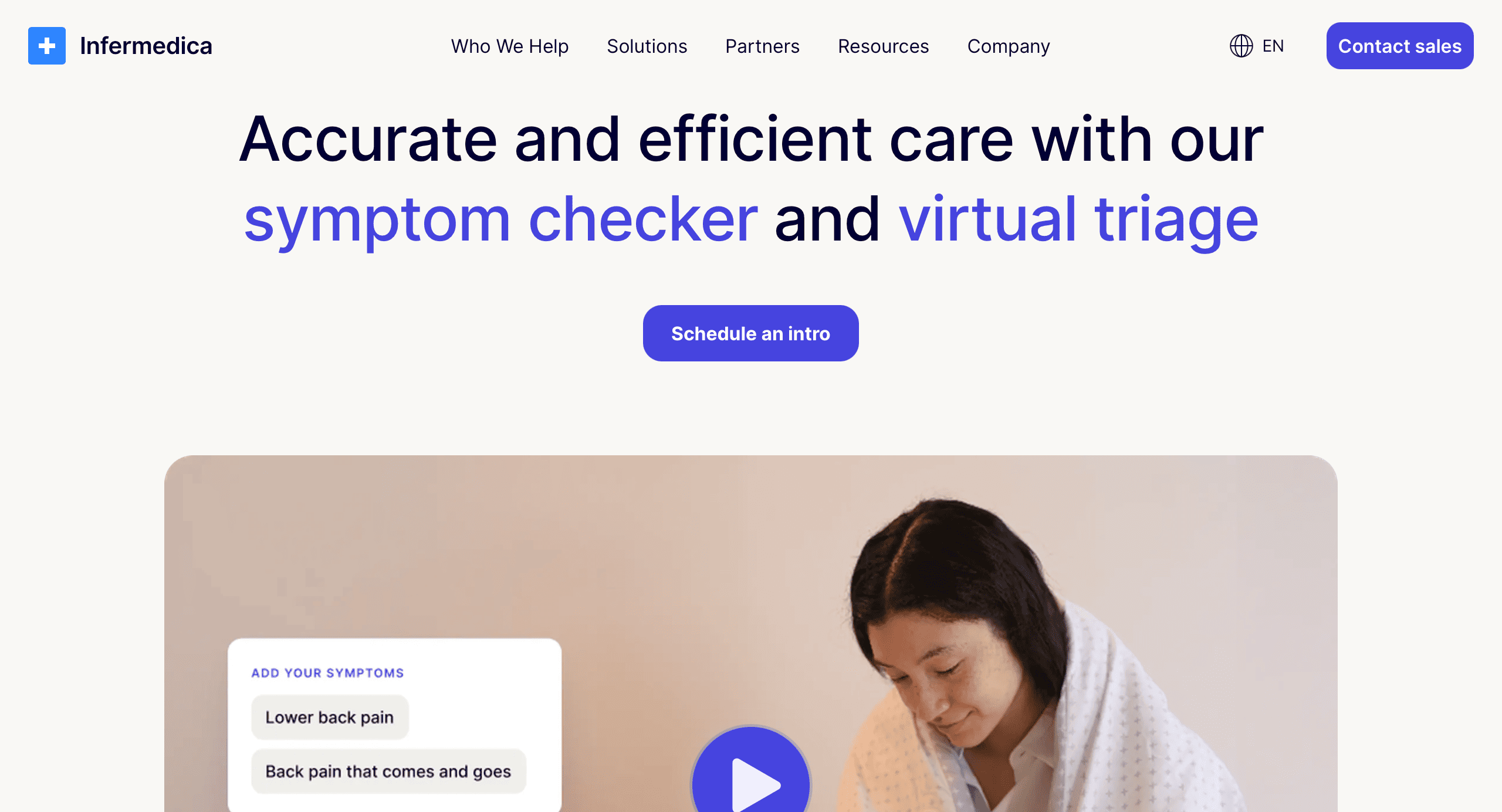
Infermedica describes a specialized clinical AI triage offering that includes symptom assessment and care-direction workflows. It belongs on a different shortlist from an administrative conversation builder when the intended task involves gathering symptoms and supporting a care-navigation process.
Ask which product or API is proposed, its intended use, the jurisdictions and populations supported, and what oversight and clinical governance the implementation requires. Examine how outputs reach patients or staff and how unresolved situations are handled. This comparison does not independently test the product’s clinical accuracy or reproduce vendor performance claims. Pricing and the scope of a proposed deployment should be confirmed with Infermedica.
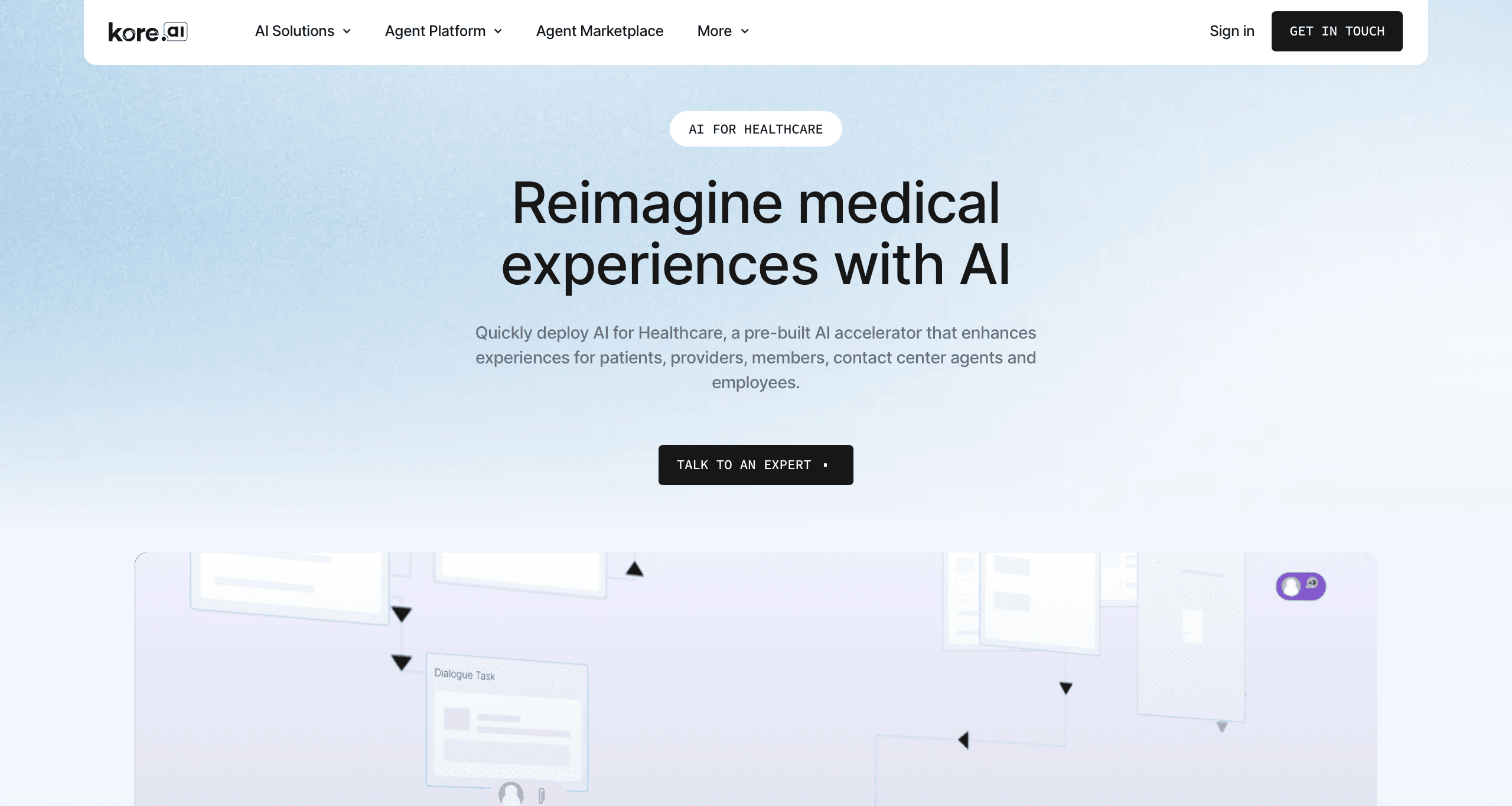
Kore.ai’s healthcare payer solution describes member-service and operational use cases, including benefit and eligibility inquiries, provider-network searches, and claim-status explanations. This makes it relevant to a payer assessing how members or providers access information through conversations.
For an evaluation, identify the authoritative data source for each answer, the access checks required, and the specific action a deployment is permitted to perform. Explaining a recorded claim status is not the same as approving a claim, and payer automation should not be treated as a clinical decision without an independently defined intended use. Ask Kore.ai for the applicable solution scope, integration requirements, and commercial terms; the cited payer page does not establish a single price for all deployments.
Ada Health offers a consumer-facing symptom experience and describes enterprise symptom assessment and care-navigation technology. These are related offerings, but an organization should verify the specific product, supported region, intended audience, and implementation it is considering.
Ask how the output is presented, what escalation or review processes the organization must provide, and what evidence applies to the exact use case. A symptom assessment is not automatically a final diagnosis. Regulatory claims should not be carried from one geography or version to another without checking their scope. Enterprise pricing and contracting conditions require confirmation with Ada Health; this is not the separate customer-service vendor Ada CX.
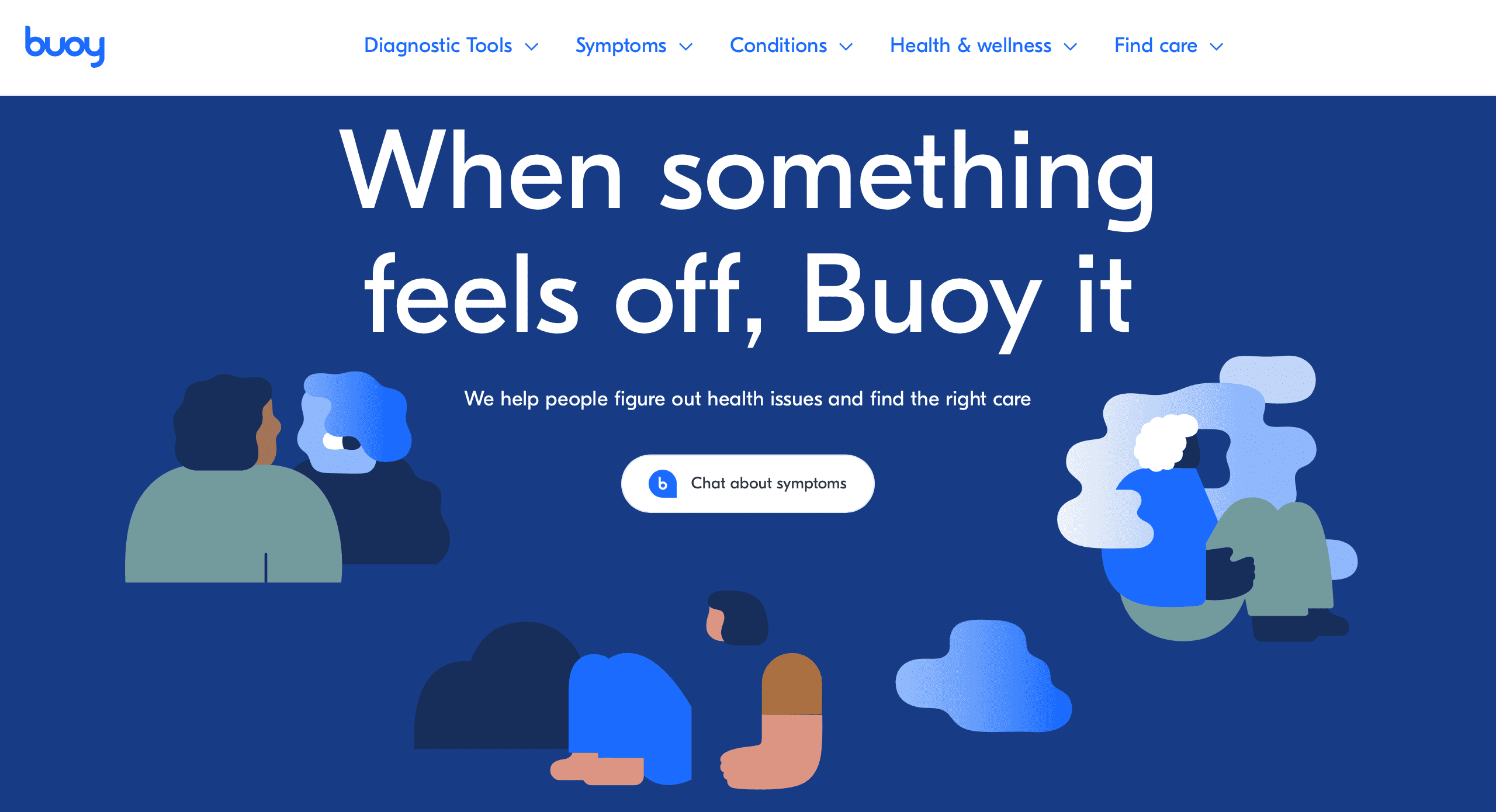
Buoy Health’s public site offers a consumer-facing conversation about symptoms and finding care. That makes it relevant to a review of patient-facing navigation experiences, although its intended use should be assessed separately from a clinician’s documentation workflow.
The public consumer page does not establish the current availability, scope, or price of an enterprise API or a particular directory integration. That is an information gap, not proof that such an offering is unavailable. Organizations considering procurement should ask Buoy directly about deployment options, intended use, regions, data handling, and terms. This overview does not validate a clinical result or recommend using a symptom conversation as a substitute for professional care.
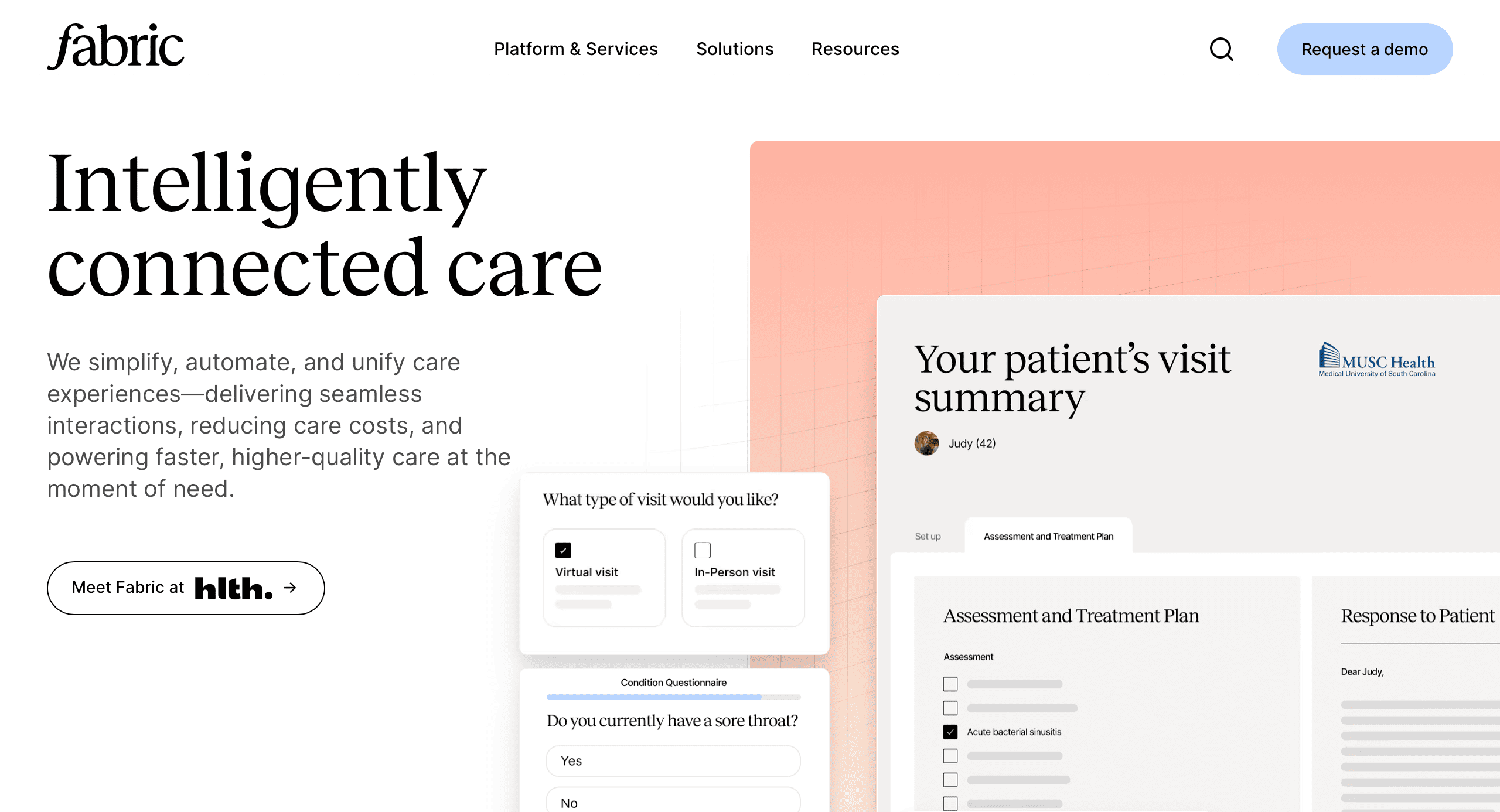
Fabric describes a care-access platform with workflows covering virtual and in-person care. It is relevant when an organization wants to evaluate a broader care-access offering rather than only a standalone conversation builder. The specific functions and clinical boundaries depend on the solution being purchased and implemented.
Fabric announced its acquisition of GYANT on January 31, 2024. That history does not establish the performance of a current deployment, and GYANT is not a separate tenth entry in this comparison. Ask Fabric about the relevant product, integrations, oversight, regional availability, and commercial terms. This company is not Microsoft Fabric.
Start with a specific task and an agreed boundary. “Answer questions about visiting hours from an approved document” is a different requirement from “draft a clinical note” or “support symptom assessment.” Decide which organization or person owns the outcome before evaluating an interface.
Use these questions to compare candidates within the appropriate category:
AI workflow automation may connect a conversation to an authorized action, but the response and the external result must be checked separately. Likewise, no-code AI agents can reduce the amount of code needed for some configuration; they do not remove integration work, clinical governance, security review, or procurement requirements.
In the United States, HHS cloud-computing guidance explains HIPAA considerations and business associate agreements in applicable circumstances. HIPAA is not a universal worldwide rule, and a vendor’s statement about one service does not establish compliance for an entire workflow. Even an administrative request can contain PHI. Assess the applicable law, agreement, configuration, and data flow with the responsible team before using real patient information.
The following is a proposed test using synthetic data, not an actual CogniAgent deployment or customer case. Its purpose is to assess an administrative workflow without assuming clinical readiness.
Choose one task and the appropriate category first. Then identify the required data, system operations, responsible owner, and evidence that the pilot met its acceptance criteria before considering a wider deployment.