How to Build AI Agents: A Beginner's Guide to CogniAgent
 Jan 15, 2026
 3 min read
 Jan 15, 20263 min read
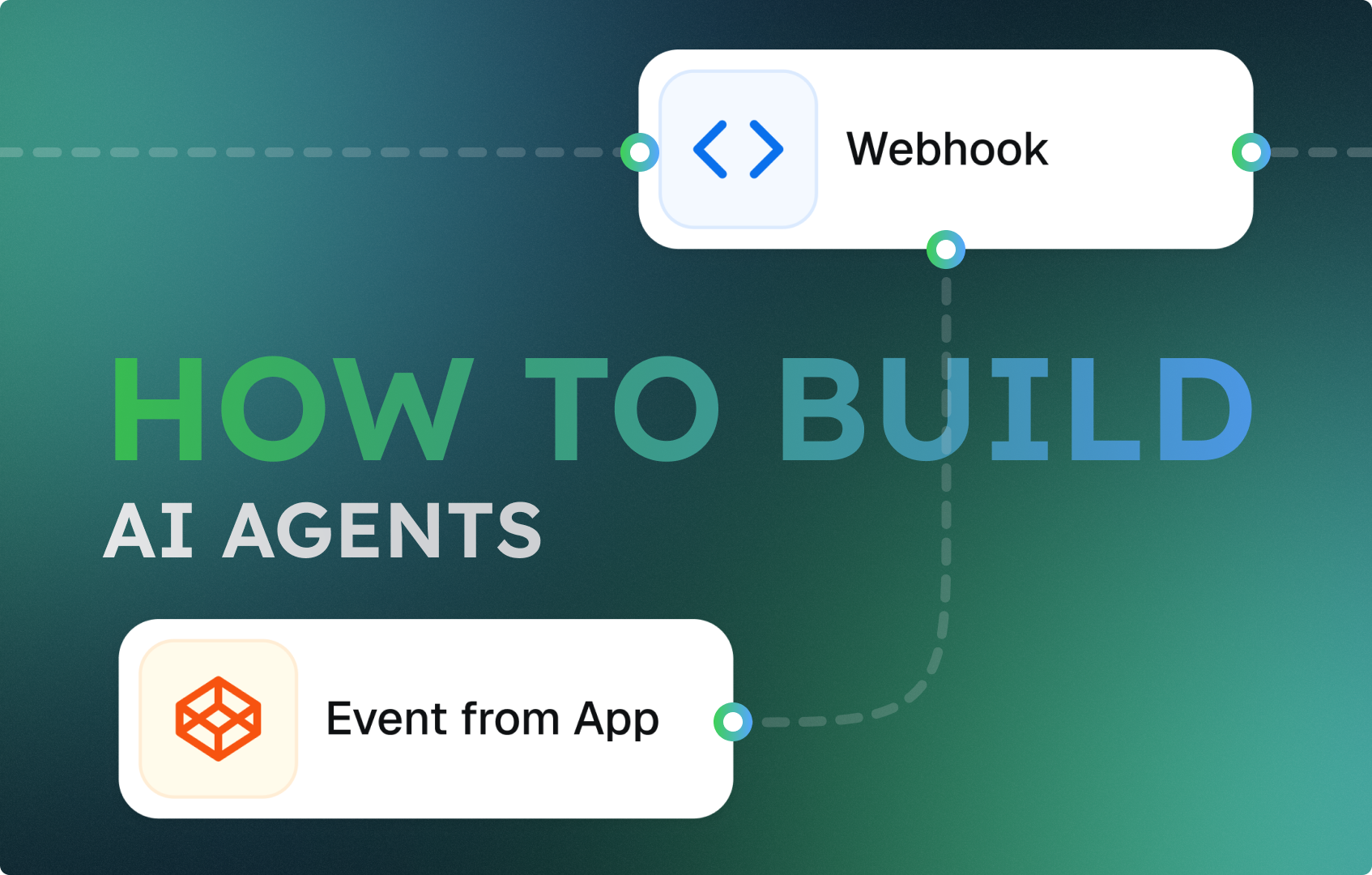
This guide is your starting point for building AI agents with CogniAgent.
Whether you're a complete beginner or exploring no-code AI agent tools for the first time, this guide gives you the foundation. It explains the core idea behind the platform and shows how to think about workflows before you start connecting nodes, services, and logic. You'll learn what CogniAgent is designed for and how its building blocks fit together.
This is the starting point.
Here, you'll learn:
Detailed, step-by-step explanations of specific nodes and logic are covered in the next guides.
CogniAgent is an AI agents platform built for event-driven automation.
Instead of acting like a traditional automation tool with fixed rules and linear steps, CogniAgent works like a business brain. It understands workflows, reacts to events, processes data, and executes actions based on context and instructions.
CogniAgent lets you build AI agents without coding — you describe the logic, connect the steps, and the platform handles execution, decision-making, and data flow. Its goal is to automate repetitive work while remaining flexible enough to handle real-world complexity.
Imagine automating daily tasks faster than you can manually repeat them.
That's what CogniAgent enables.
You don't need to build AI agents from scratch using code. You describe what should happen, connect the right steps, and let the system handle execution. CogniAgent handles the complexity so you can focus on the workflow — whether that's processing data, reacting to events, or running autonomous AI agents that act without manual triggers.
No prior knowledge or coding skills required to get started.
This introduction is the root of the learning tree.
From here, you'll move through three focused guides that explain how workflows are built and controlled — step by step:
Together, these guides will give you a complete mental model of how to design AI-powered workflows in CogniAgent — from scratch, without writing a single line of code.
Let's get started!