Return Cost Analysis Alert
Turn Costly Product Returns Into Actionable Insights Automatically
Features Leveraged

Automated Return Monitoring Engine

Slack + Email Alert Integration

Cost Impact Calculator

Root-Cause Analysis Module

Autonomous Action Execution
Performance Tracking Dashboard
Every Return is Invisible Until it's Too Late
Undetected Patterns
Returns spike unnoticed until inventory is gone
Revenue Leakage
Processing costs + lost revenue compound monthly
No Root Cause
You know returns happen, not why they happen
How It Works
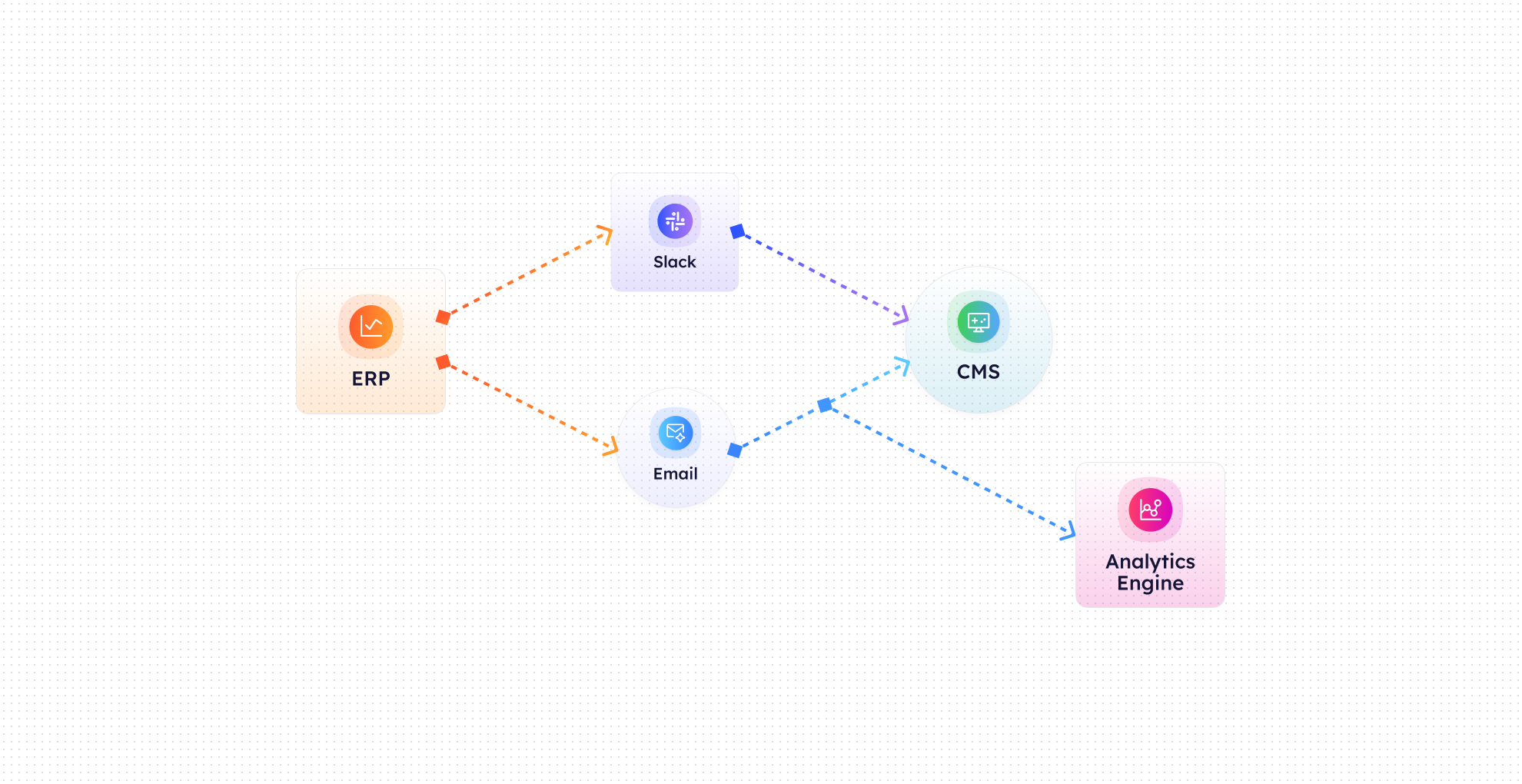
Return data stream detected
System ingests return and sales data from eCommerce, ERP, and fulfillment platforms.
AI analyzes trends
Identifies products exceeding return-rate thresholds and categorizes reasons.
Proactive alert issued
Sends message to product or operations lead with structured recommendations.
Autonomous execution
If approved, AI updates product listings, flags QC workflows, and schedules re-analysis
Impact assessment
Calculates revenue loss and cost per return.
The Real Impact for eCommerce Teams
| Metric | Before Automation | After (With AI Agent) |
|---|---|---|
| Time spent analyzing returns | 4–6 hrs/week | <30 mins/week |
| Time to detect product issues | Weeks | <24 hours |
| Return-related cost per SKU | $300–$800 | <$50 |
| Visibility across teams | Fragmented | Unified |
| Visibility across teams | Slow | Continuous & automated |
Step-by-Step Setup / Onboarding Timeline
Day 1
Connect your eCommerce platform (Shopify, WooCommerce, Magento) and configure alert thresholds and Slack channel.
Day 2
Receive your first AI analysis - Automatic
Week 1
Start acting on insights and tracking improvements - Your action
Week 4
Review ROI and optimize strategy - See results

![Best AI Tools for Auto Repair Shops [2026 Guide]](https://cogniagent-preview-def77a0f.nyc3.digitaloceanspaces.com/media/2026/07/Best-AI-Tools-for-Auto-Repair-Shops-2026-Guide.png)

Frequently Asked Questions
Two things drive it: the thresholds you set and the quality of the data it reads. Threshold breaches are deterministic, so a SKU crossing your return rate ceiling gets flagged every time rather than estimated. The AI layer handles the judgment on top of that, grouping return reasons, tracing a spike back to a specific variant or batch, and ranking what to act on first. Because it reads your own return and sales records rather than a generic model, accuracy sharpens as your reason codes and customer comments get richer. Nothing changes in your store until you approve the recommendation.
For return analysis the agent reads from your storefront, your ERP and your fulfillment system, then delivers findings where your team already works. Shopify, WooCommerce and Magento connect directly for order, return and product data. Odoo and NetSuite cover cost and inventory. Alerts land in Slack or email, and findings can be written back to a CRM such as HubSpot or Salesforce. Anything without a prebuilt connector is reachable through an HTTP Request node or a webhook, so an in-house or custom system is not a blocker.
Yes, and thresholds are your main control. Set them by return rate, by units returned in a period, by refund value or by cost per SKU, and apply different limits to different collections so a category that naturally returns more does not drown out everything else. You choose who gets alerted, on which channel, and how loud the agent is: a single daily digest, or an immediate message the moment a SKU breaches. Thresholds stay editable and take effect on the next analysis run.
Only what the workflow needs for the analysis: return and order records, product and variant identifiers, return reasons, and the cost figures you connect. No payment card data passes through the agent. Data is encrypted, access is governed by role-based permissions, and every action the agent takes is written to an audit log you can review. Enterprise plans add compliance documentation and a dedicated security review.
Yes, and that is where most of the value sits. The agent works across your whole catalogue rather than one SKU at a time, so it catches a sizing problem running through an entire apparel line, or a packaging fault hitting every item shipped from one warehouse. It groups the related returns, names the shared cause, and proposes one fix covering the group. On approval it applies that fix across all affected listings at once, flags them for QC, and schedules a re-check to confirm the change worked.

No results