Offer Communication Agent
Deliver the offer, answer every question, and close the acceptance — before a competing offer does
Core Automation Capabilities

Personalized Offer Delivery Engine

Compensation & Benefits Q&A (Knowledge Base-powered)

Accept / Decline / Negotiate Routing

E-Signature & Acceptance Capture

Multi-Touch Follow-Up Sequencing

Onboarding Handoff Trigger
Why Great Candidates Slip Away After the Offer
The Offer Sits in an Inbox
An offer emailed on Friday afternoon is read Monday morning — if it's read at all. Every silent hour is a window for a competing employer to close the same candidate first.
Questions Stall the Decision
Candidates hesitate on pay, shift, benefits, or start date and wait days for a reply. Momentum built through interviews dies in the gap between "here's the offer" and "here's your answer."
Silent Reneges Before Day One
An accepted candidate goes quiet between signing and start date with no check-in. You find out they took another role when they no-show — after you've stopped sourcing for the seat.
How It Works
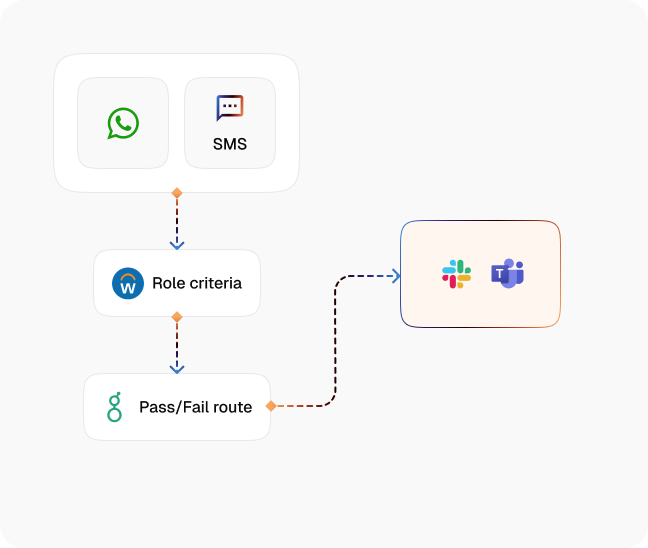
Offer Trigger
A candidate is moved to "offer" in your ATS — CogniAgent detects it and opens the offer conversation on the candidate's channel immediately.
Personalized Offer Delivery
Role, pay, shift, start date, and a benefits summary are delivered in plain, readable language — not buried in a PDF attachment the candidate has to open on their phone.
Live Questions Answered
The agent draws on your Knowledge Base to answer compensation, benefits, PTO, and policy questions on the spot — the same accurate answer every time, day or night
Guardrailed Negotiation
Requests inside your approved bands are handled to script. Anything outside them routes to the hiring manager with full context, so nothing gets promised that shouldn't be.
Acceptance Capture
A clear yes or no, e-signature or confirmation logged straight to your ATS, decision timestamped — no manual tracking, no ambiguity about where the candidate stands.
Onboarding Handoff
On acceptance, the agent triggers document collection and first-day logistics. On a decline, it captures the reason and closes the conversation professionally.
Impact of AI That Delivers Real Operational Wins
| Metric | Before Automation | After (With AI Agent) |
|---|---|---|
| Time from offer to signed acceptance | 3–5 days | Under 24 hours |
| Offer acceptance rate | 60–70% | 85%+ |
| Post-offer candidate drop-off | 20–30% | Under 8% |
| Renege rate before start date | 15%+ | Under 5% |
| Recruiter hours per offer cycle | 3–5 hours | Under 1 hour |
Step-by-Step Setup
Step 1
Load your offer terms, compensation bands, benefits, and FAQs into the Knowledge Base for each role.
Step 2
Connect your ATS or HRIS so the agent fires the moment a candidate is moved to the offer stage.
Step 3
Set your negotiation guardrails and the escalation path to the hiring manager for any out-of-band request.
Step 4
Define acceptance capture and the onboarding sequence that triggers automatically on a signed yes.

![Best AI Tools for Auto Repair Shops [2026 Guide]](https://cogniagent-preview-def77a0f.nyc3.digitaloceanspaces.com/media/2026/07/Best-AI-Tools-for-Auto-Repair-Shops-2026-Guide.png)

Frequently Asked Questions
The agent delivers offers proactively over email (Gmail or Outlook), SMS, or Slack, and continues the conversation wherever the candidate replies — including WhatsApp, Teams, and web chat. Channel choice is set per role.
Yes, within limits you define. Requests inside your approved compensation and scheduling bands are handled directly; anything outside them is routed to the hiring manager with the full conversation context, so no unauthorized terms are ever offered.
The agent collects a clear accept or decline, logs an e-signature or written confirmation to your ATS, and timestamps the decision. It can integrate with your existing e-signature tool for formal sign-off. (For binding-agreement requirements, confirm with your own counsel — the agent handles the workflow, not the legal review.)
The agent runs a paced follow-up sequence — a small number of spaced nudges, capped so it never spams — and captures the reason on decline. If there's still no response, it flags the candidate for the hiring manager rather than closing silently.

No results