What a Backed-Up Inbox Costs Your Store
The Problem
With Your Agent


Tracking questions bury the urgent tickets
Most of the inbox asks one thing. A damaged-item claim waits behind forty "where is my order" emails.

Tracking replies go out on their own
The agent reads the latest carrier scan and explains it, so claims reach a person first.
Peak season outruns your hiring plan
Sale traffic arrives in days. Seasonal reps need weeks to learn your exchange rules.
Sale week runs on the same rules
The policy you approved in October answers the November surge, without a new training round.
Order changes miss the warehouse cutoff
A new shipping address lands at 11pm and nobody reads it until the parcel is gone.
Edits reach the order before packing
Unfulfilled orders get updated in the same thread, and the customer sees the confirmation.
Silence turns into disputes
A customer who hears nothing about a late parcel stops writing to you and calls their bank.
Every delay gets an explanation
Customers learn what happened and what comes next while they still want to hear it from you.
From First Question to Refund Confirmation
Six request types your agent can own, from tracking and returns to subscription changes
Order tracking
An order number or an email address is enough. The agent finds the order, reads the carrier status, and explains a stalled parcel in plain words instead of pasting a tracking link.
Returns and exchanges
Return window, final-sale status, and reason checked first. An exchange is offered before a refund when stock allows.

Order edits and cancellations
Address, size, or quantity changed while the order is unfulfilled. After the cutoff, the customer hears the real options.

Damaged and wrong items
Photos and the affected line item collected in the chat, then logged as a claim in your helpdesk

Product & checkout questions
Stock, sizing, and delivery times answered before the order, and a promo code that failed at checkout checked against your rules
Subscription orders
Skip a delivery, move a ship date, or swap a variant, with the change written to the subscription record and confirmed back to the customer before the next charge runs
Paste Your Return Policy. Get a Working Agent.
AI Concierge turns your shipping, returns, and help center pages into a canvas you can edit
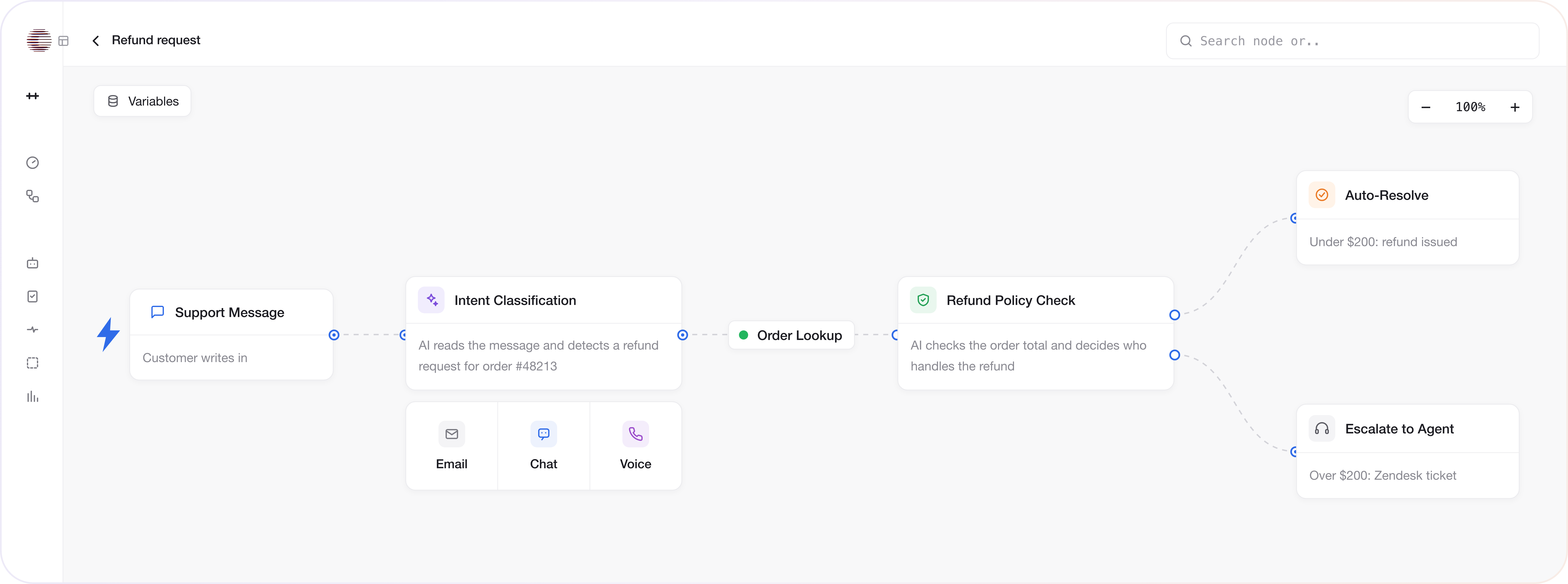
Built from your help center
A Knowledge Collection Task reads your policy pages and FAQ, so answers match what your site already promises.
Rules you can see
Return windows, final-sale categories, and refund limits sit on the canvas as nodes, not inside a hidden prompt.
Holiday changes in one edit
Extending returns for gifts? Change one node in November and publish it before the first order ships.
Live Before Your Next Sale Starts
No developer needed to connect, test, or expand the agent
Answer Order Questions Wherever They Arrive
Web chat, email, WhatsApp, SMS, and voice share one agent, so a return started in chat continues by email
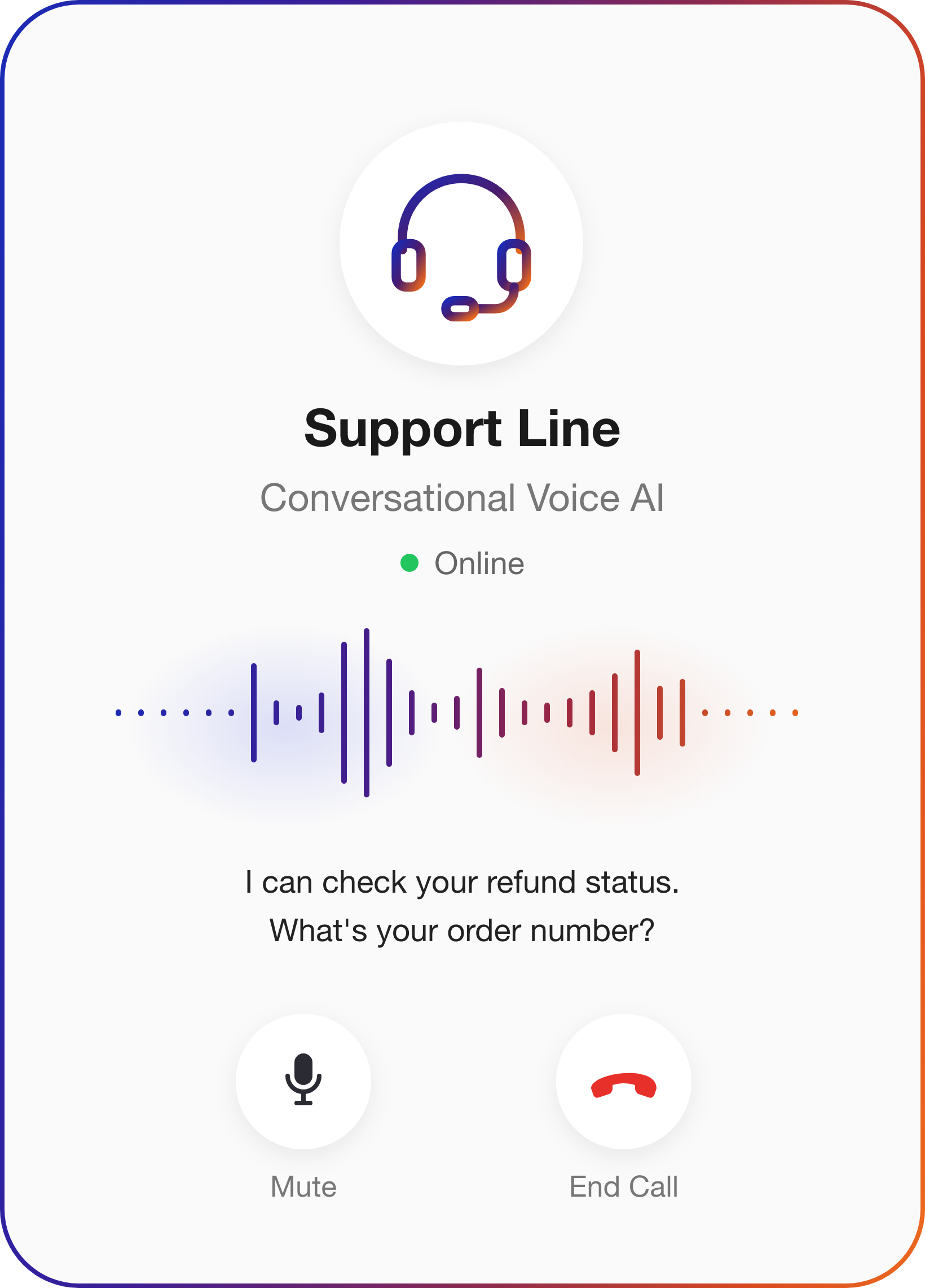
Conversational Voice AI
Callers read an order number aloud and get the status, or a warm transfer, through your own Twilio account.
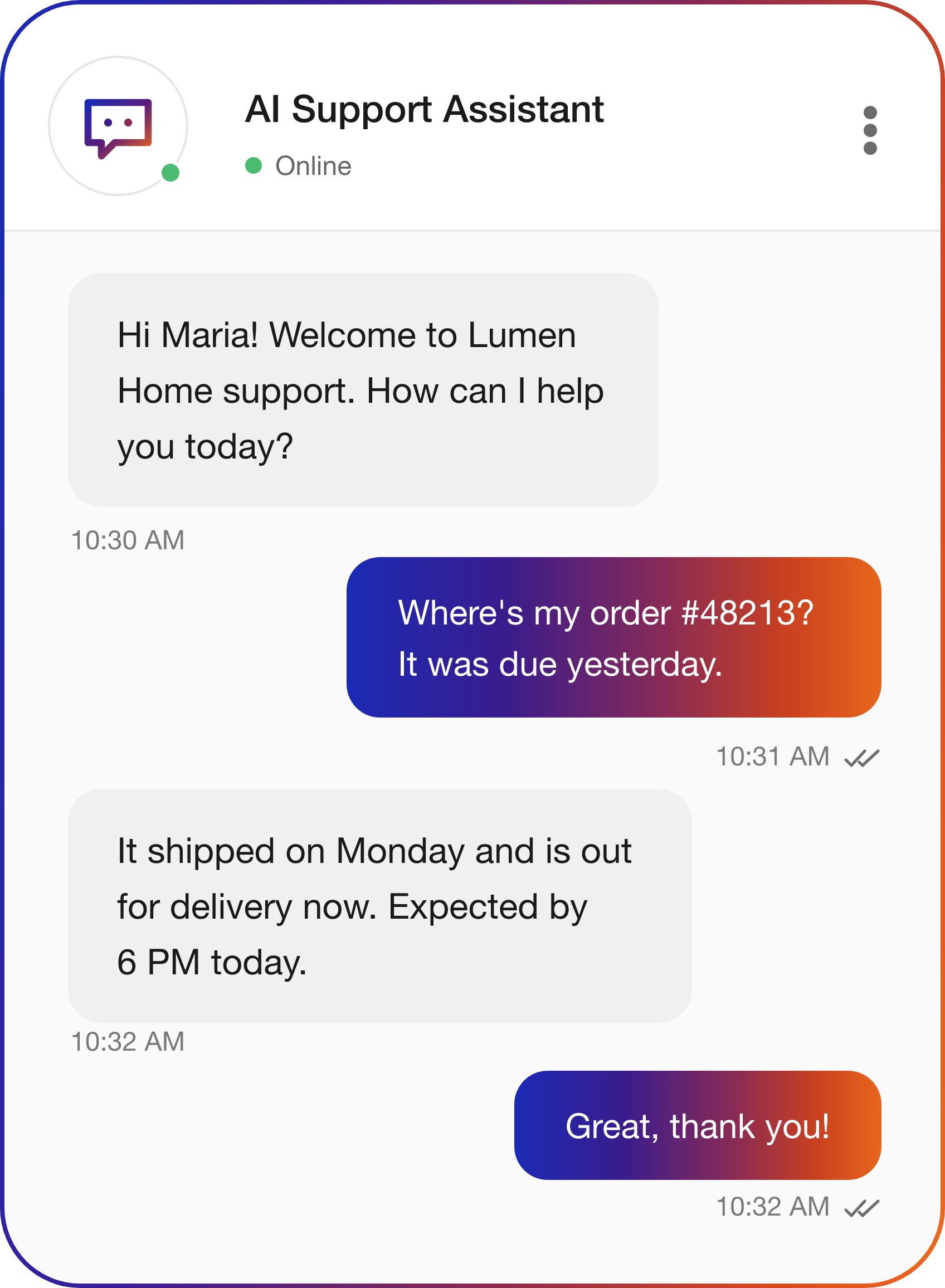
Web Chat
On the order status page, the account page, and the help center, where shoppers look first after checkout.
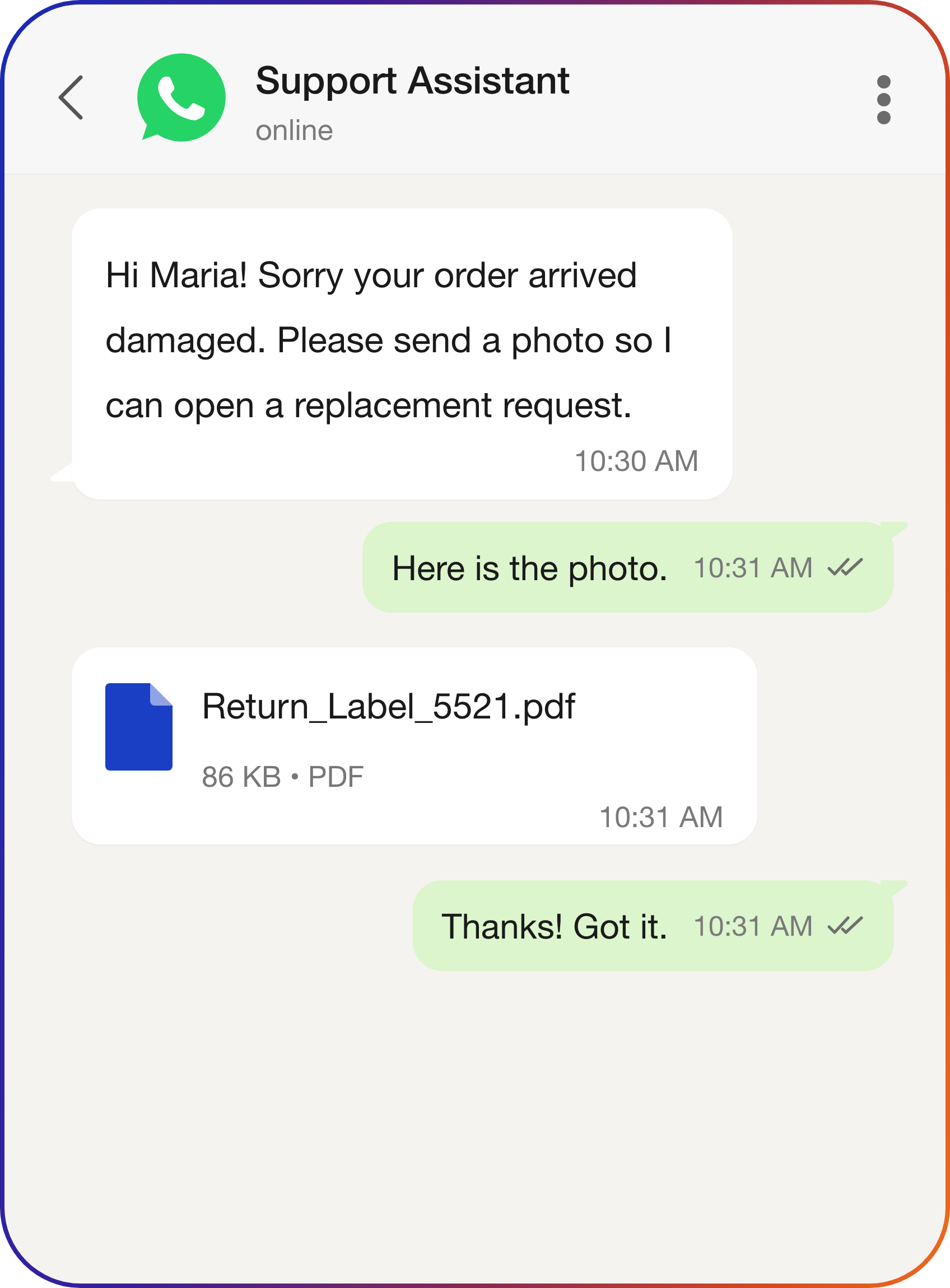
Customers send a photo of the cracked vase in the same thread they used to ask about delivery.
SMS
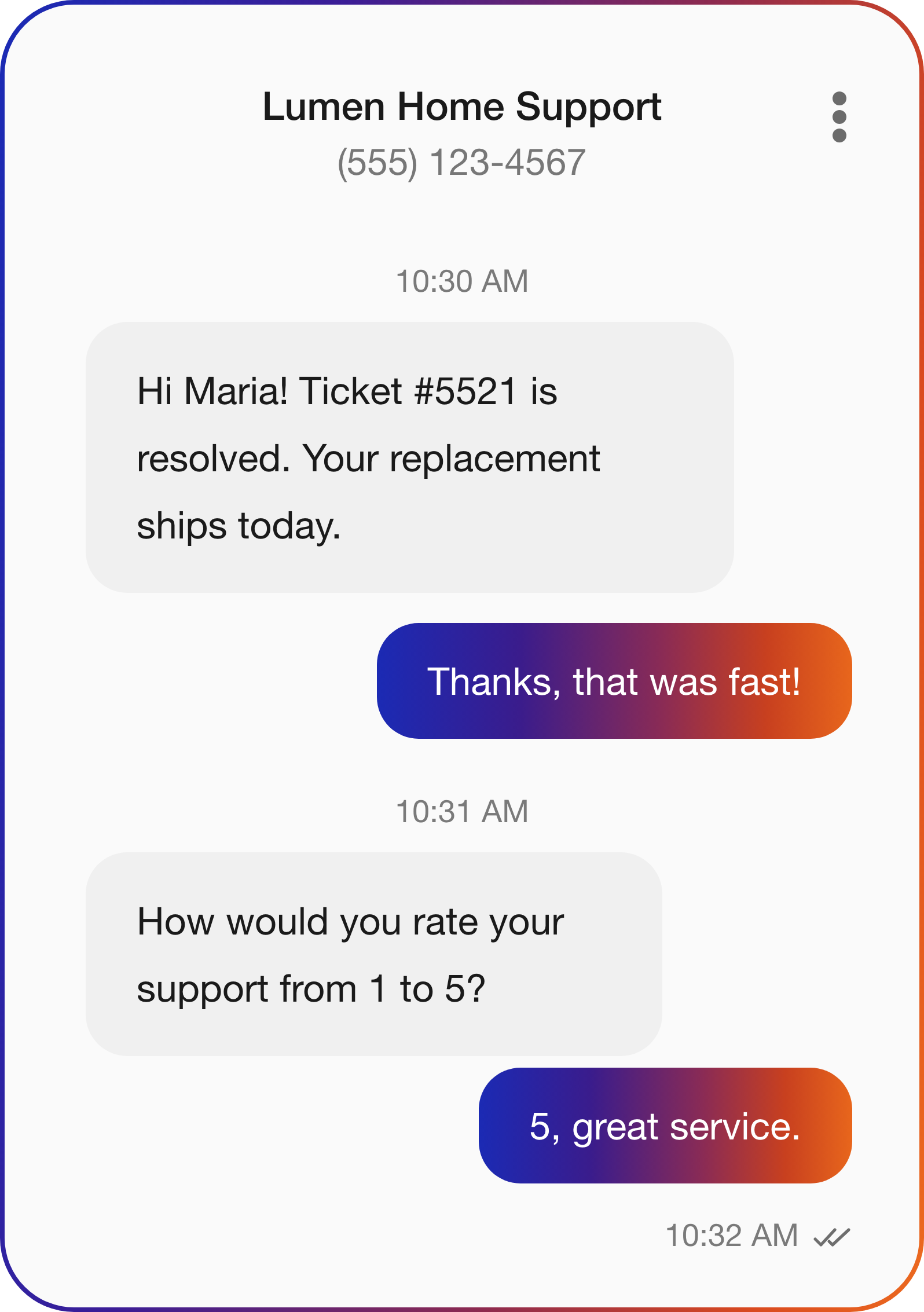
Delay notices and "we received your return" messages sent first, before the customer has to ask.
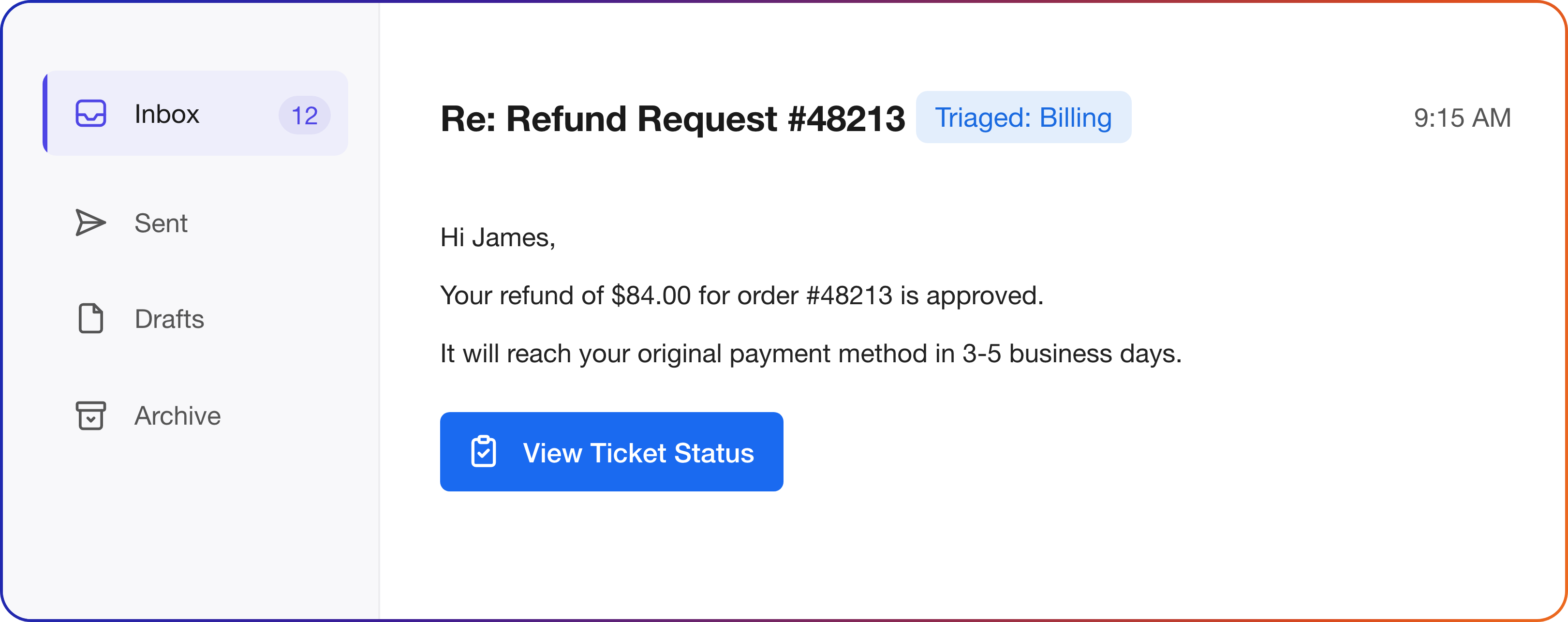
Replies to shipping confirmations get read, answered, or turned into a tagged ticket in your helpdesk.
Every Agent Action,Visible in Shopify

Note on the order
Customer history and agent actions, summarized where your team already looks
Tags you can sort
“Resolved by agent” or “needs review”, so the order list sorts itself
Saved order edits
Address and variant updates on unfulfilled orders, plus the reason for any handoff
Why Store Teams Outgrow Macros and FAQ Bots
Six moments where a scripted reply sends the ticket back to your team

Macros and FAQ Bots

- Pastes a tracking link and leaves the customer to read it
- Quotes the return policy without checking the order
- Logs a damage complaint, then waits for a rep to ask for photos
- Address changes sit in the inbox until after the parcel ships
- A holiday policy change means rewriting dozens of macros
- Lives in the website widget only

Agent Built on CogniAgent

- Reads the scan history and explains the delay
- Checks the order date, item, and final-sale status against the policy
- Collects photos and the line item in the first conversation
- Updates unfulfilled orders before they are packed
- One node edit changes every channel at once
- Same logic on chat, email, WhatsApp, SMS, and voice
Connected to the Stack Your Store Runs On
2,700+ integrations, including Shopify, WooCommerce, and BigCommerce, so the agent reads orders and writes updates inside the tools your team already uses







.svg)




 WhatsAppbusiness
.svg.webp)
.svg.webp)







Enterprise-Grade
Security & Compliance
Built for store teams handling shipping addresses, order history, payment references, and photos customers send with claims


Data Protection
Conversations, attachments, and customer records are encrypted in transit and at rest, with retention windows you configure.
Secure System Integration
Role-based access controls govern every connection to your store, helpdesk, and payment tools.

Privacy Assurance
Shopper data stays yours and is never used to train public AI models.

Audit & Monitoring
Every reply, order update, and escalation is time-stamped, which helps when a customer disputes what they were told.
Support Teams That Got Their Day Back
Our customers have experienced remarkable transformations by implementing the cognitive conversational AI platform CogniAgent
CogniAgent has become an essential part of our customer experience. The cognitive AI platform handles most routine inquiries, freeing up our agents to focus on more complex issues. Our customer satisfaction scores have gone up by 25% since implementation. I highly recommend this solution.

Pricing
Pay only for what you use. Credits never expire.
Pay-as-you-go
Free to start. No subscription.
Credits from $10.
- 5,000 credits loaded on signup
- Full canvas and all AI features
- 2,700+ integrations and templates
- Free messaging channels
- Up to 5 user seats
- Production deployment
- Human chat support*

* activates on first credit purchase
Enterprise
Custom plan. Annual prepay
at a negotiated rate.
- Annual credit package
- Custom user seats
- SSO
- Bring your own LLM API keys
- Extended usage logs
- Assisted onboarding and training
- Agents built by the CogniAgent team
- Premium support and SLA


![Best AI Tools for Auto Repair Shops [2026 Guide]](https://cogniagent-preview-def77a0f.nyc3.digitaloceanspaces.com/media/2026/07/Best-AI-Tools-for-Auto-Repair-Shops-2026-Guide.png)

AI Agent for Customer Support in eCommerce
FAQ
Only within limits you set. You decide the maximum amount, the eligible reasons, and whether a return must be scanned first. Requests inside those rules go through the connected payment or store integration; anything larger, unusual, or from a flagged customer goes to a person with the order details and a recommended outcome attached.
Yes, through the connected integrations, the agent looks up orders, tracking, and customer history from your storefront during the conversation. Store owners on WooCommerce or BigCommerce can also see the platform-specific chatbot pages for setup detail. Multi-store operators connect each store separately and keep separate policies per brand.
No. Your helpdesk stays the system your team works in. The agent creates and updates tickets there, adds tags and a summary, and closes the ones it resolved, so your reps still see every conversation. Most stores keep their existing macros for edge cases while the agent takes the repeat volume.
The agent tells the customer what the policy says and does not grant an exception by itself. You can configure a route for borderline cases, for example a loyal customer two days past the window, which sends the request to a person with the order history so they can approve store credit or decline.
You choose the triggers. Strong negative sentiment, words like "dispute" or "bank", or an order above a set value can move the conversation to a person immediately. The handoff carries the full thread and order details, so your rep answers the problem instead of asking for the order number again.
Yes. The same customer service AI agent answers the questions shoppers ask before checkout: stock, sizing, shipping times, and return terms, pulled from your catalog and policies. It helps the shopper decide rather than selling, so upsells and outbound offers need a separate agent. For guided shopping conversations, see conversational AI for eCommerce.
You pay for the work the agent does, not for seats. A busy sale month uses more credits and a quiet month uses fewer, with no per-agent licence to add before the rush. Credits never expire, so a balance bought before the holidays carries into January.
Early enough to read real transcripts first. Teams usually go live with order tracking a few weeks before the sale, review conversations, then switch on returns and order edits once the answers match their policy. Starting narrow means the agent is tested before the busiest week, not during it.

No results