5 Best AI Recruiting Agents for Auto Repair Shops in 2026
4.7/5 - (17 votes)

 7 min read
 7 min read
Certified techs may apply to four or five shops at once and take the first credible offer, so the interview goes to whoever reaches them first, not whoever pays best or writes the strongest job description. Pay and job-description quality only matter for candidates who are still on the market by the time you reach them.
That dynamic is driven by scale, not luck. The TechForce Foundation's 2026 Supply, Demand & Opportunity report counts 241,842 annual technician openings against 101,743 program graduates, meaning the training pipeline covers only 42% of national demand. Automotive runs a 29% gap on its own, which is exactly the kind of shortage that turns a slow reply into a lost hire.
Independent shops absorb that problem without support. There is no HR function to screen applications, chase ASE documentation, and run interview scheduling, so it falls to a service advisor already writing tickets and ordering parts, and it waits until the bay goes quiet.
That gap is what AI recruiting agents for auto repair shops close. They read applications as they land, ask the questions you would ask, capture certification details in writing, and book interviews without pulling anyone off the floor. The five platforms below take different approaches to that problem, and the right one depends on how big your shop is and how often you're hiring.
Most recruiting software is built for office hiring, where candidates wait a week for a phone screen, and everyone works by email. Technician hiring doesn't allow for that. Candidates apply from a phone between jobs, expect a reply within the hour, and rarely open an email that isn't from a customer. Software built for the slower model misses them. That's part of why AI has moved into recruiting so fast.
SHRM's 2025 Talent Trends report found AI use in HR tasks climbed to 43% in 2025 from 26% the year before, and 89% of HR professionals using AI in recruiting say it saves time or increases efficiency. Today, the open question is which capabilities matter in a shop.
AI hiring software auto repair shops can actually use has to do three things well, and each is worth checking before you sit through a demo of any AI agents for recruiting.
Vendor pages rarely mention this, but no recruiting platform can verify an ASE certification automatically, because ASE doesn't provide a live registry to check against. Confirming a credential still means the candidate emails a status letter from their myASE account, or you call ASE directly.
What good auto technician recruiting AI does is capture what otherwise gets lost. It asks which ASE tests the candidate passed, records the ASE ID, requests a certificate upload in the same conversation, and flags expiration dates. State inspection licenses and EPA 609 certification work the same way. You still make the verification call, but you make it holding a complete record instead of a resume that says "ASE certified" with nothing behind it.
Auto technician recruiting AI that filters on years of experience alone hands you a shortlist that falls apart on the first call. Technician fit runs on specifics: tool ownership and box level, makes worked on, diagnostic capability versus strictly R&R, EV and hybrid comfort, flat-rate versus hourly expectations, and Saturday availability. The stronger platforms let you set those as knockout criteria.
Technicians spend the day with their hands on a vehicle, not at a desk, so email sits unread for hours between jobs, and a login wall or application portal loses them before they finish it. Texting doesn't have that friction. Most people read a text within minutes of getting it, and they'll answer a call from a local number faster than one they don't recognize. Platforms covering text, voice, and messaging apps reach candidates where they are, and the better ones connect that conversation to business workflow automation so a completed screen triggers the calendar invite, the document request, and onboarding without anyone retyping a thing.
These five platforms approach AI recruitment for auto repair businesses from different starting points. As you go through the list, weigh each platform against how many bays you're running, how often you're actually hiring, and whether you have anyone dedicated to screening or if that job falls to whoever's free between tickets.
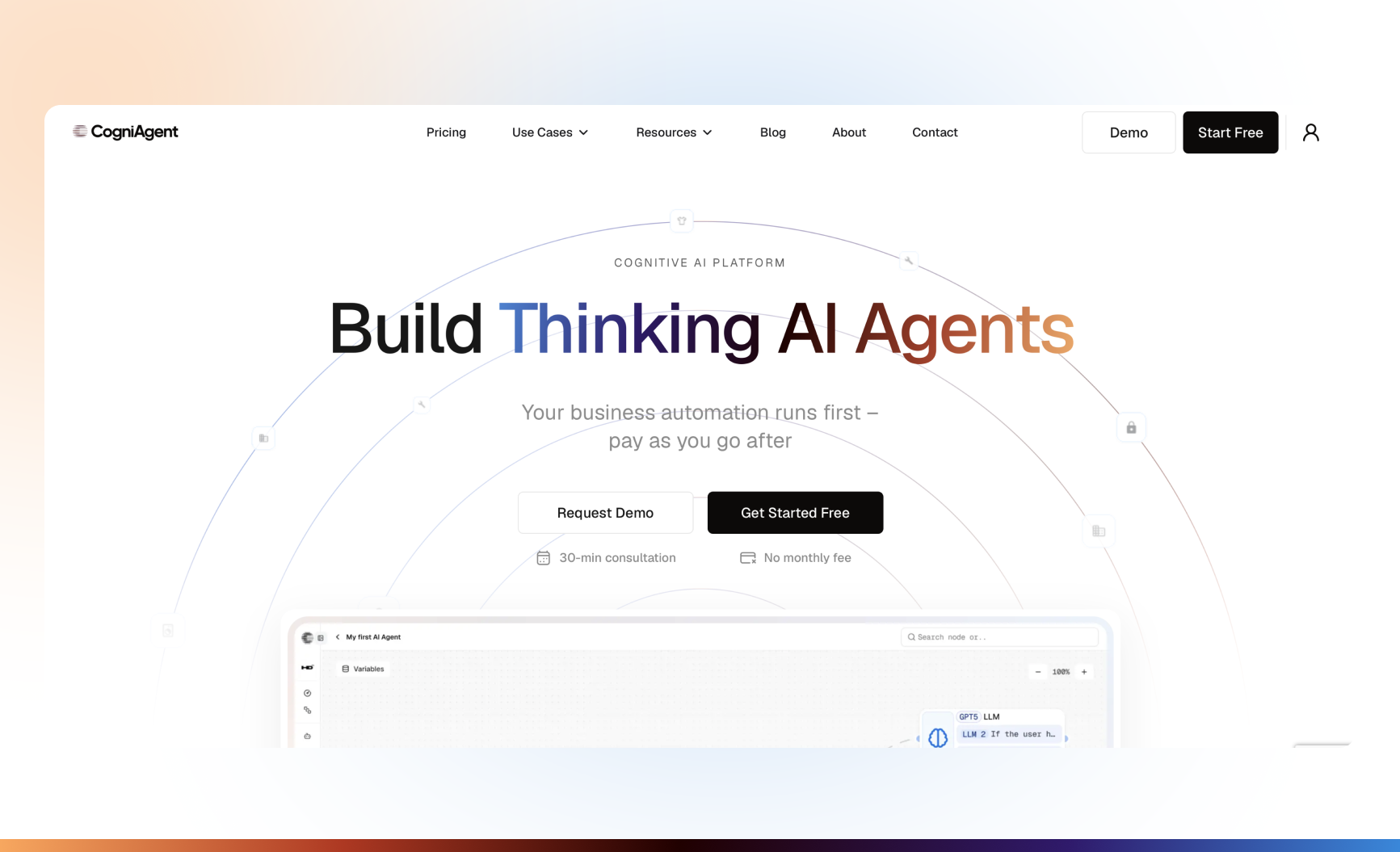
CogniAgent is a cognitive AI platform for building conversational AI agents, autonomous agents, and workflow automation on one no/low-code system. For a shop, that means an agent that holds a real screening conversation over SMS, WhatsApp, voice, or web chat, then acts on what it learns: capturing the ASE ID, requesting a certificate, checking your calendar, and confirming the interview before the candidate closes the thread. Agents handle unstructured replies and invalid input without dropping the conversation. The platform runs a purpose-built AI recruiting agent for auto repair shops, and the same account handles customer calls once hiring slows.
Key features:
Best for: Independent and small multi-bay shops with no HR function that need screening and scheduling live within the first week.
Pricing: Pay as You Go starts at $0, no card required — 5,000 credits on signup, production deployment, up to 5 seats. Top-ups from $10; credits never expire. Enterprise is annual prepay at a negotiated rate.
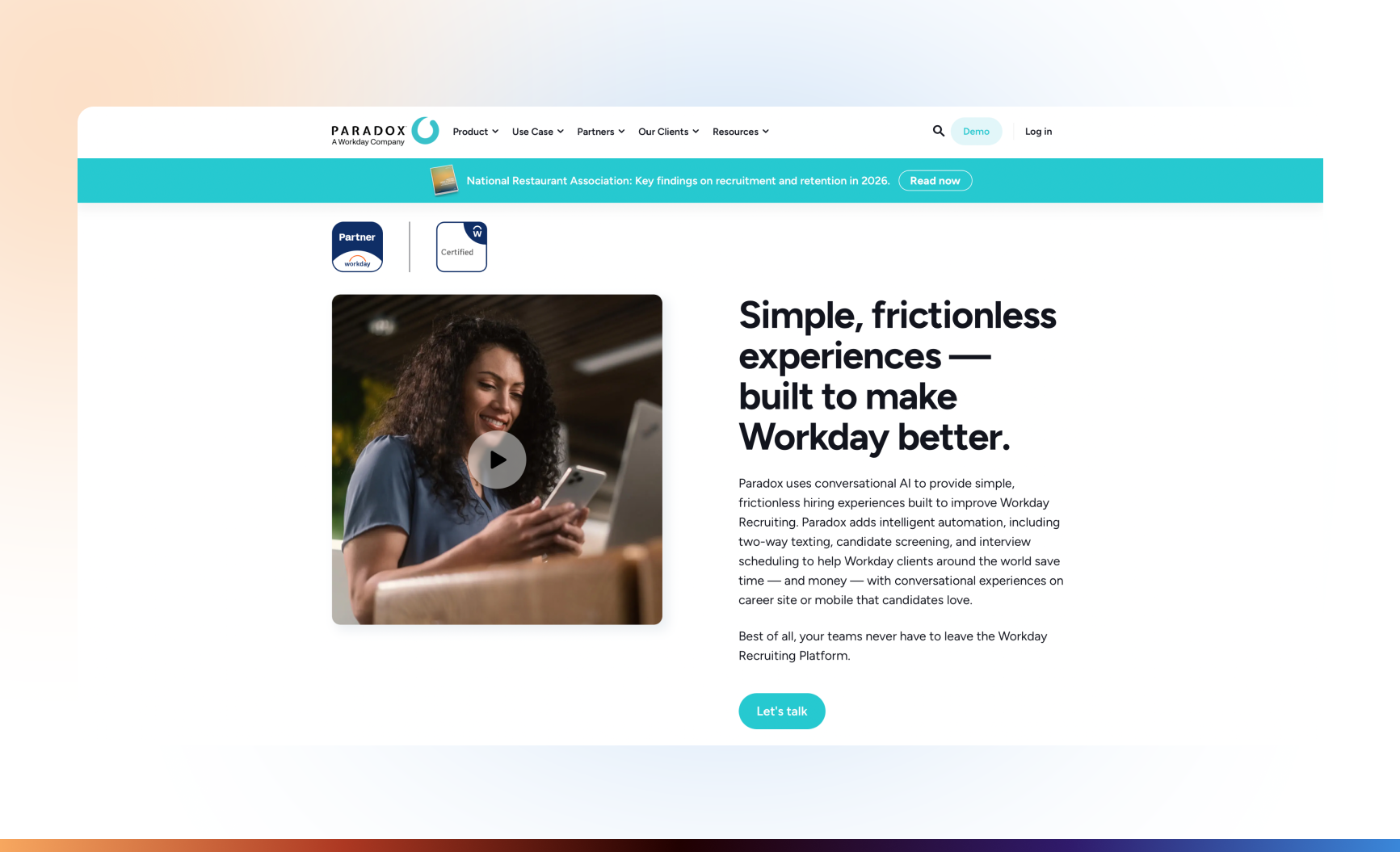
Paradox built Olivia, an SMS-native hiring assistant that turns the top of the funnel into a text conversation: a candidate scans a QR code, answers screening questions by text, and books an interview with no login or resume upload. It is the most established tool in high-volume frontline hiring, running across thousands of locations for brands like Chipotle. Workday completed its acquisition of Paradox on October 1, 2025, and it now sells as the Workday Paradox Candidate Experience Agent.
Key features:
Best for: Large dealer groups and multi-location networks with a recruiting team and the volume to justify an enterprise contract.
Pricing: Not published. Sold through Workday or Paradox on custom enterprise terms.
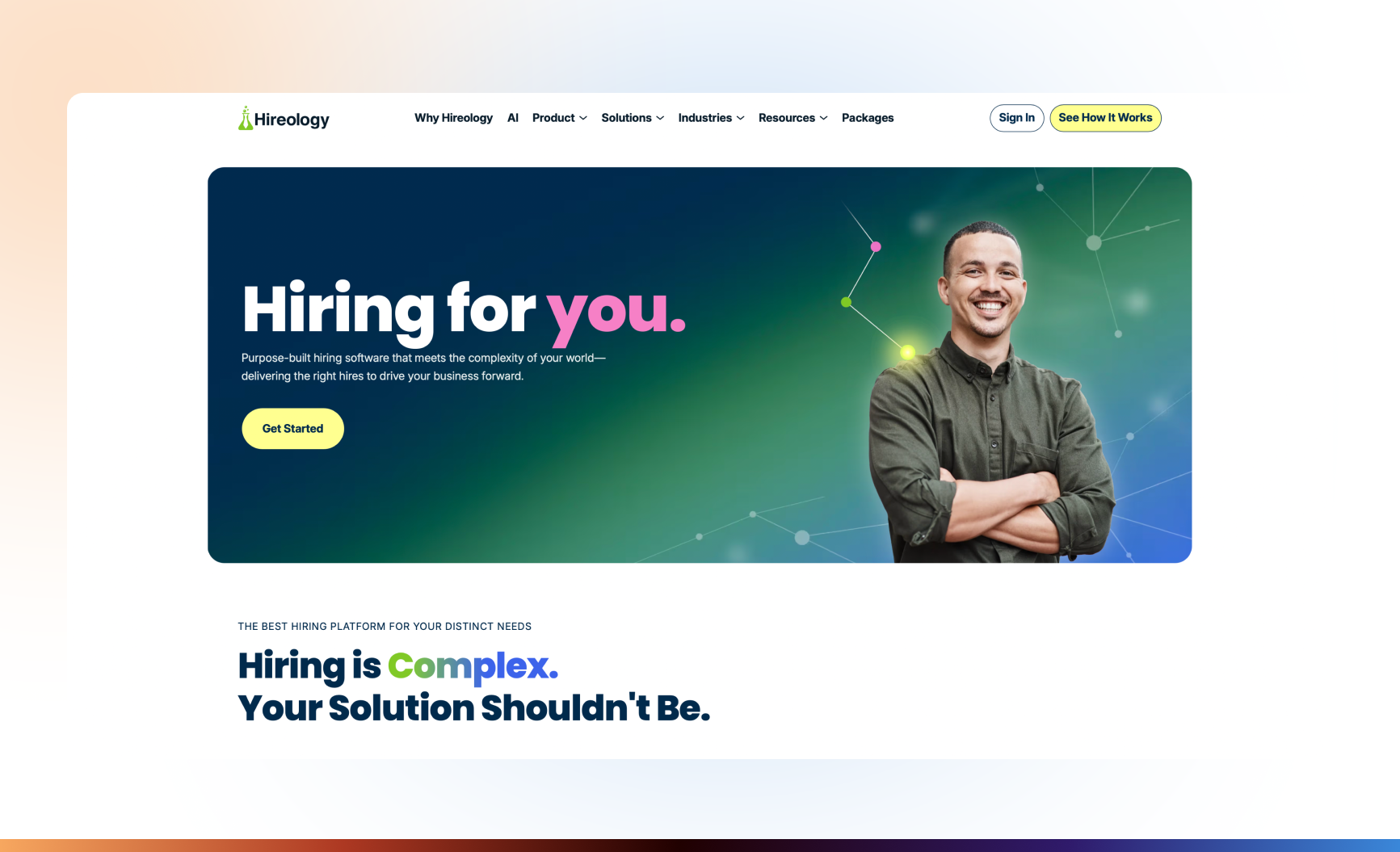
Hireology is an applicant tracking and hiring platform built for decentralized industries, with retail automotive as a core vertical. That focus shows in the details: pre-screen surveys tuned to automotive roles, background checks, credential tracking in higher tiers, and a branded career site. It structures the pipeline around the difference between a lube tech and a Master ASE technician.
Key features:
Best for: Multi-location shops and dealership service departments wanting a full ATS with automotive-tuned workflows.
Pricing: Essentials around $249/month, Professional around $499/month, All-In-One custom.
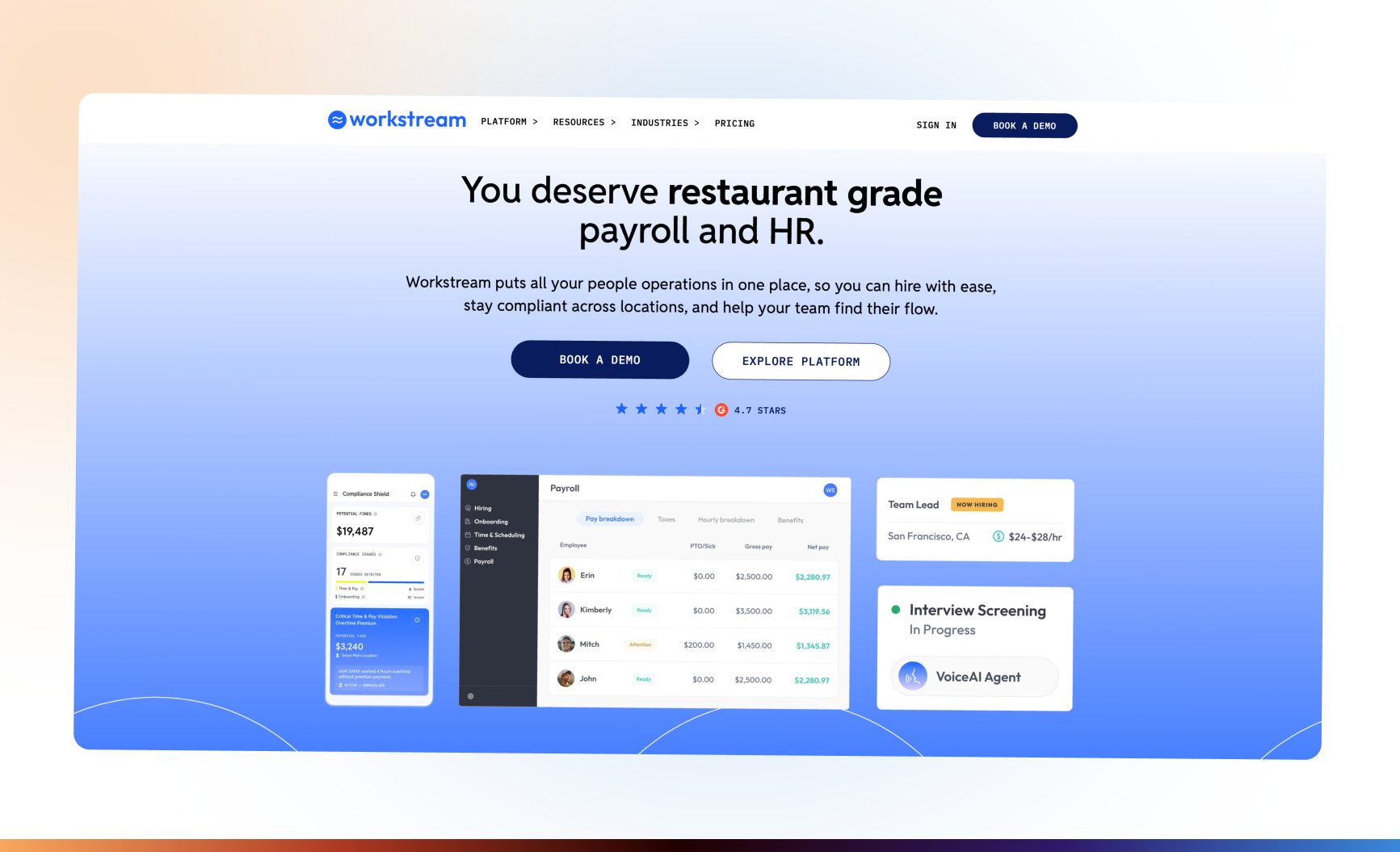
Workstream is an HR and hiring platform for hourly teams, strongest in restaurants and retail but applicable anywhere shift-based hiring runs constantly. It is mobile end-to-end: text-to-apply postings, AI voice screening calls, and paperwork completed by phone. It also carries payroll, scheduling, and time tracking, which suits owners looking to consolidate systems.
Key features:
Best for: Shop groups wanting hiring, onboarding, and payroll in one system.
Pricing: Not published. Per-employee-per-month by module, employee count, and location count. No self-serve free trial.
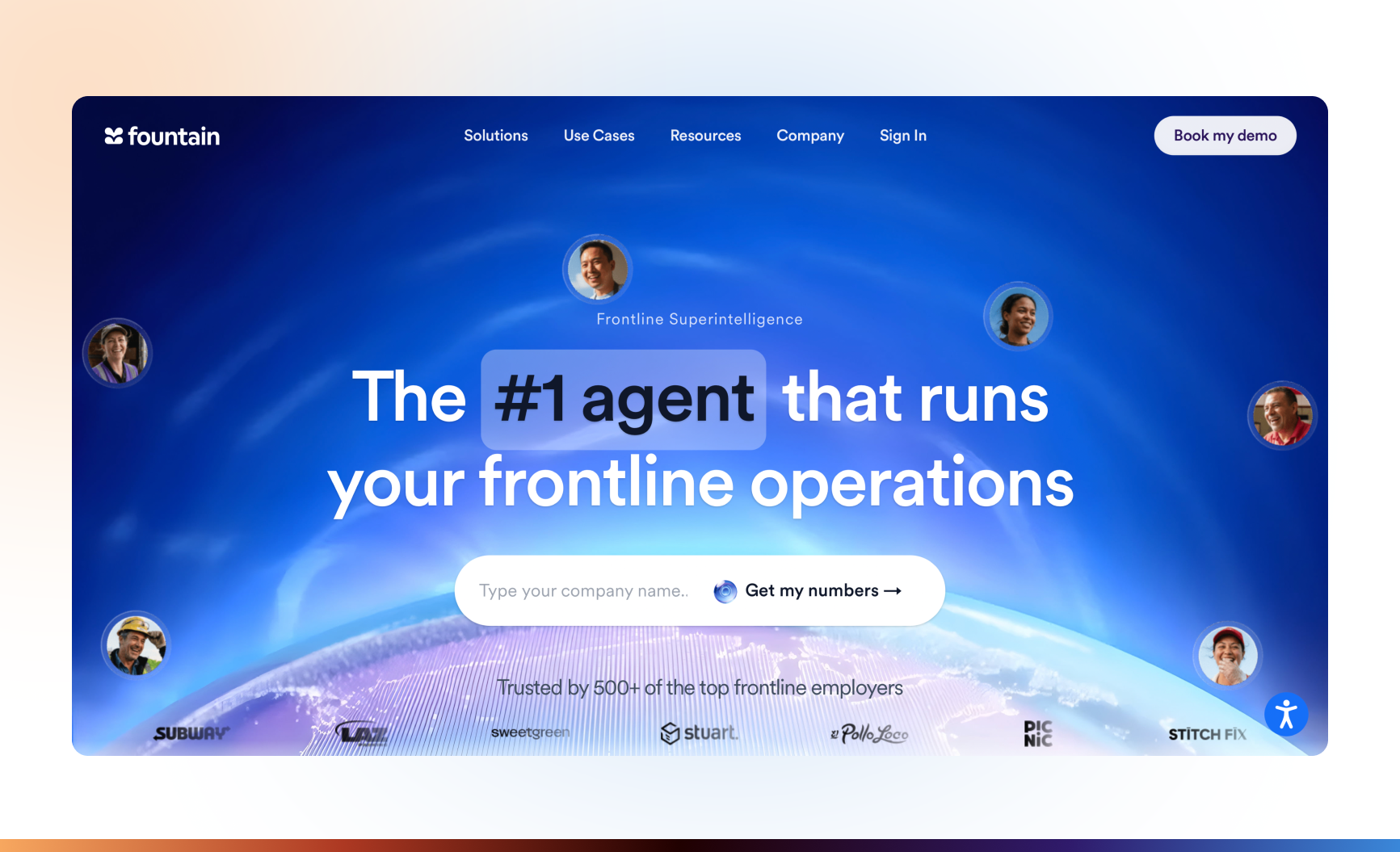
Fountain is a frontline hiring platform built for volume, covering sourcing through onboarding and shift scheduling. Its current generation runs on named agents — Cue orchestrating the workflow, with Anna, Emma, and Sam handling screening, candidate support, and first-day retention. It was recognized in the 2026 Gartner Magic Quadrant for Talent Acquisition Suites and is built for hiring hundreds of hourly workers across many sites.
Key features:
Best for: Large service networks and franchise operators running centralized, high-volume recruitment.
Pricing: No published rate card. Quote-based, scaled to volume, locations, and modules.
The best AI recruiting tools for auto shops separate mostly on scale and price floor. Match the row to your bay count and hiring frequency before comparing feature lists.
|
Name |
Main features |
Best for |
Pricing |
|
CogniAgent |
Conversational screening across SMS, voice, WhatsApp, and web; cert capture; mid-conversation booking; onboarding automation |
Independent and small multi-bay shops with no HR function |
Free to start (5,000 credits); top-ups from $10; Enterprise custom |
|
Workday Paradox (Olivia) |
SMS-native screening, self-scheduling, job distribution, conversational onboarding, ATS integration |
Large dealer groups and multi-location networks with a recruiting team |
Contact for a quote |
|
Hireology |
Automotive pre-screen surveys, job board distribution, credential tracking, background checks, referrals |
Multi-location shops and dealership service departments |
From approx. $249/month; Professional approx. $499/month |
|
Workstream |
Text-to-apply, voice AI screening, mobile onboarding, multi-location management, payroll |
Shop groups consolidating hiring, onboarding, and payroll |
Per-employee-per-month, quote only |
|
Fountain |
Agent-run screening, full-lifecycle hiring, automated messaging, compliance tooling |
Large service networks and franchise operators hiring at volume |
Quote-based, scaled to volume |
None of this requires a recruiting department to work. Applications still come in the same way they always have, whether that's a text, a job board listing, or someone walking in with a resume. What changes is what happens to them in the hours right after, when a reply used to wait for whoever had a free minute. Screening starts immediately instead, certifications get captured instead of assumed, and an interview gets booked before the candidate's moved on to another shop.
That is what AI recruiting agents for auto repair shops should deliver. Conversations that act as they go, across text and voice, and a screening record complete enough that your first real conversation is with someone you would have shortlisted anyway.
CogniAgent's Template Center includes a recruiting agent built for exactly this: screening, certification capture, and interview booking, ready to configure instead of built from scratch. Start free with 5,000 credits and adapt it to your shop's requirements, no card required.
Not against a live registry, because ASE does not publish one for automated lookup. Verification happens through the candidate's myASE certification status letter or by calling ASE. What AI hiring software for auto repair does is capture the ASE ID, request the document during screening, and track expiration dates, so the record is complete before you verify it.
Most AI hiring software for auto repair shops falls into three price bands. Self-serve platforms let a single shop start free and pay for usage, often tens of dollars a month. Mid-market ATS products with automotive workflows run roughly $250 to $500 per month. Enterprise platforms are quote-only.
Response comes down to channel and timing. Technicians answer texts and calls quickly and rarely open recruiting emails. An agent texting within minutes of an application usually gets a same-day reply.
Self-serve platforms can have a screening agent live in a few days, since setup means describing the role and its knockout criteria. ATS platforms typically take two to four weeks to configure job templates, career sites, and integrations. Enterprise systems commonly run four to six weeks or more.