Article Sep 07, 2026
 7 min read
6 Best AI Receptionists for Roofing Companies in 2026
Sep 07, 20267 min read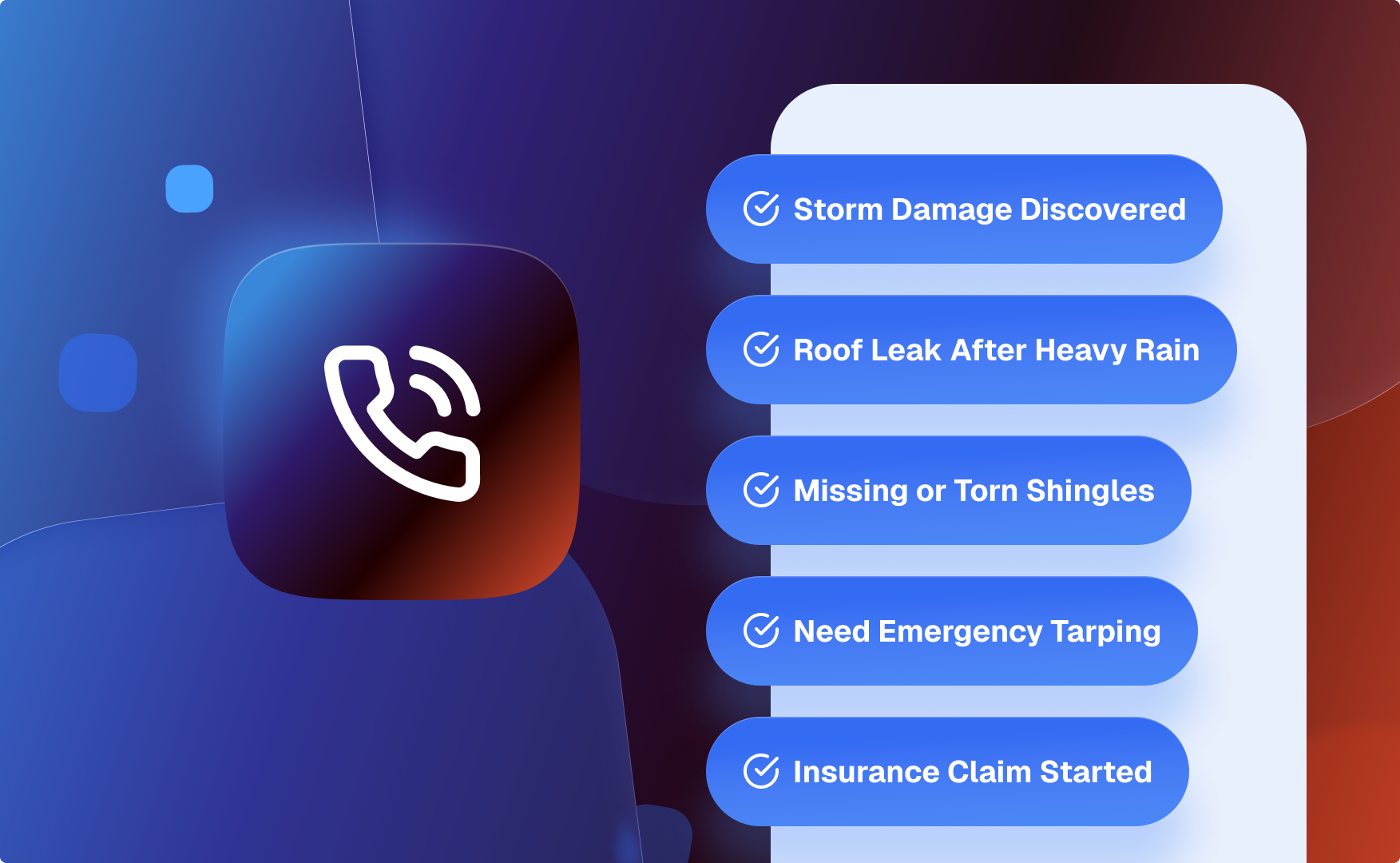 Sep 07, 20267 min read
Roofing has a call pattern unlike almost any other trade: dead calm most of the year, then absolute chaos for 72 hours after a hailstorm rolls through town. Industry estimates put roofing call volume spikes at 300-500% in the days after severe weather, and if your office can only physically answer so many phones at once, you are mathematically guaranteed to lose leads to whichever competitor's system doesn't run out of hands. That's the exact scenario AI receptionists were built for, and by 2026 several platforms have built roofing-specific playbooks — recognizing storm damage language, capturing insurance claim details, and triaging active leaks as emergencies — instead of treating a roofer like a generic contractor.
Here are six worth putting on your shortlist.
Roofing sales also work a little differently than most home services, which matters when you're judging these tools. A roof replacement is a big-ticket, considered purchase — homeowners are usually comparing multiple quotes, sometimes coordinating with insurance adjusters, and rarely booking on the first call. That means the "after the call" behavior of an AI receptionist matters just as much as how it handles the initial inbound ring. Does it just capture the lead and move on, or does it keep the conversation warm with follow-up texts while the homeowner is still deciding between contractors? For roofing specifically, that follow-through is often the difference between winning and losing the job.
Insurance is the other wrinkle unique to this trade. A meaningful share of roofing jobs get paid through a homeowner's insurance claim rather than out of pocket, which means the intake conversation often needs to capture claim numbers, adjuster contact information, and damage documentation alongside the usual scheduling details. Generic AI receptionists built for, say, a landscaping business simply aren't trained to ask about any of that, which is exactly why roofing-aware qualifying questions end up mattering more here than in almost any other trade on this list.
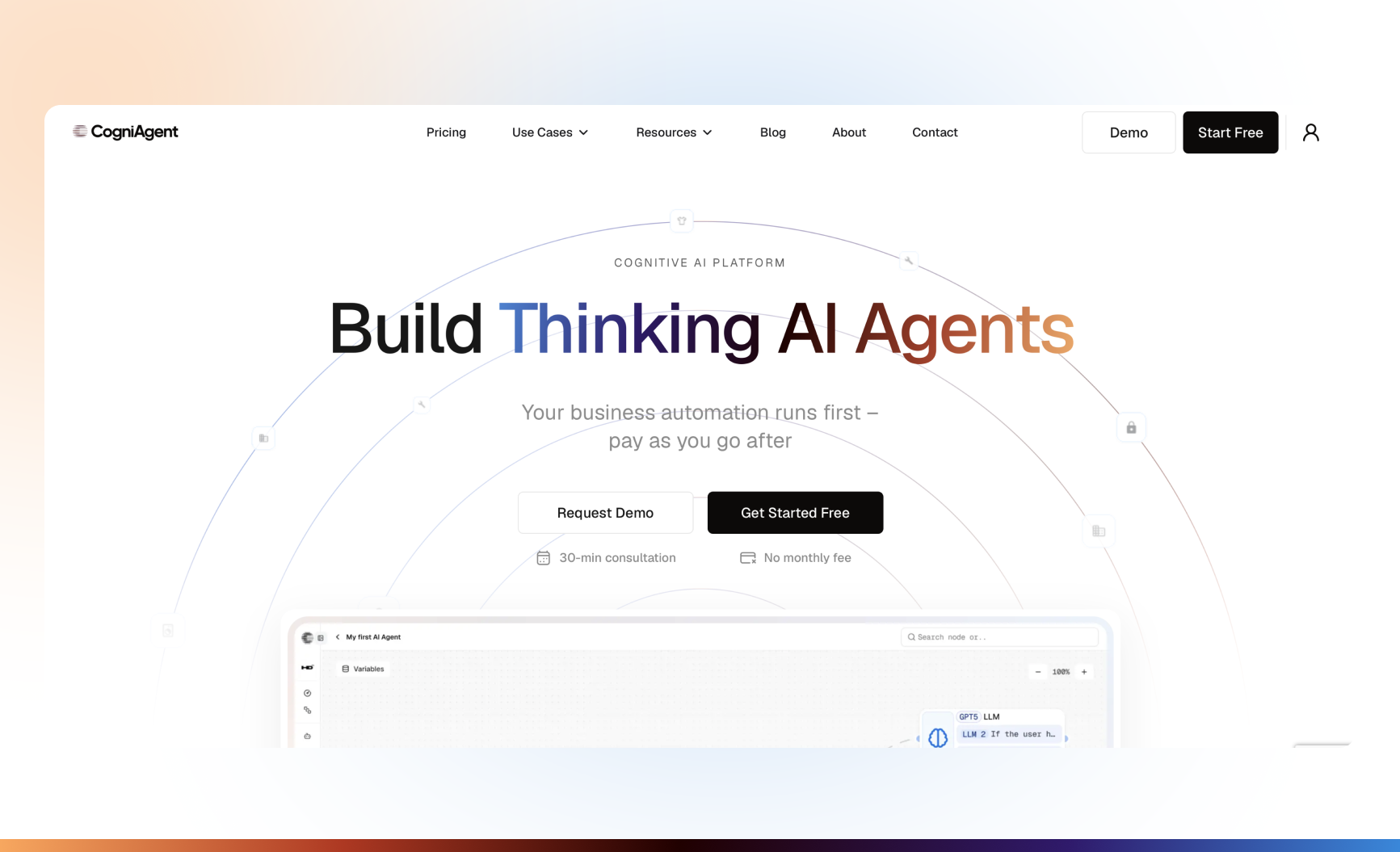
CogniAgent handles roofing calls the same way it handles every trade it serves: with a single agent that qualifies the lead, checks fit and service area, books the inspection directly on your live calendar, and then runs automated follow-up on day one, three, and seven if the homeowner doesn't confirm right away — across phone, SMS, WhatsApp, and web chat, with one consistent conversation regardless of channel.
That consistency matters enormously during a storm surge, when a homeowner might text a photo of damage on their phone while also calling from a landline, and you need the system to recognize it's the same person either way. It connects to roofing-relevant tools through its 2,700+ integrations (including ServiceTitan, HubSpot, and Google Calendar), and the home services agent overview walks through how the same underlying platform adapts across trades like roofing, HVAC, and plumbing.
Pricing is pay-as-you-go with no monthly minimum — see the pricing page — which is a genuinely good fit for a business whose call volume is naturally spiky rather than steady.
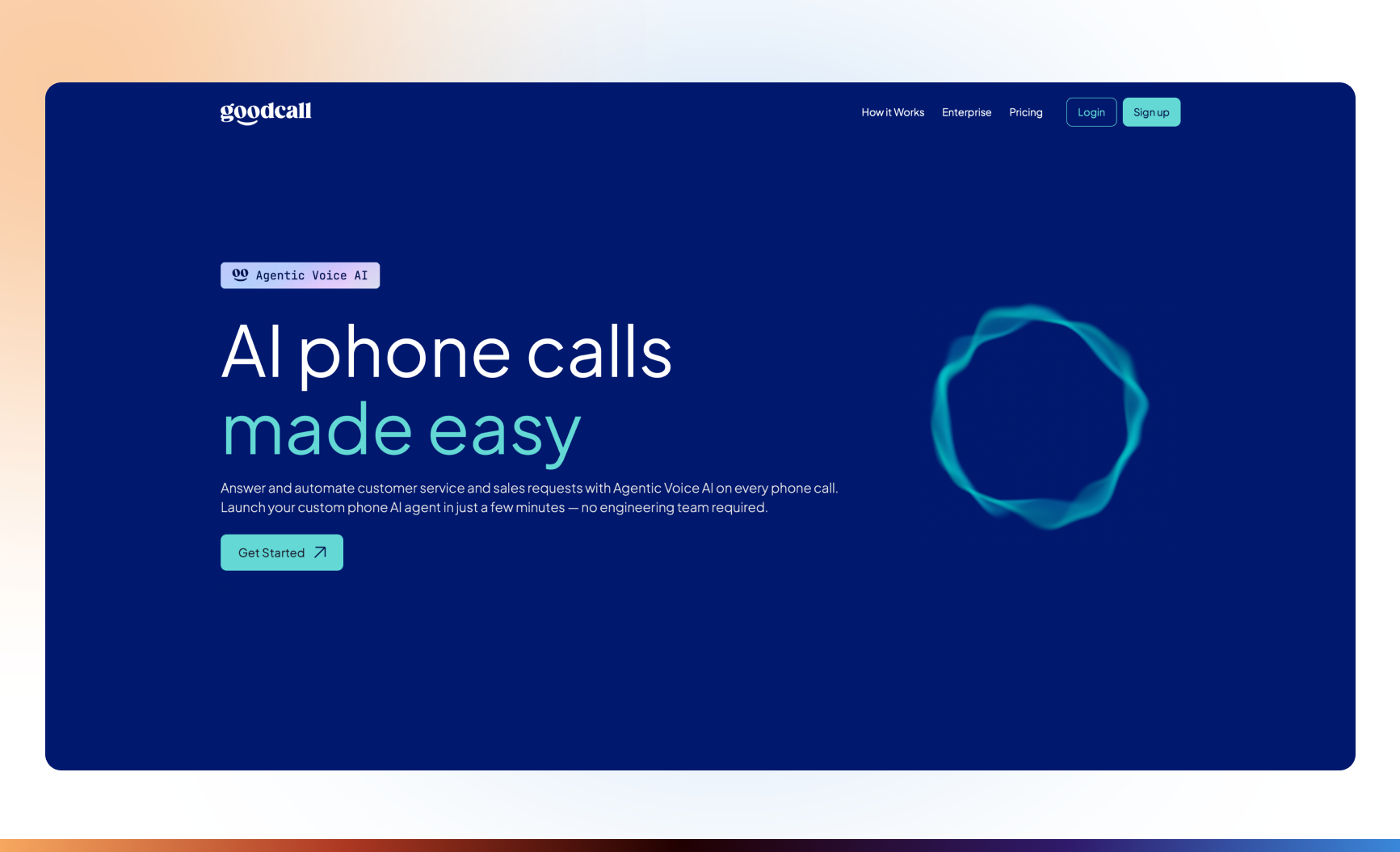
Goodcall built a roofing-specific answering service, and it shows in the details: it asks about roof age, damage type, square footage, and insurance status before a call ever reaches a human, and it's explicitly designed to handle "storm surge" volume without dropped calls or hold times.
It cites a genuinely useful stat — that 62% of roofing calls go unanswered industry-wide, at a cost estimated around $120,000 a year in lost business — and syncs directly with roofing CRMs like JobNimbus and AccuLynx as well as ServiceTitan. If your business lives and dies by storm response, this is one of the more purpose-built options available.
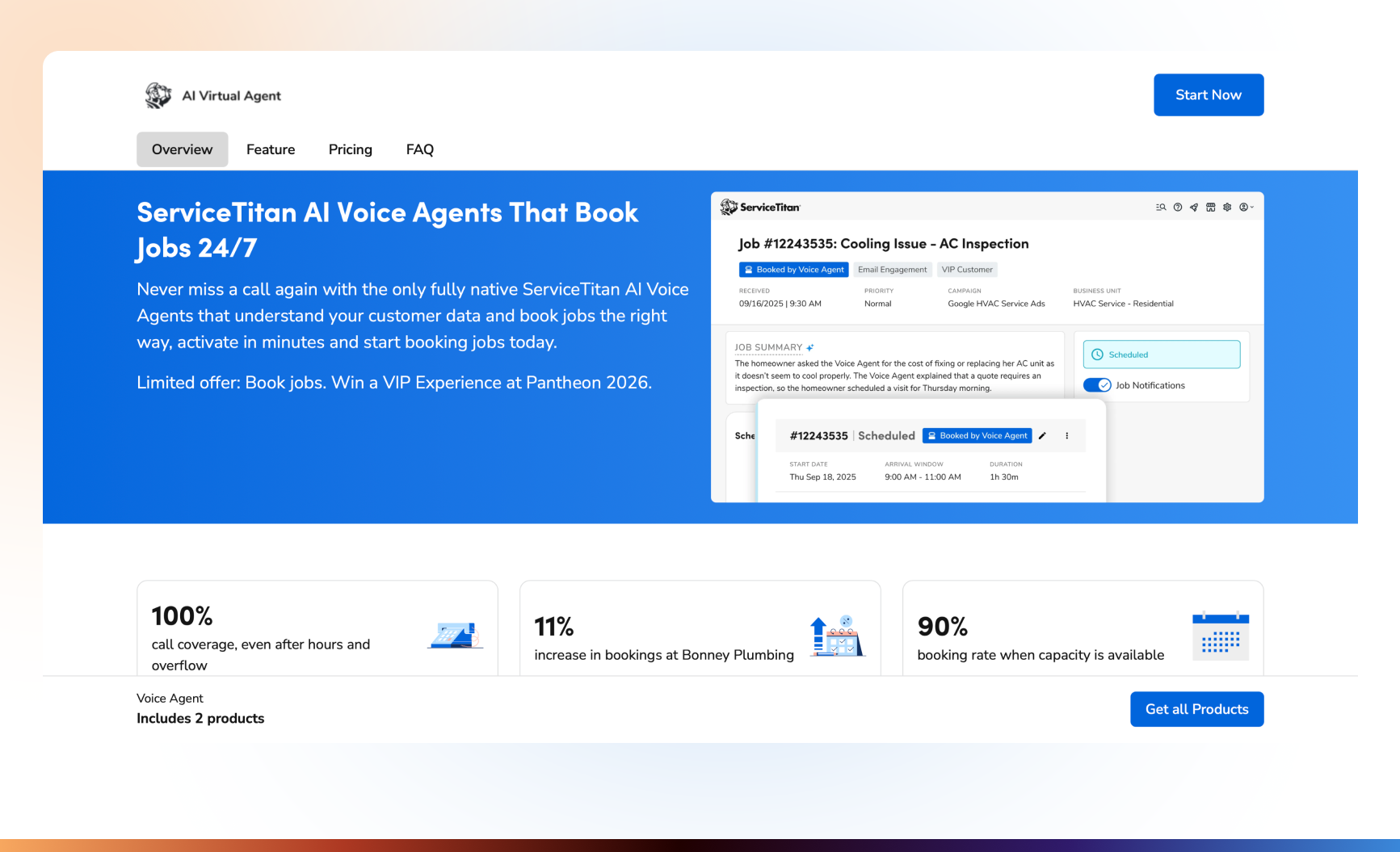
ServiceTitan's Phones Pro explicitly lists roofing among its target trades, and for larger roofing operations already running ServiceTitan for job management, that native integration is hard to beat — calls link straight to job records, get transcribed and sentiment-scored, and unbooked calls get automatically flagged for a follow-up call through "Second Chance Leads."
It's built more as an AI co-pilot for an existing call center team than a full replacement for one, which is the right fit if you already employ CSRs and want to make them faster and more consistent during a storm rush.
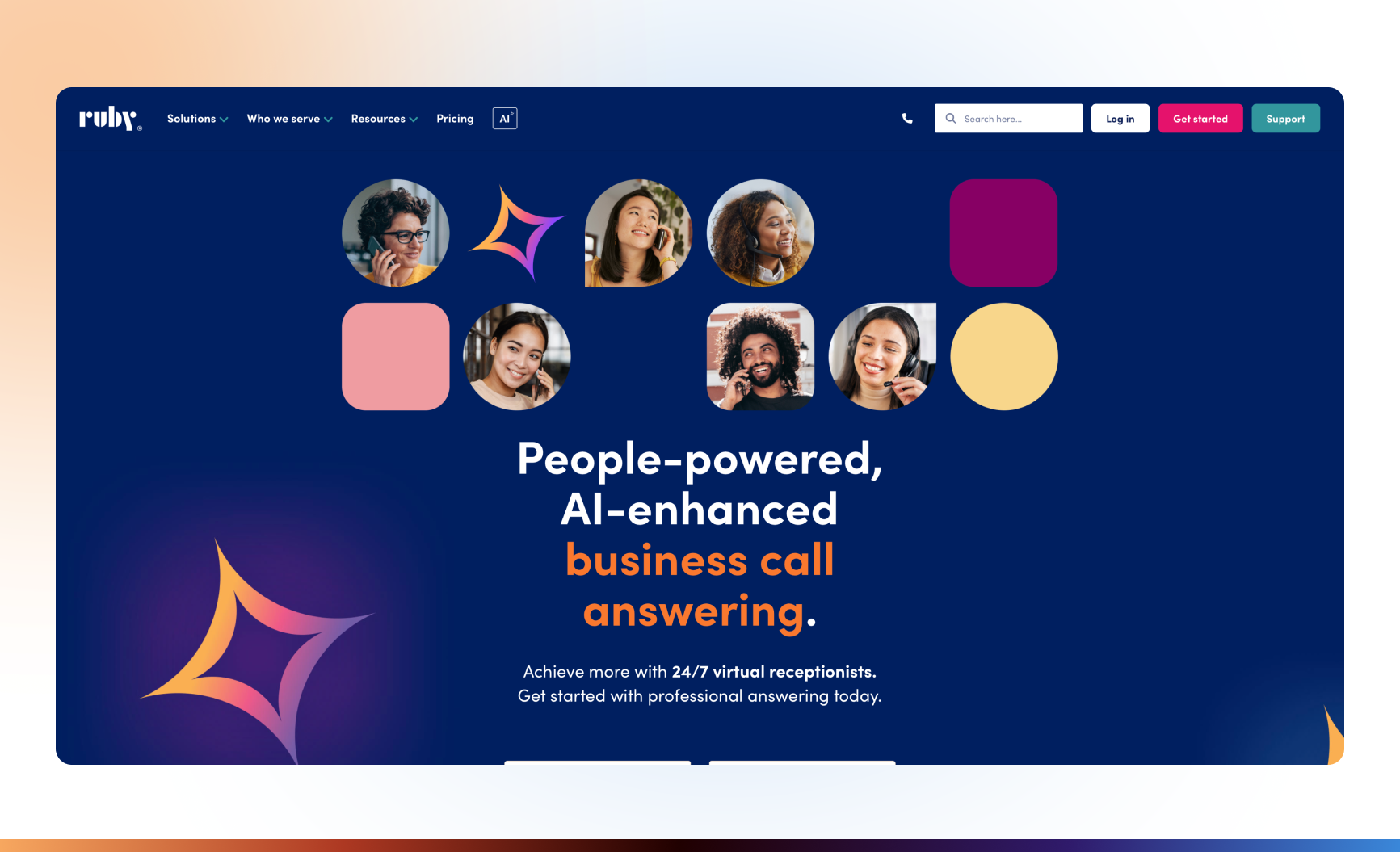
Ruby names roofers directly in its list of core home-services customers, offering live, trained human receptionists with AI-powered transcription, sentiment analysis, and heavy spam/robocall filtering running underneath.
For a roofing company that wants the reassurance of an actual person answering every call (especially with anxious homeowners dealing with storm damage) Ruby's "people-powered, AI-enhanced" model is a legitimate, well-tested option with two decades of receptionist experience behind it.
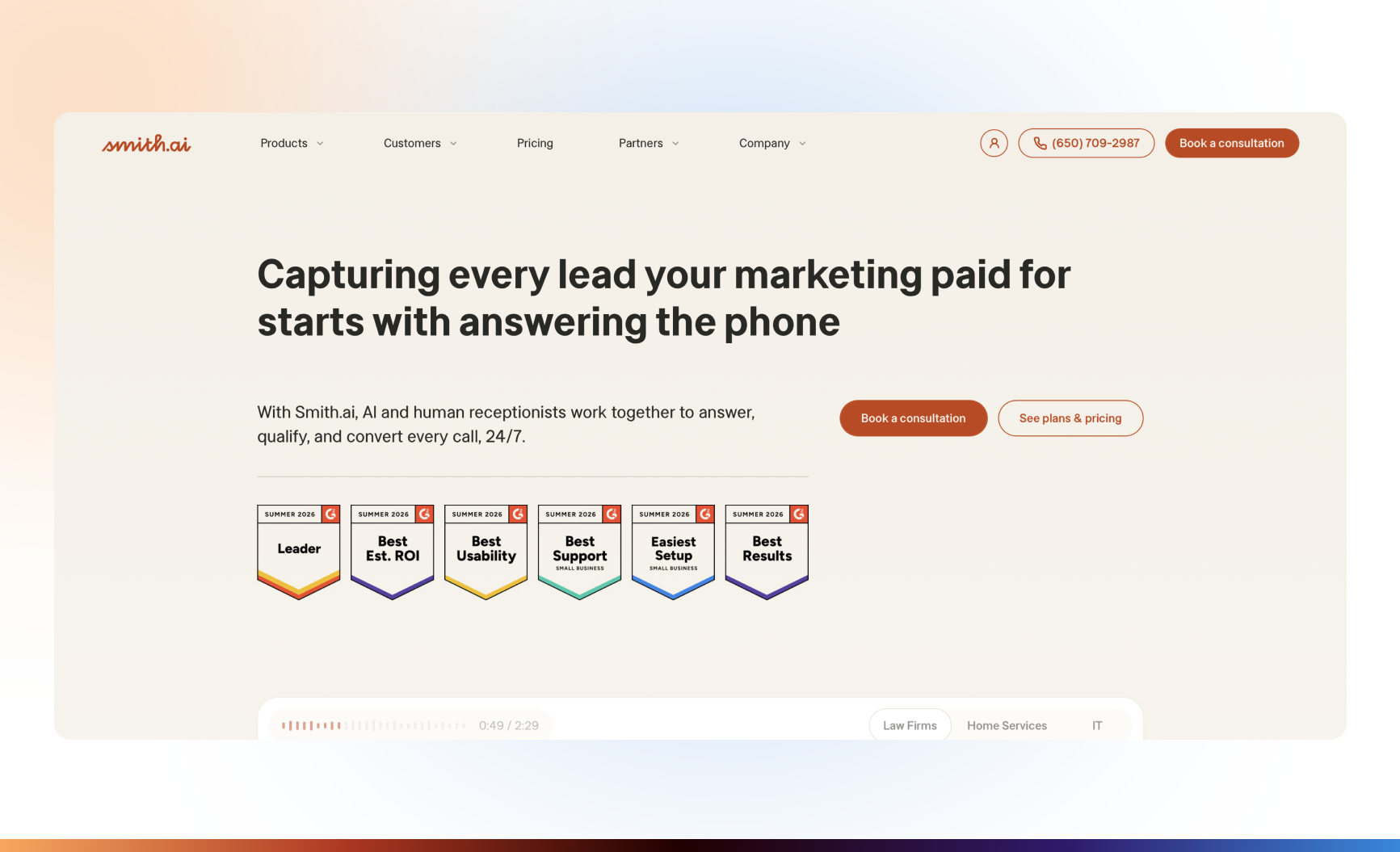
Smith.ai's AI-first, human-when-it-matters model works well for roofing because storm-damage conversations can get emotionally charged fast, and having a live agent one step away for anything the AI can't confidently handle reduces the risk of a bad customer experience during your highest-stakes calls of the year.
It also integrates directly with ServiceTitan and Housecall Pro if either is already part of your stack.
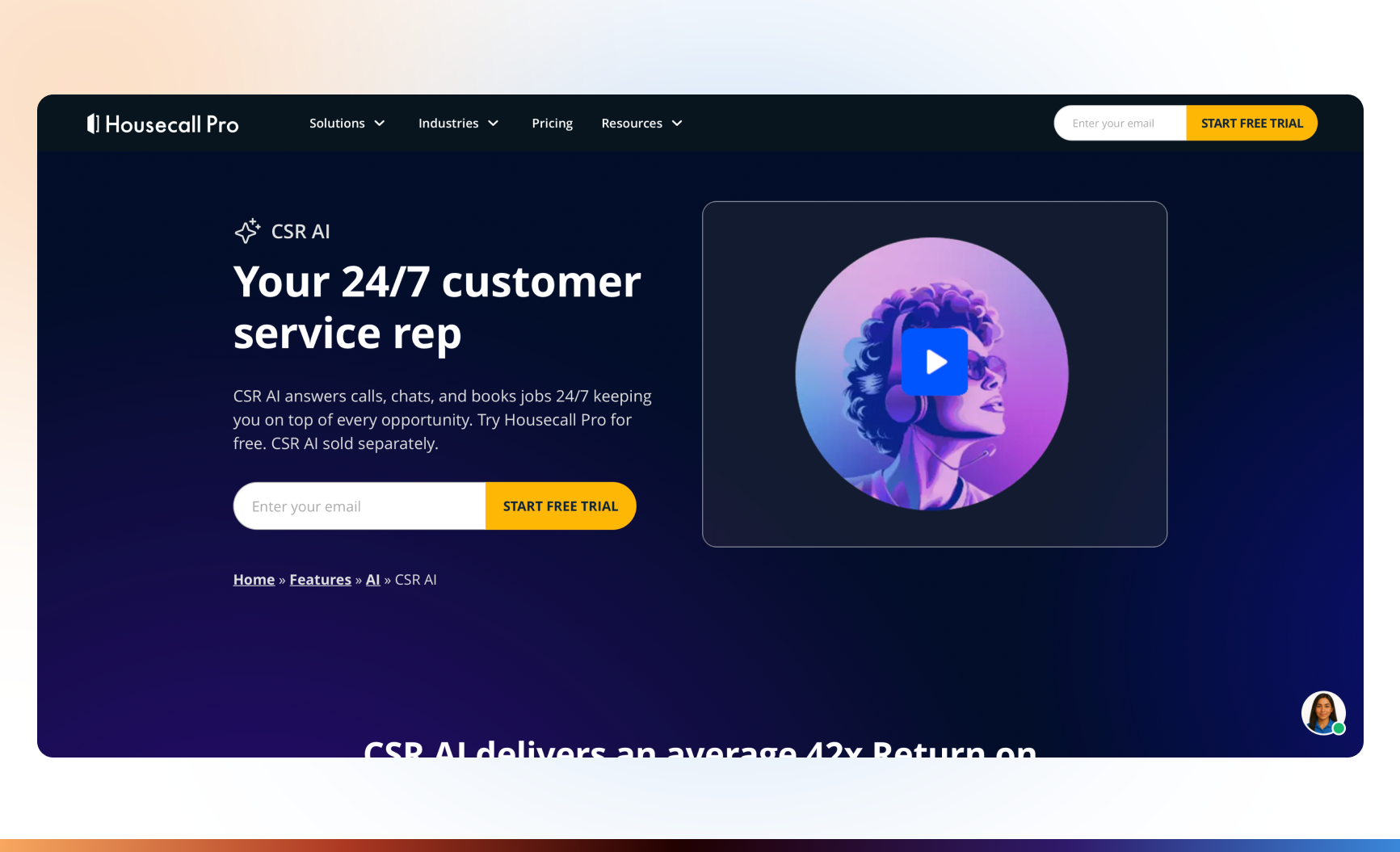
CSR AI is worth a mention for smaller-to-mid-size roofing companies already using Housecall Pro to manage jobs, since it books inspections directly onto your existing calendar using real pricing and availability data rather than operating as a disconnected add-on. It's not roofing-specific, but the native integration with a platform many smaller roofers already run makes it a low-friction option, though roofers running a different CRM may find less value here than the more roofing-specific options above.
A quick reality check across all six: roofing lead quality varies wildly by source, and a smart AI receptionist should be helping you sort the tire-kickers from the real jobs, not just booking every inspection request regardless of fit. Insurance-driven storm leads, for instance, often need different qualifying questions than a homeowner voluntarily replacing an aging roof — one is racing an insurance deadline, the other is comparison shopping on their own timeline.
Whichever tool you choose, spend real time during setup teaching it the qualifying questions that actually matter for your business, rather than accepting the generic default script. That configuration step is usually where the gap between "fine" and "genuinely useful" gets decided.
Roofing is arguably the clearest argument for AI receptionists of any trade on this list, because the ROI math isn't theoretical — it's a predictable, seasonal event with a documented dollar cost attached to every missed call. The tools that actually earn their keep here are the ones that don't buckle under a 300-500% spike in call volume and that can distinguish a routine inspection request from an active leak needing same-day attention. It's also where the "one platform" argument gets concrete: during a storm rush, you don't want your voice AI, your text-back tool, and your CRM to be three separate vendors that each need separate configuration before the next hailstorm hits. CogniAgent's model of running conversational AI, autonomous follow-up, and workflow automation together is built exactly for that kind of unpredictable, bursty demand.
One more thing worth thinking about: storm response isn't just about speed, it's about capacity that scales without hiring. A roofing company doesn't want to staff up its office for a once-a-year, three-day surge and then pay those wages the other 362 days. That's precisely the math that makes pay-as-you-go AI options attractive for this trade specifically — you're not paying for standby headcount during the quiet months, but the system still scales instantly the moment a storm rolls through and the phones light up. Whatever you choose, ask directly how the vendor prices for sudden volume spikes, since that's the scenario roofing companies actually need solved, not the average Tuesday in March.
And don't overlook the quieter months when you're evaluating. A tool that only shines during a storm rush but feels clunky the rest of the year isn't actually a good fit — you still need it to book routine inspections, gutter jobs, and small repairs cleanly in February when the sky is calm. The best roofing AI receptionists on this list are the ones built to handle both extremes well, not just the dramatic one that makes for a good sales pitch.