Article Updated Sep 05, 2026
 6 min read
The 7 Best AI Receptionists in 2026 (Tested & Compared)
Updated Sep 05, 20266 min read Updated Sep 05, 20266 min read
Picture this: it's 9:47 PM on a Tuesday, and your phone rings. You're elbow-deep in dinner, your kid needs help with math homework, and the last thing you want to do is talk shop. But that call? It's a potential customer who found you on Google, has a real need, and is currently deciding between you and the three other businesses they also just called. If nobody picks up, they move to the next name on the list. That's the entire reason AI receptionists exist now, and by 2026 they've gone from "interesting experiment" to "the thing every serious small business owner is quietly setting up in the background."
I've spent a lot of time poking around this space (reading through product pages, watching demo videos, comparing pricing pages side by side), and the honest truth is that "AI receptionist" now covers a pretty wide spectrum. Some are glorified voicemail with a nicer voice. Others are genuinely capable of holding a conversation, checking your calendar, and booking a job while you're still asleep. Here are seven that are actually worth your attention right now, including where each one shines and where it doesn't.
Before we get into the list, it's worth being clear about what actually separates a good AI receptionist from a bad one, because the marketing pages tend to blur together. The weak version of this technology answers a call, writes down a message, and emails it to you — which is marginally better than voicemail, but not by much. The strong version actually understands intent, checks a real calendar, books the appointment or transfers the call appropriately, and then keeps working the lead afterward with follow-up texts or emails if the person doesn't confirm right away. That second version is the one that actually moves revenue, and it's the bar every tool below is measured against.
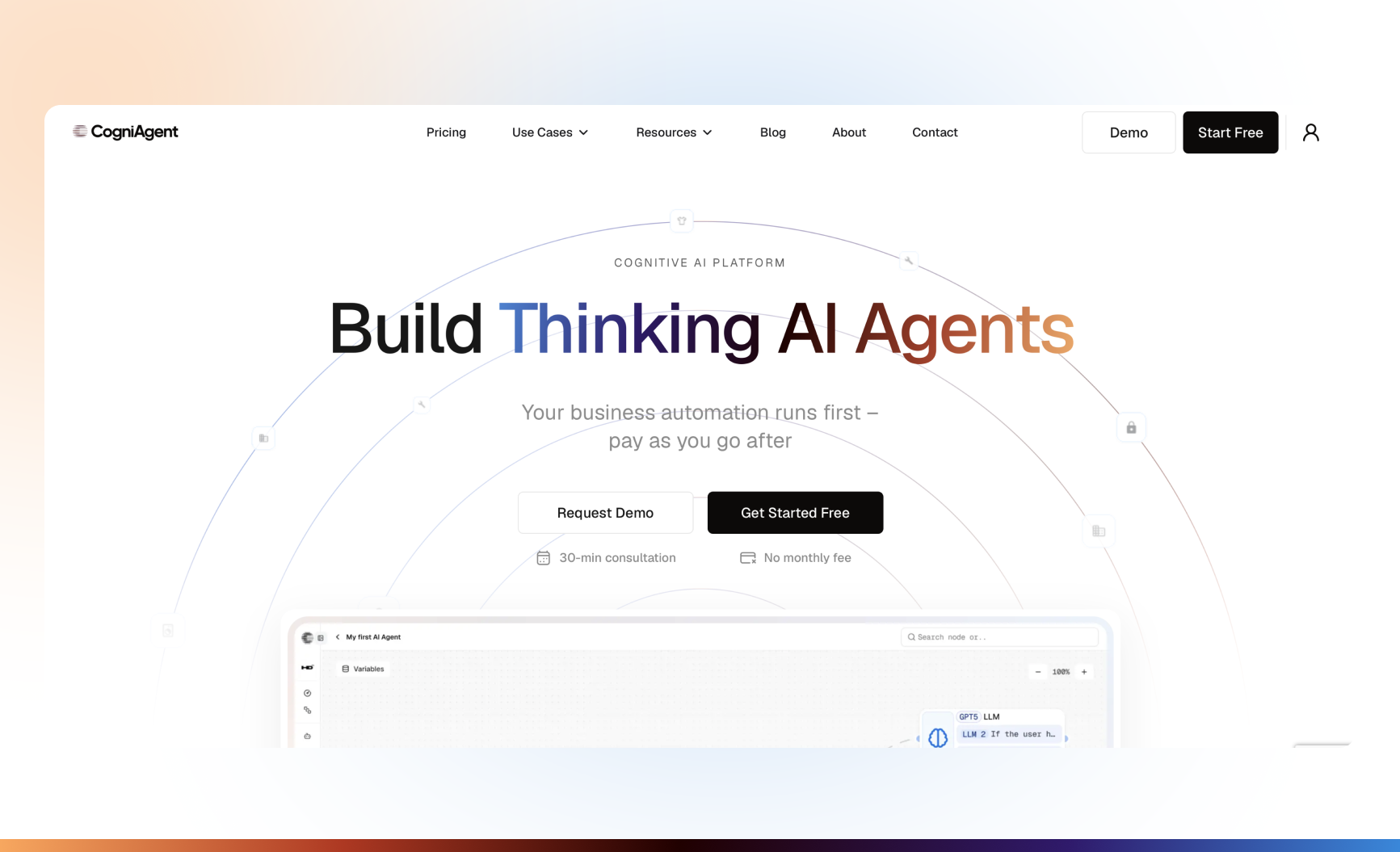
CogniAgent is the one I keep coming back to because it doesn't try to be just a phone-answering bot. Most "AI receptionists" are built around one channel — usually voice — and everything else is bolted on. CogniAgent flips that: it's built as one AI agent platform where conversational AI (the part that talks to your customers on the phone, in SMS, on WhatsApp, or in web chat), autonomous AI agents (the part that goes and does things in the background, like chasing a follow-up sequence for three days straight without anyone prompting it), and business workflow automation (the part that actually writes the appointment into your calendar and updates your CRM) all live on one canvas instead of three different subscriptions duct-taped together.
In practice, that means when someone calls after hours, CogniAgent doesn't just take a message — it asks qualifying questions, checks your live calendar, books the appointment if it fits, sends a confirmation text, and then follows up on day one, three, and seven if the lead goes cold, all without a human touching it. It plugs into more than 2,700 tools (Jobber, HubSpot, Salesforce, Google Calendar, Stripe, and so on), and pricing is refreshingly simple: pay-as-you-go with no monthly minimum, starting with 5,000 free credits, or a custom enterprise plan if you need SSO and dedicated support. Check the pricing page for the current breakdown. If you want the single most "does everything, not just phones" option on this list, this is it.
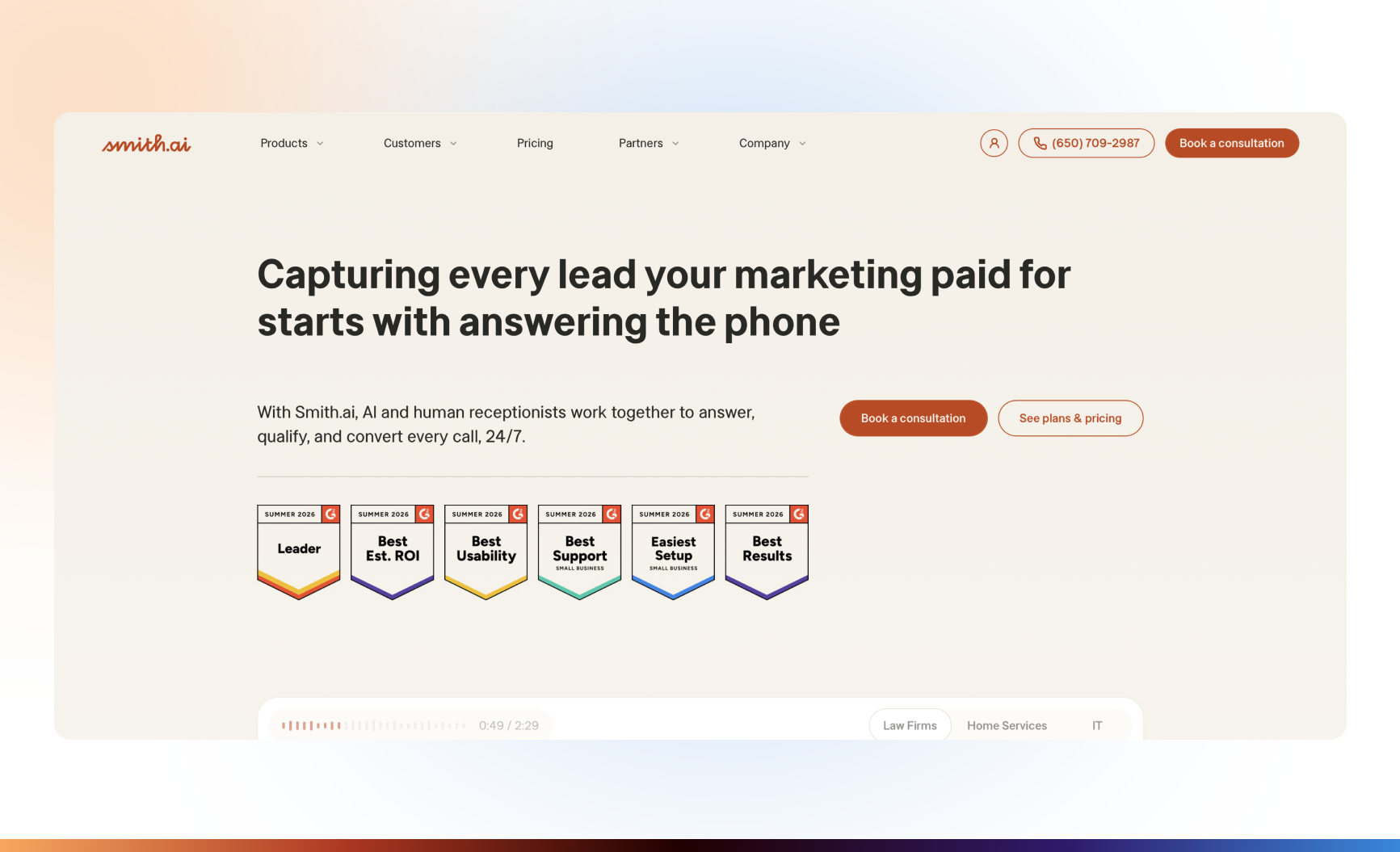
Smith.ai takes a hybrid approach that a lot of businesses find reassuring: AI-first call handling, backed by a bench of 500+ live North American agents who step in when things get complicated. Roughly a quarter of their AI-handled calls currently get escalated to a human, which tells you they're being honest about where the technology's limits still are.
Smith.ai is especially strong for law firms (about 80% of their client base), but they've built out solid workflows for home services and healthcare too, with real-time CRM syncing across 7,000+ tools. The tradeoff is that you're paying partly for human labor, so it's not going to be the cheapest option on this list — but if "never let a human-sounding voice fail us" matters more than cost, it's a smart pick.
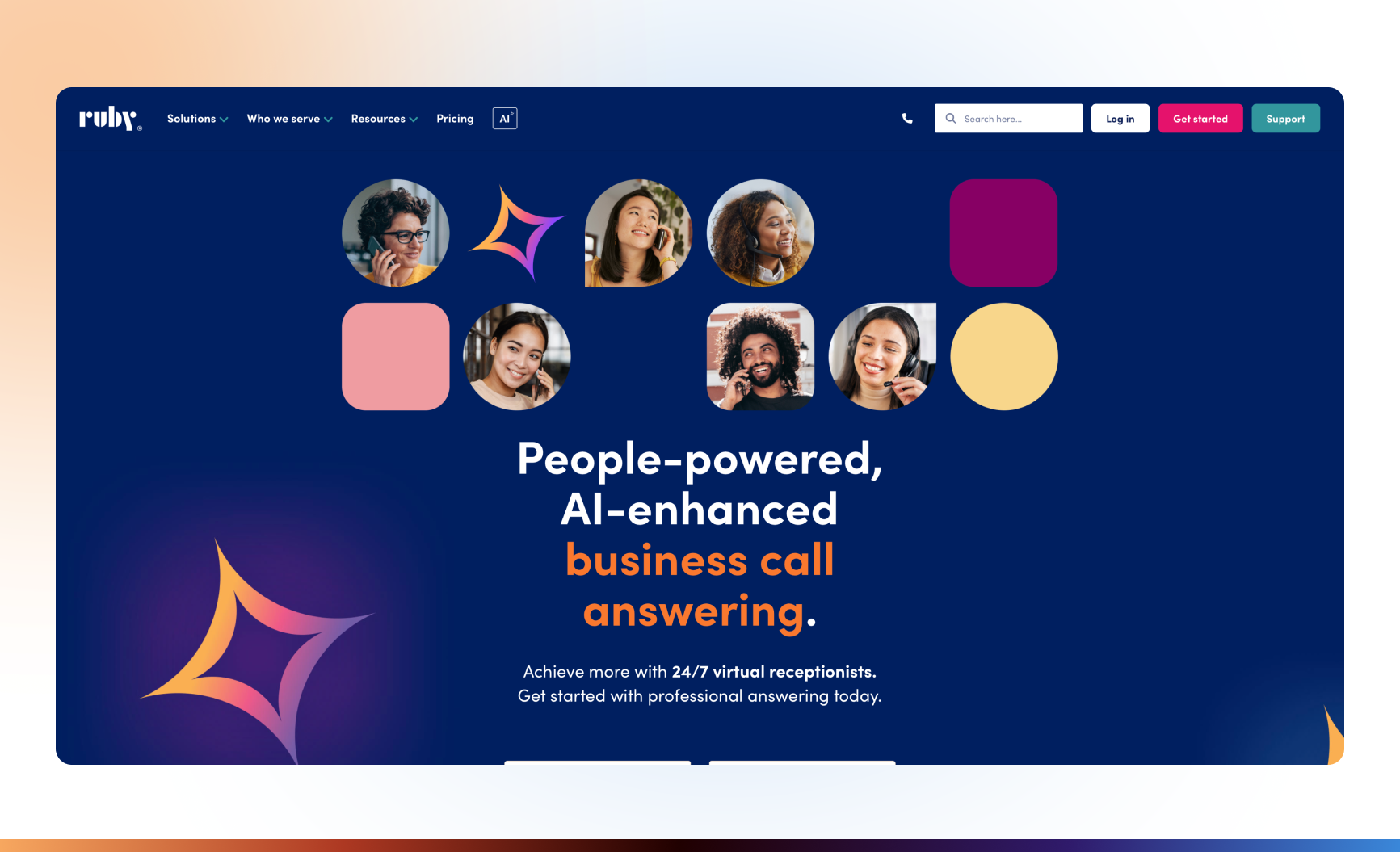
Ruby has been in the virtual receptionist business for over two decades and describes itself as "people-powered, AI-enhanced" — meaning real humans do the talking, with AI handling the transcription, sentiment analysis, and spam filtering behind the scenes.
They serve over 15,000 businesses, including a meaningful chunk of home service contractors (roofers, plumbers, HVAC), plus law firms and healthcare providers who need HIPAA-compliant handling. If the idea of a fully autonomous AI voice still makes you a little nervous, Ruby is the comfortable middle ground.
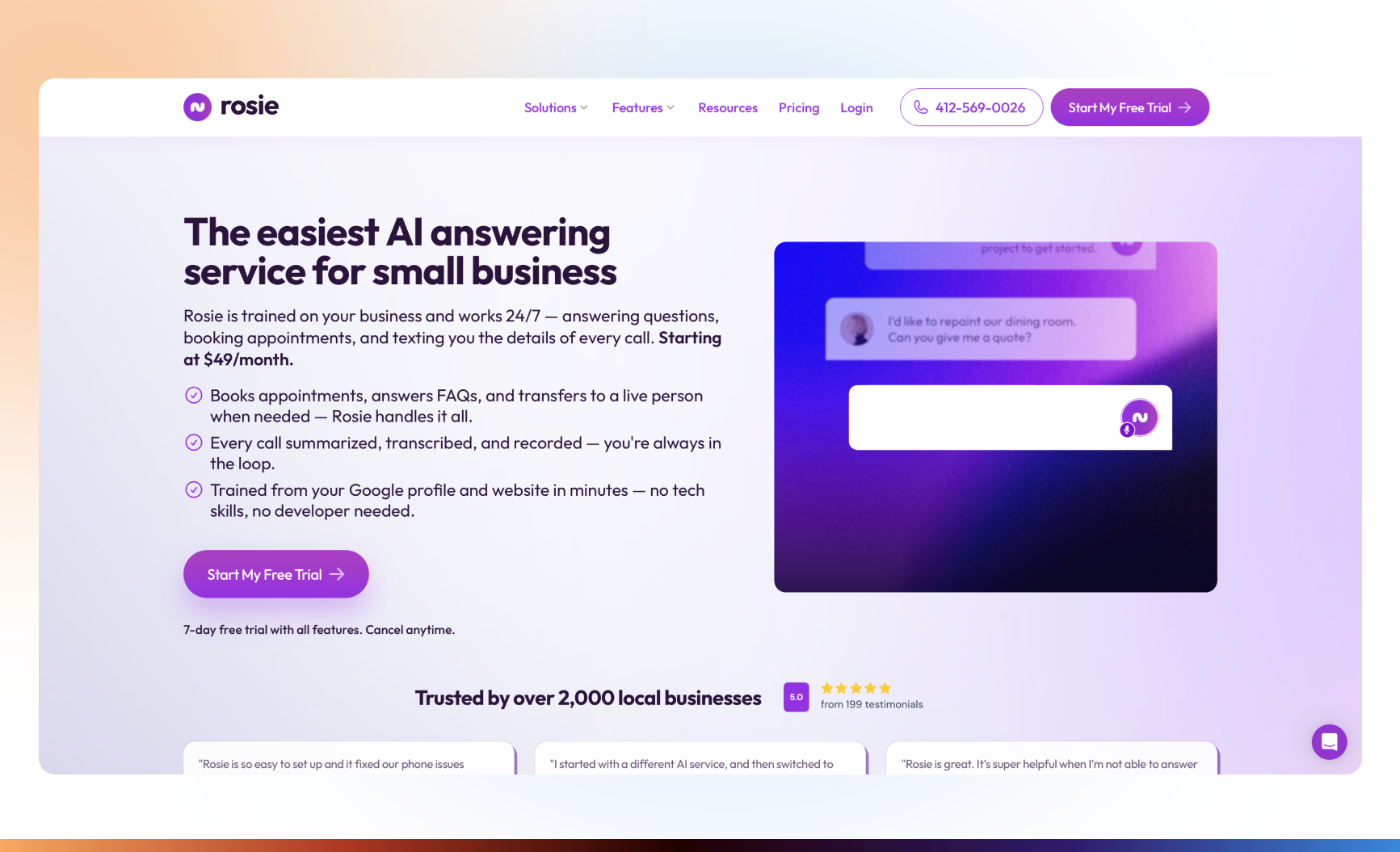
Rosie was built specifically with small, local service businesses in mind, and it shows in how fast you can get it running — it trains itself off your Google Business Profile and website, and you're live same-day. It answers calls, filters spam, takes detailed messages, books appointments, and even does warm or cold transfers to your team.
Pricing is transparent and tiered ($49 to $299/month depending on minutes and features), which is a nice change from the "book a demo to find out" pattern most of this industry still uses. It's a genuinely good budget-to-mid-tier option, especially if you just need reliable call answering without a lot of platform complexity.
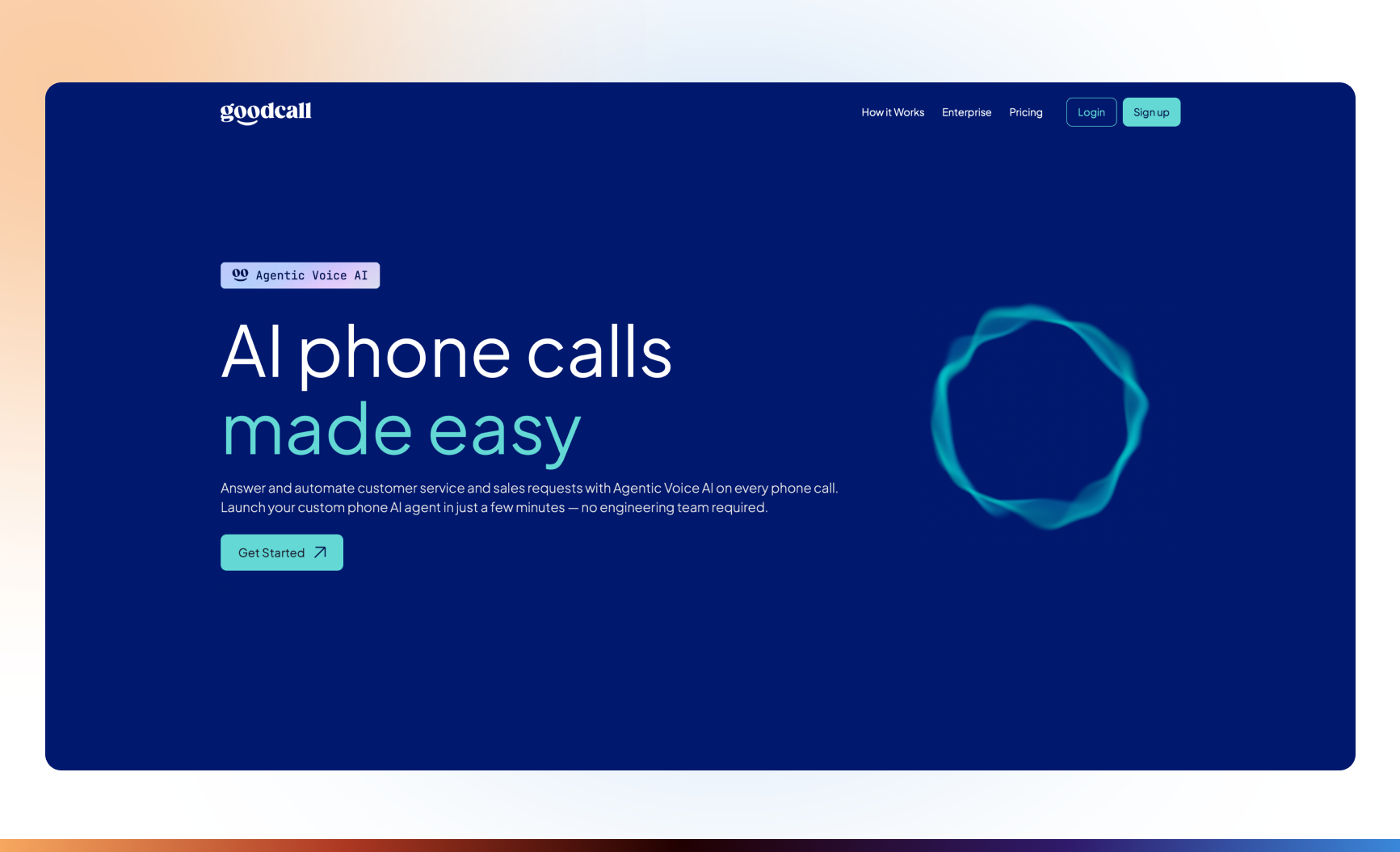
Goodcall grew out of a team with Google roots, and it leans hard into being fast to deploy — you can have a working agent live in minutes. It's handled over 60 million voice interactions across 50,000+ agents, and it's SOC2, ISO27001, and HIPAA compliant, which matters if you're in a regulated space.
Where Goodcall stands out is analytics: you get real visibility into automation rates, call outcomes, and caller behavior, which makes it a strong choice if you're the type of business owner who wants to see the numbers, not just trust that "it's working."
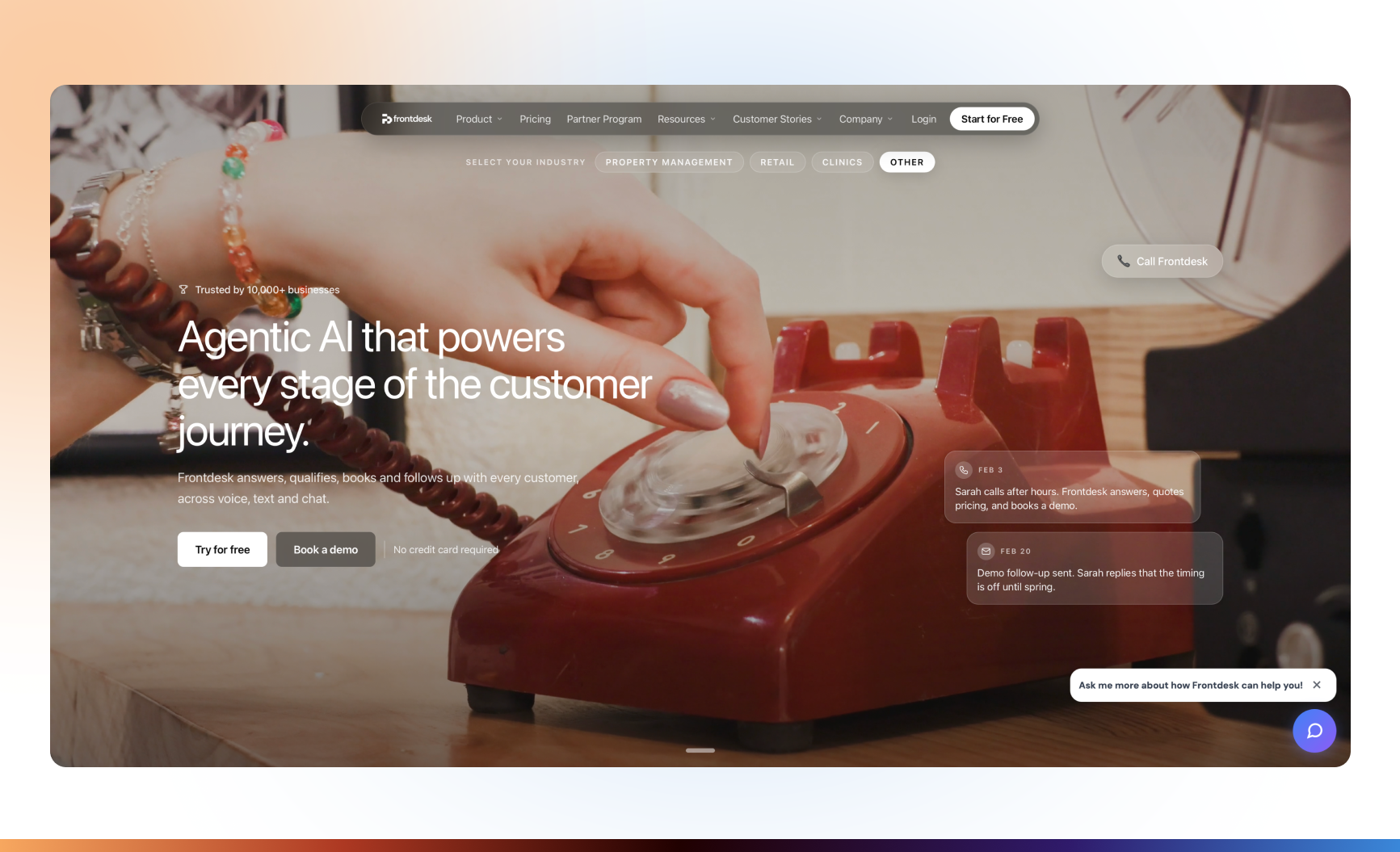
MyAIFrontDesk is built around what they call a "unified memory" — one AI brain that remembers a customer whether they called, texted, emailed, or used the web chatbot last time. That continuity is genuinely useful for service businesses where the same person might message on Tuesday and call on Thursday. It's also one of the more affordable entry points here, with plans starting at $16/month and a popular $79/month tier that covers voice, chat, and SMS. Setup is fast (they claim under five minutes), which makes it a solid option if you want to test the AI-receptionist waters without a big commitment.
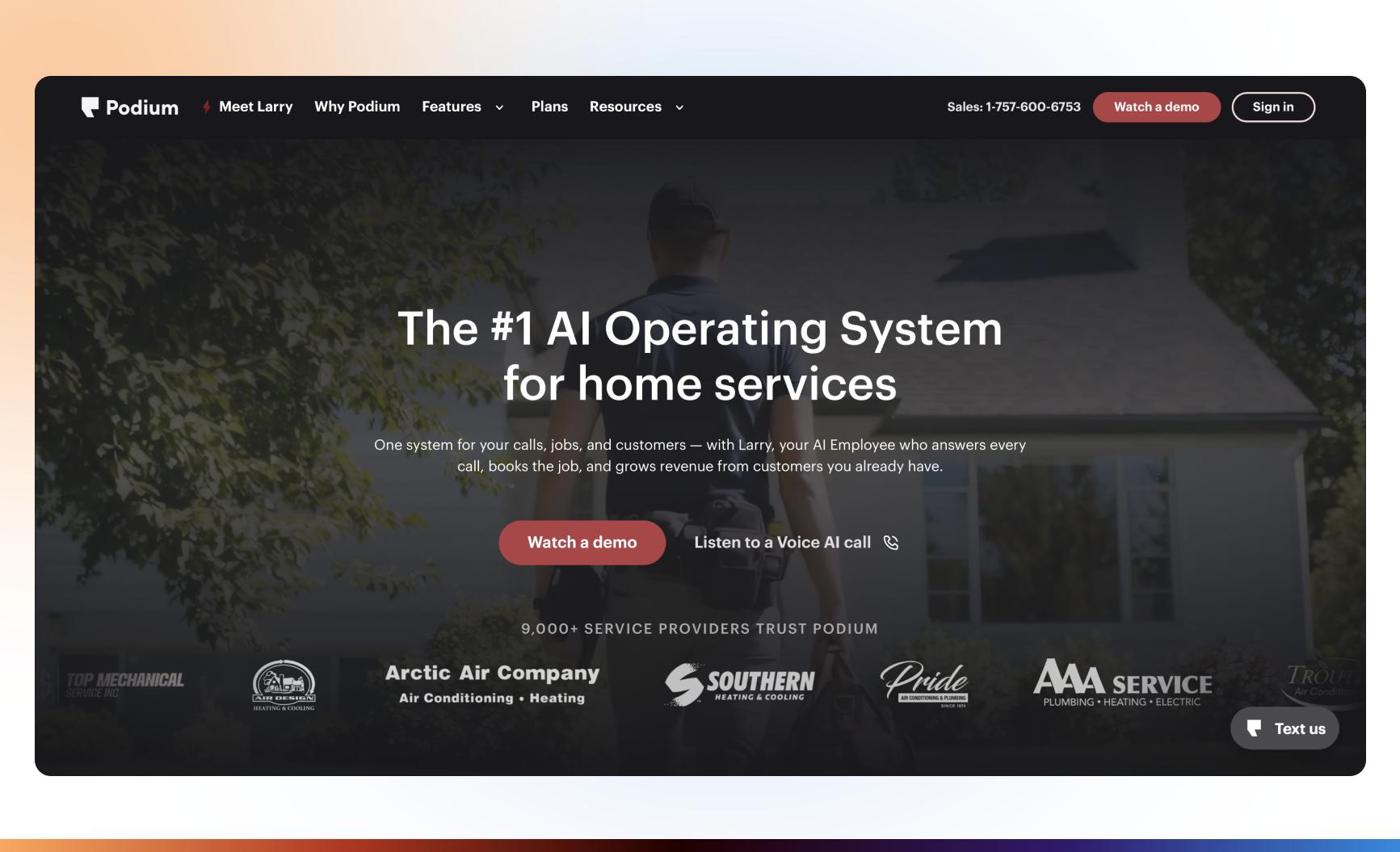
Podium's "Larry" deserves a spot here because of how deep the booking integration goes. Larry doesn't just take a message — he has direct access to the dispatch board, price book, technician availability, and customer history, and finishes the booking himself rather than handing off a lead for a human to schedule later.
It's most tailored to HVAC, plumbing, and electrical businesses that already run on a field service management tool, and case studies cite real revenue recovery numbers. It's a narrower tool than some others on this list, but if booking depth is your priority, it's worth a serious look.
|
Platform |
Best For |
Channels |
AI vs. Human |
Pricing Model |
Key Differentiator |
|---|---|---|---|---|---|
|
CogniAgent |
Businesses wanting one system to handle the full lead lifecycle, not just the call |
Voice, SMS, WhatsApp, web chat |
Fully autonomous AI |
Pay-as-you-go, no monthly minimum; 5,000 free credits; custom enterprise (SSO, dedicated support) |
Combines conversational AI, autonomous follow-up agents, and workflow/CRM automation on one canvas; 2,700+ tool integrations |
|
Smith.ai |
Law firms (~80% of client base), plus home services and healthcare |
Phone (AI-first, human backup) |
Hybrid — AI handles calls, ~25% escalate to live agents |
Not disclosed (pricing partly reflects live-agent labor) |
500+ live North American agents as a safety net; CRM sync across 7,000+ tools |
|
Ruby |
Home service contractors, law firms, HIPAA-sensitive healthcare providers |
Phone |
Human-first, "AI-enhanced" (transcription, sentiment analysis, spam filtering) |
Not disclosed |
20+ years in virtual receptionists; serves 15,000+ businesses; most reassuring option for buyers wary of fully autonomous AI |
|
Rosie (HeyRosie) |
Small, local service businesses wanting fast setup |
Phone |
Fully autonomous AI, with warm/cold transfer to staff |
$49–$299/month, tiered by minutes/features |
Trains itself off your Google Business Profile and website; live same-day; transparent published pricing |
|
Goodcall |
Businesses in regulated spaces needing compliance + analytics |
Phone (voice) |
Fully autonomous AI |
Not disclosed (deployable "in minutes") |
SOC2, ISO27001, HIPAA compliant; 60M+ voice interactions across 50,000+ agents; strong reporting on automation rates and call outcomes |
|
MyAIFrontDesk |
Budget-conscious small businesses wanting cross-channel continuity |
Voice, chat, SMS |
Fully autonomous AI |
$16/month entry tier; $79/month popular tier |
"Unified memory" — one AI remembers a customer across call, text, email, and web chat; setup claimed under 5 minutes |
|
Podium (Larry) |
HVAC, plumbing, electrical businesses already on a field service management tool |
Phone |
Fully autonomous AI |
Not disclosed |
Direct access to dispatch board, price book, tech availability, and customer history — completes the booking itself rather than handing off a lead |
Here's the thing nobody tells you upfront: most of these tools are good at answering the phone. The real difference shows up after the call ends. Does the tool just log a message, or does it actually check your calendar, book the job, follow up three days later if the customer goes quiet, and update your CRM without you lifting a finger? That's the gap between a call-answering bot and an actual AI employee. CogniAgent's whole pitch is built around closing that gap by combining the conversational layer, the autonomous follow-up layer, and the workflow automation layer into one system instead of three separate tools you have to stitch together yourself — which, if you've ever tried to make Zapier talk to two different SaaS products at 11 PM, you know is worth paying to avoid.
Price is the other variable worth thinking through honestly. Hybrid human-plus-AI services like Smith.ai and Ruby tend to cost more because you're partly paying for live labor, which buys you peace of mind but at a real premium. Flat-fee tools like Rosie and MyAIFrontDesk are easier to budget for if your call volume is predictable. Pay-as-you-go models like CogniAgent's make the most sense if your volume is spiky or you'd rather pay for outcomes than a seat count. None of these is objectively "best" — the right one depends on whether your business needs a safety net, a predictable bill, or a system that scales cleanly with however many calls actually come in that week.