Article Sep 06, 2026
 8 min read
6 Best AI Receptionists for Installation & Repair Businesses in 2026
Sep 06, 20268 min read Sep 06, 20268 min read
If you run an installation or repair business (HVAC, appliance repair, garage doors, handyman, low-voltage, whatever your trade) you already know the rhythm of the phone. It's dead quiet for two hours, and then it rings four times in ten minutes, usually while you're up a ladder or under a unit with grease on your hands. Every one of those calls is either a paying job or a competitor's paying job, depending on whether someone answers. That's the whole business case for an AI receptionist in this industry, and by 2026 the technology has gotten specific enough that some tools genuinely understand the difference between "my dryer won't heat up" and "I need a new install quote."
I went looking for the tools that actually get built for this world, not generic call centers repurposed for trades, but platforms with real installation-and-repair DNA. Here are six worth knowing about.
One thing worth flagging before diving in: installation and repair calls tend to split cleanly into two buckets, and a good AI receptionist needs to handle both well. Bucket one is the urgent repair — something's broken now, and the caller wants to know how fast someone can get there. Bucket two is the planned install — a new HVAC system, a water heater replacement, a bigger job that involves a quote and a longer sales cycle. A tool that's great at booking a same-day repair slot isn't automatically great at nurturing a multi-week install decision with follow-up texts and financing questions. Keep that distinction in mind as you read through these, because it's often the real differentiator once you look past the surface-level "answers your phone" pitch.
It's also worth noting that a lot of installation and repair techs are solo or small-crew operators for whom the phone genuinely competes with the wrench for their attention. Every minute spent on a call is a minute not spent finishing the job in front of them, which is exactly why the businesses adopting AI receptionists fastest in this category tend to be the ones who've already tried "just letting it go to voicemail" and watched leads evaporate as a result.
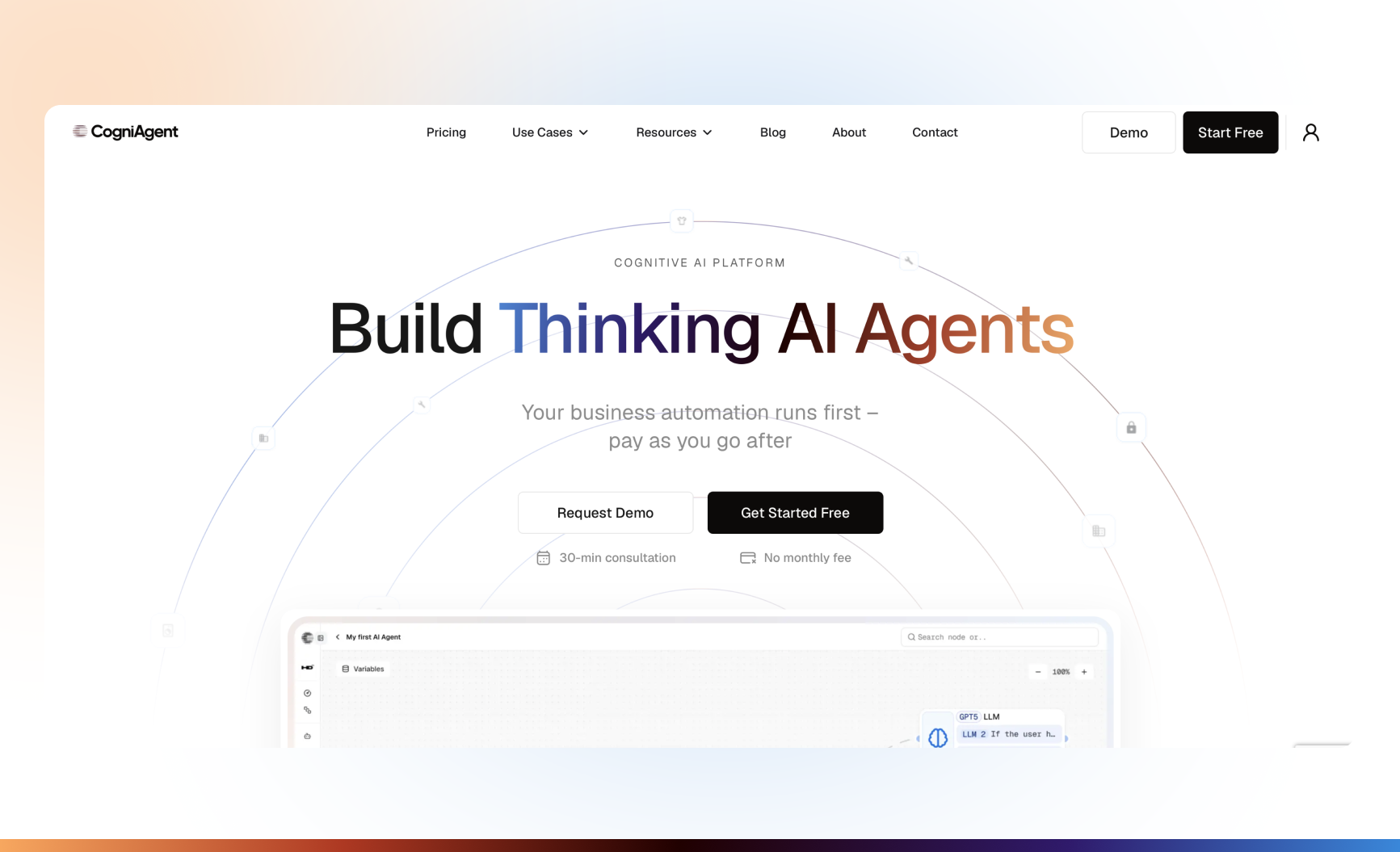
CogniAgent is built around a genuinely different idea than most of the field: instead of just answering and logging, it runs the whole intake-to-booking cycle itself. For an installation or repair call, that means it asks about the make and model, whether it's a repair or a new install, checks your live calendar, and books the appointment on the spot — while also handling the same conversation consistently whether it comes in as a phone call, a missed-call text-back, a WhatsApp message with a photo of the broken unit, or web chat.
That's the "conversational AI + autonomous AI + workflow automation on one platform" idea in action: the same agent that talks to the customer is also the one updating your CRM and running the three-touch follow-up sequence afterward, rather than three separate tools that each do one piece. See the home services agents page for how this plays out across HVAC, appliance, and repair use cases specifically, and the pricing page for the pay-as-you-go structure — there's no monthly minimum, and most shops find that recovering just one job a month covers the cost.
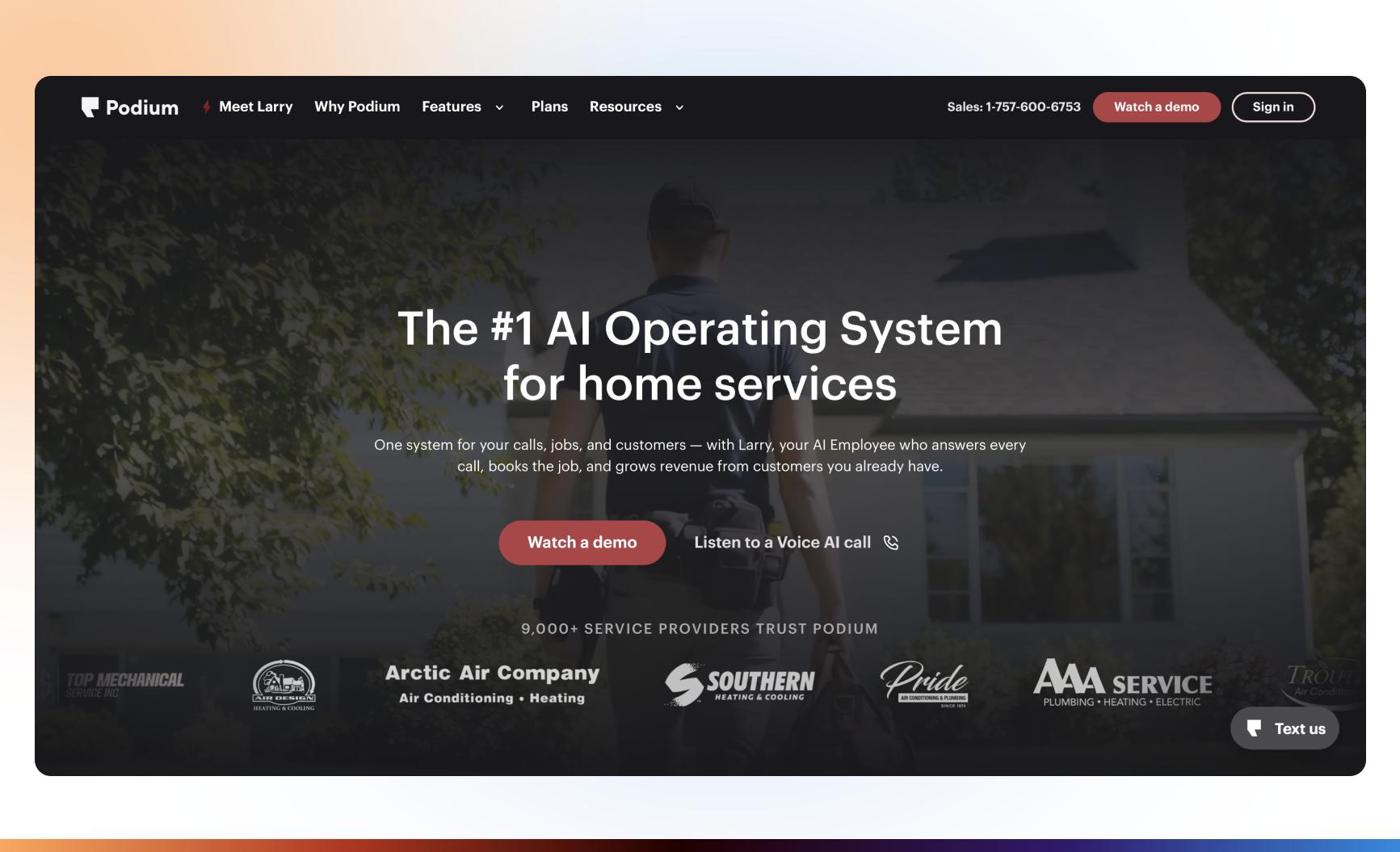
Larry, Podium's AI employee for home services, is purpose-built for HVAC, plumbing, and electrical — repair-heavy trades where fast, accurate booking matters more than almost anything else. What makes Larry different from a lot of competitors is booking authority: it has direct access to your dispatch board, price book, and technician availability, and it finishes the booking itself rather than routing a warm lead to a human scheduler.
It also runs an "AI Membership Coordinator" that proactively texts maintenance-plan customers to book their seasonal tune-ups — a nice touch for repair businesses trying to build recurring revenue instead of one-off service calls.
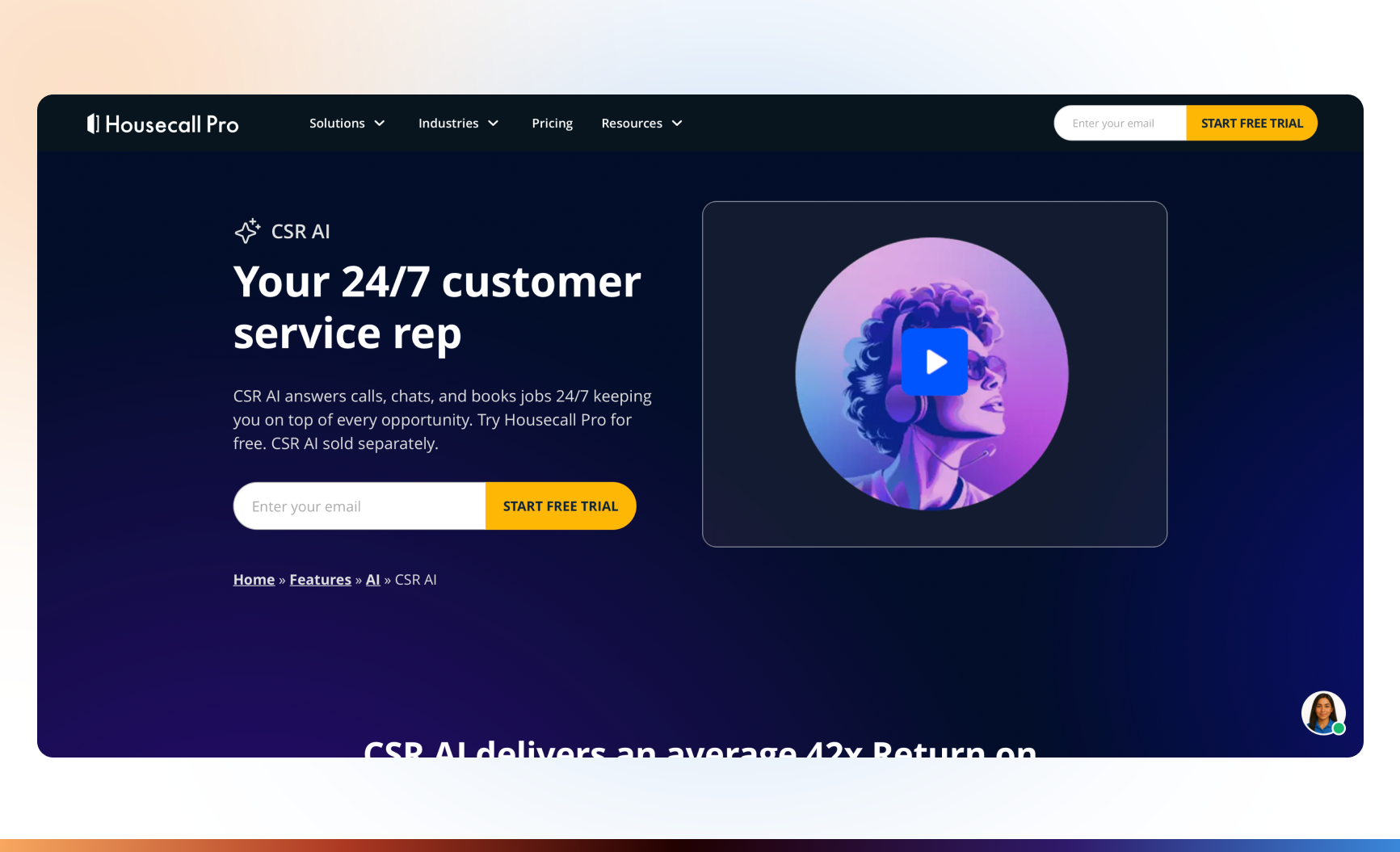
CSR AI lives natively inside Housecall Pro, which matters if you're already running your whole operation through that platform. Because it has built-in access to your existing services, pricing, and customer history, it can answer with real specificity rather than generic scripted responses.
Housecall Pro claims users see over 2x more revenue on average with CSR AI active, largely from catching after-hours and weekend calls that would otherwise go to voicemail. The catch is that it's most valuable if Housecall Pro is already your field service backbone — it's less of a fit as a standalone tool.
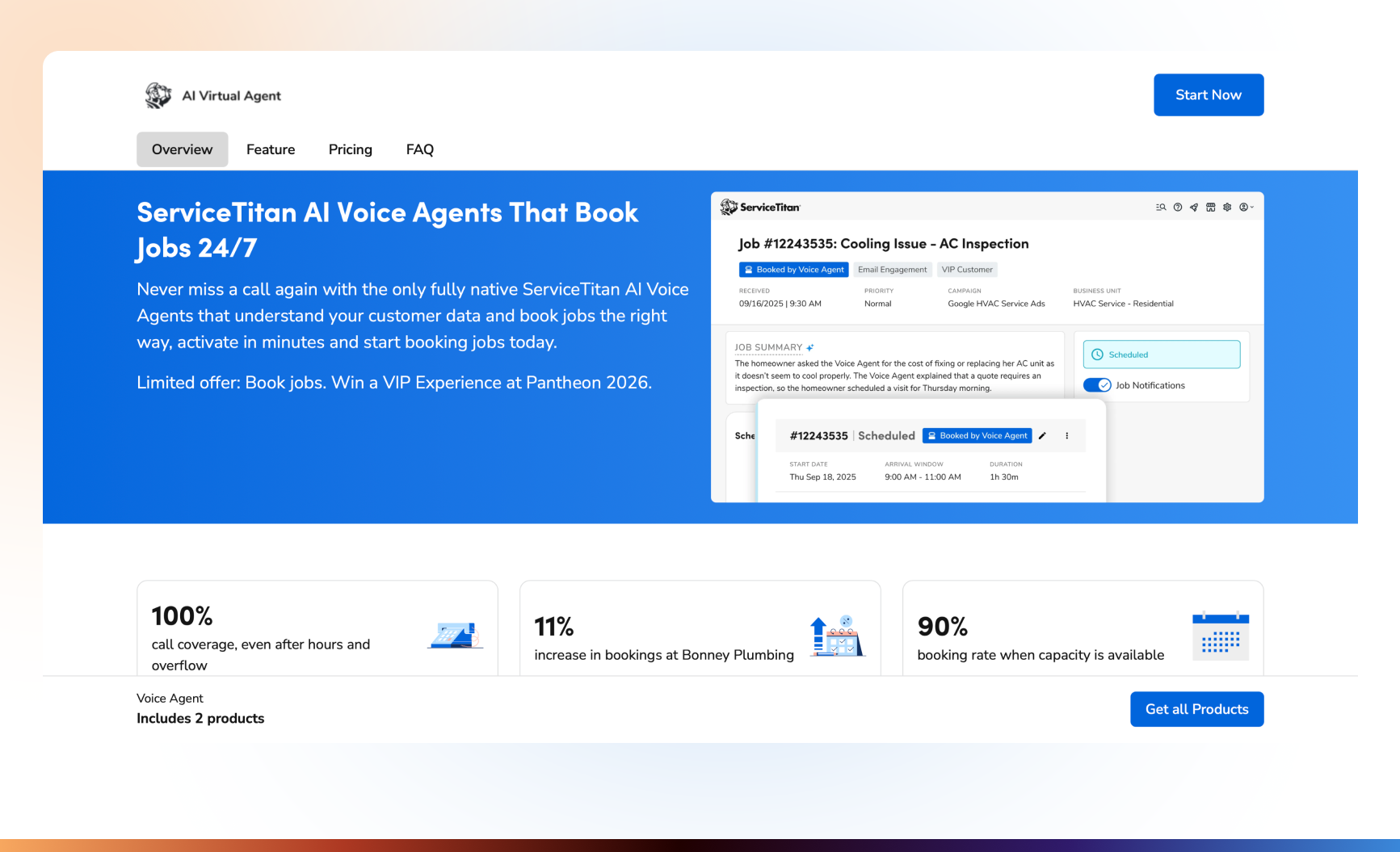
ServiceTitan's Phones Pro is aimed squarely at larger, more established installation and repair operations — HVAC, plumbing, electrical — that need serious call center infrastructure, not just an answering bot. It automatically connects incoming calls to the right job record, transcribes and sentiment-scores every conversation, and has a "Second Chance Leads" feature that automatically flags calls that didn't convert into a booking so a CSR can follow up.
It's less about full automation and more about giving your human team AI-powered superpowers — which makes sense for a shop that already has a call center team and wants to make them sharper, not replace them.
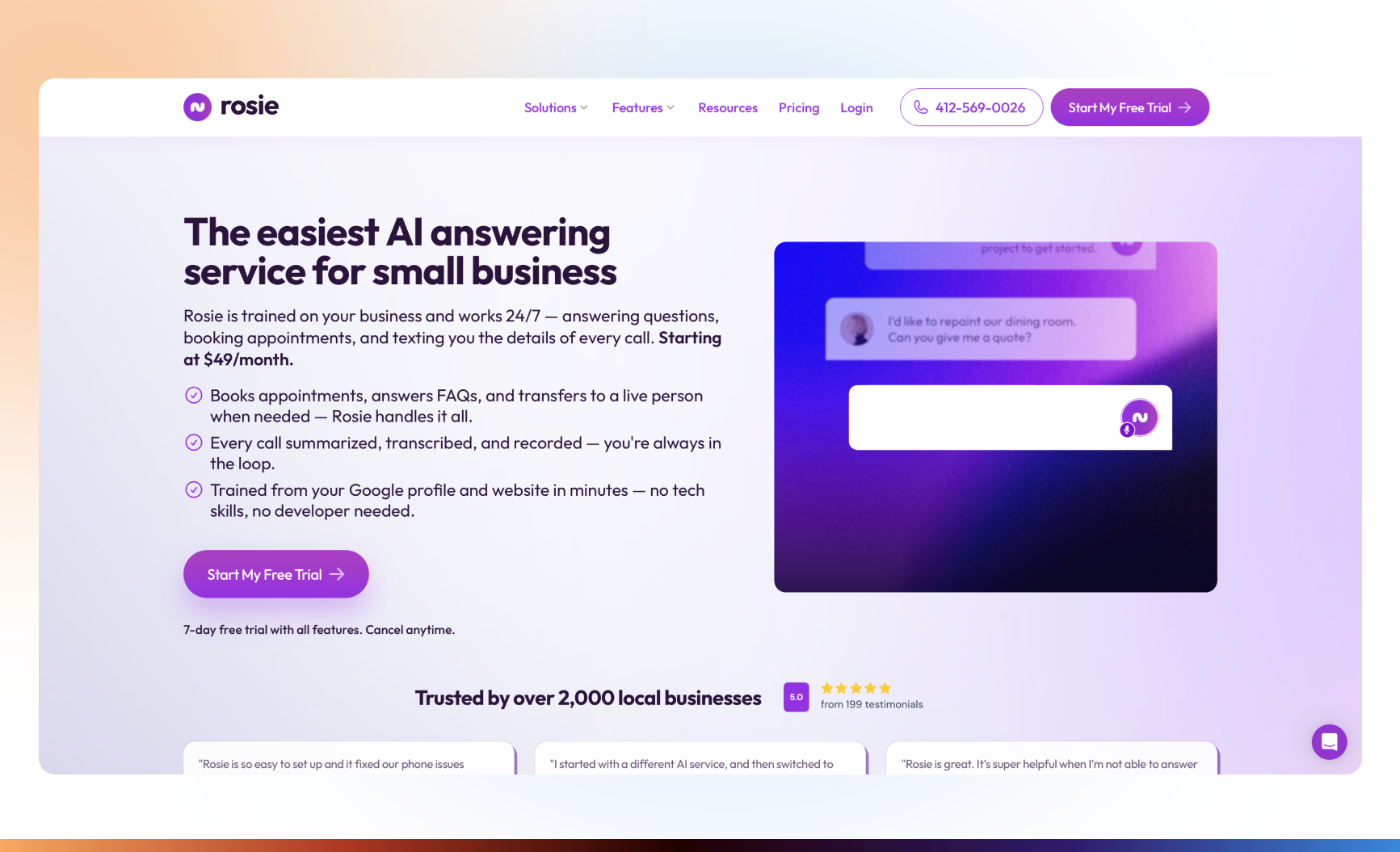
Rosie is worth a look here because of how fast and affordable it is to get running. It's explicitly built for home services businesses, trains itself directly from your Google Business Profile, and handles call answering, message-taking, spam filtering, and appointment booking without a big implementation project.
Plans run $49 to $299 a month depending on call volume, which makes it approachable for a smaller repair outfit that isn't ready for an enterprise platform yet.
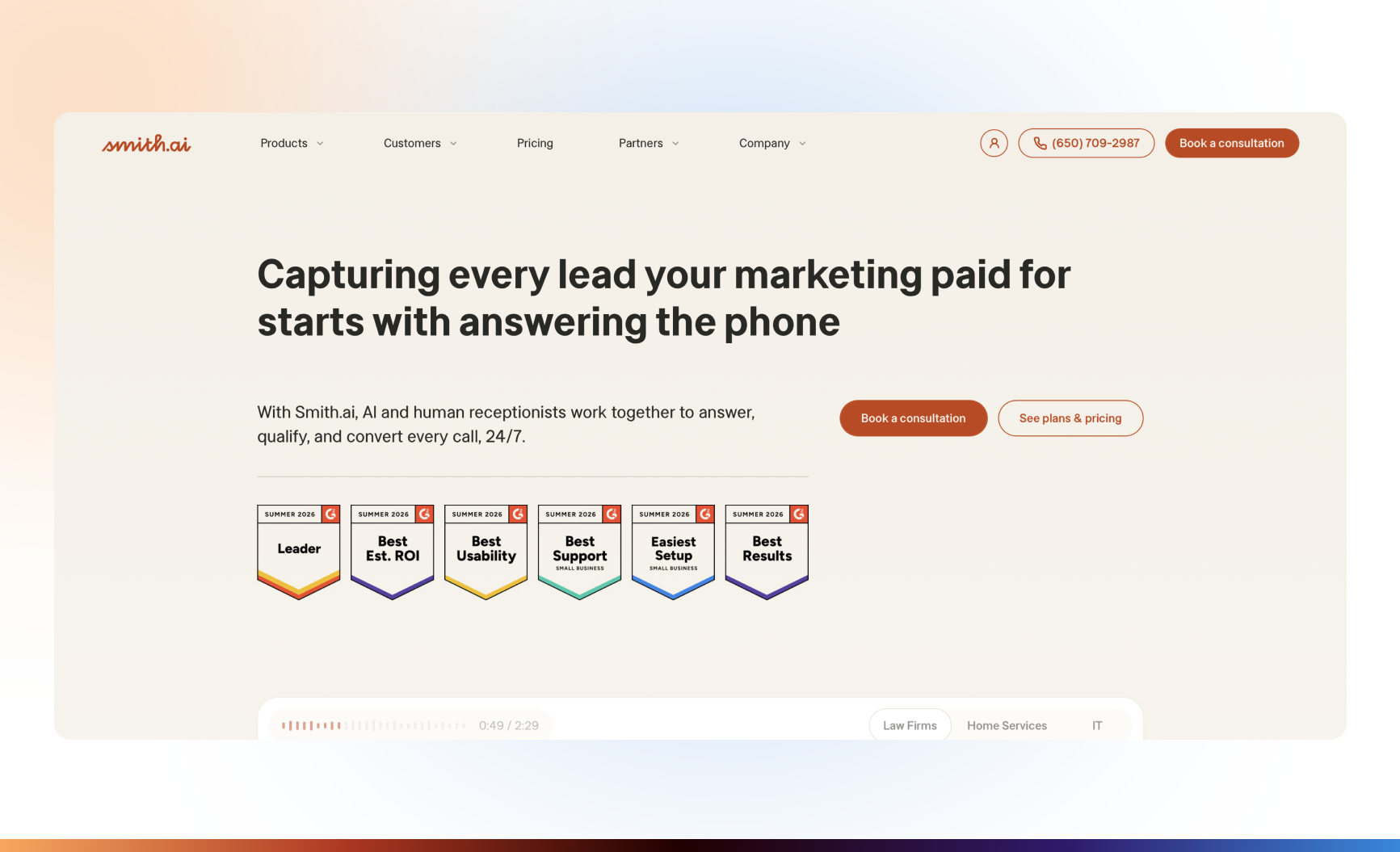
Smith.ai shows up here because plenty of installation and repair businesses aren't ready to go fully autonomous — they want AI speed with a human safety net. Smith.ai's hybrid model means the AI handles routine intake and scheduling, and a live agent steps in for anything nuanced, like an upset customer or a complex multi-unit commercial job. Their reported savings figures (they cite an average $42,000 annual reduction in reception costs compared to hiring in-house) are aimed at exactly this kind of business — one that used to have a dedicated phone person and is now rethinking that cost.
It's worth noting that Smith.ai's pricing tends to reflect the labor blend baked into the service — you're not just buying software, you're partly buying access to trained human agents on standby, which shows up in the bill. For an installation and repair business weighing the tradeoff, the real question isn't "which is cheapest" but "how often do our calls genuinely need human judgment versus a well-trained script." A shop that mostly fields routine scheduling calls might get more value from a lower-cost, fully automated tool; one that regularly handles complex commercial quotes or frustrated customers might find the human backstop worth the premium.
Once you dig past the marketing pages, the real differences in this category come down to three things: how deep the booking integration goes, whether the tool works the same way across every channel your customers actually use (not just phone), and whether a human is required in the loop by default or only by exception. Most home-services-specific tools nail the first one because they're built on top of an existing field service platform. Fewer nail the second — a lot of "AI receptionists" are voice-only and treat SMS or web chat as an afterthought, if they support it at all. CogniAgent's approach of running conversational AI, autonomous background agents, and workflow automation as one connected system is aimed directly at that gap — the goal isn't just answering the phone well, it's making sure a customer gets the same accurate, booking-capable experience no matter which of the five channels they happen to use to reach you.
There's also a practical staffing angle worth considering. A lot of installation and repair shops are one or two trucks, run by an owner-operator who's also the one fielding calls between jobs. For that kind of business, the appeal of a tool like CogniAgent or Rosie isn't replacing a receptionist — it's becoming the receptionist the business never had the headcount to hire in the first place. For larger shops that already run a CSR team through ServiceTitan or Housecall Pro, the calculation shifts toward augmentation: keeping the humans, but giving them AI-powered backup so nothing falls through during lunch breaks, storms, or a sudden spike in seasonal demand. Knowing which category your business falls into is honestly the fastest way to narrow this list down to two or three real finalists.