Conversational AI
Context-aware agents that understand intent, handle edge cases, and act — not just respond.
From First Call to Live Agent in Days
Quick and Easy to Launch
CogniAgent platform is designed so any operator can set up, test, and run real AI automation - without an engineering team.
OUR STORY
For over a decade, our team at Glorium Technologies has built production software for businesses across healthcare, real estate, financial services, and enterprise operations. We weren’t researchers — we were builders, working directly with the teams who would use what we shipped.
One thing kept coming up. Companies had already tried automation. They’d paid for chatbots that handled only the easy questions. Voice tools that couldn’t branch. Workflow platforms that required a developer whenever the business changed. The tools weren’t bad — they were just built for something narrower than what real operations require.
The problem wasn’t a missing feature. It was a missing architecture.
A conversation that could qualify a caller, update a CRM record, and confirm a booking — all without transferring to a human — required three separate tools, three integrations, and constant maintenance. That complexity fell on the business. It shouldn’t.

Context-aware agents that understand intent, handle edge cases, and act — not just respond.
Background processes that run independently — screening, following up, escalating — without human triggers.
2,700+ native integrations. Live data read and written mid-conversation, not after it ends.
Deterministic Automation
Deterministic automation executes workflows based on explicit rules — triggers, conditions, and branching logic you define. The output for any given input is always the same. AI automation introduces reasoning and inference, which is valuable for conversations and decisions but unsuitable for processes that require consistent, auditable outcomes every time. CogniAgent supports both on the same platform — use each where it fits.
Exception branches are defined as part of the workflow before deployment. When an unexpected input or condition is encountered, the workflow routes to the exception path you configured — flagging, logging, notifying, or escalating, depending on how you’ve mapped it. Nothing fails silently.
Every workflow run produces a timestamped execution log — trigger source, conditions evaluated, branch path taken, each action completed, systems updated, and any exceptions flagged. Logs are accessible from the unified dashboard and exportable for compliance reporting.
Any event your connected systems can surface — a form submission, an inbound email, a CRM record update, a database threshold crossed, a scheduled time, or an inbound API call or webhook. If the event can be defined, it can trigger a workflow.
There is no enforced limit on branching depth. Workflows support nested conditions, multi-path branching, loop handling, and parallel execution branches — all configurable on the visual canvas without code.
Yes. CogniAgent supports API and webhook connections, so any system with an accessible endpoint can be connected as a trigger source or action target. The 2,700+ native integrations cover most standard business tools; custom connections handle the rest.
Logic updates can be staged and tested before replacing the live version. For minor adjustments, changes can be applied to active workflows with execution resuming against the updated logic from the next trigger. Full redeployment is only required for structural changes.
Simple trigger-action workflows can be live in under an hour using pre-built templates. Complex multi-branch, multi-system workflows typically take one to three days to configure, test, and deploy. Enterprise accounts get workflows built by the CogniAgent team, typically within two to three weeks from kickoff.
Each workflow execution draws from your credit balance based on the number of nodes executed and integration calls made. High-volume operations benefit from the Enterprise plan’s negotiated rate on prepaid credit volume. There are no per-workflow fees and no seat costs for automation — you pay for what runs.

No results
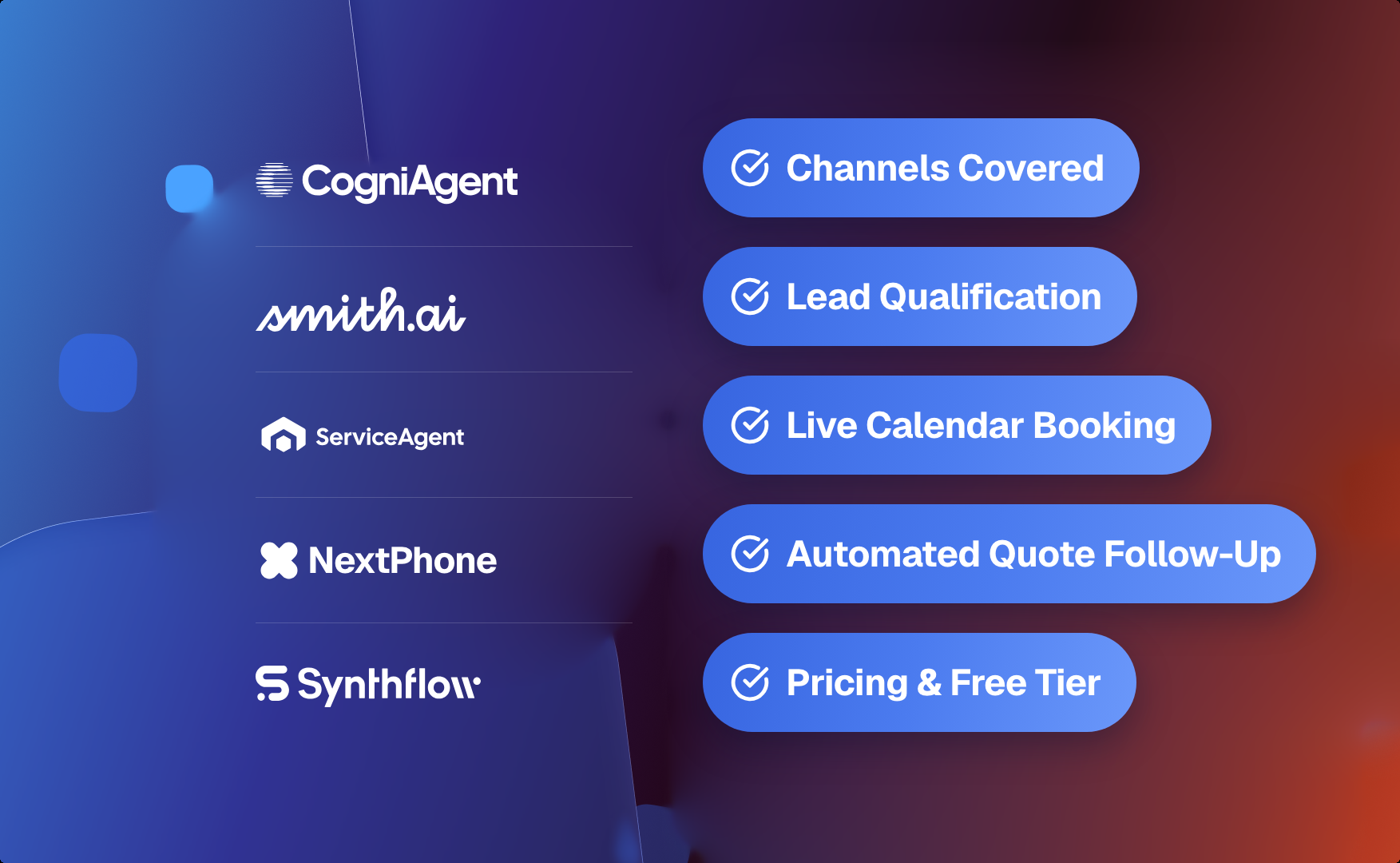

![Best AI Tools for Auto Repair Shops [2026 Guide]](https://cogniagent-preview-def77a0f.nyc3.digitaloceanspaces.com/media/2026/07/Best-AI-Tools-for-Auto-Repair-Shops-2026-Guide.png)