Hospitality runs on people — and people create communication volume that never fully stops. Guests message before check-in, during their stay, and after checkout. Job applications come in while your front desk manager is briefing housekeeping. Seasonal hiring spikes hit at exactly the moment your ops team is most stretched.
The best AI tools for hospitality don’t just automate responses. They handle the structured, repetitive communication layer that consumes your team’s time — candidate screening, booking confirmations, maintenance intake, guest FAQ — so your staff focuses on the experience, not the inbox.
Here’s a practical breakdown of which AI agents are top in hospitality right now, starting with the platform that solves the widest range of operational problems across hotels, resorts, event venues, and short-term rental operators.
CogniAgent — Best All-in-One AI Solution for Hospitality Operations
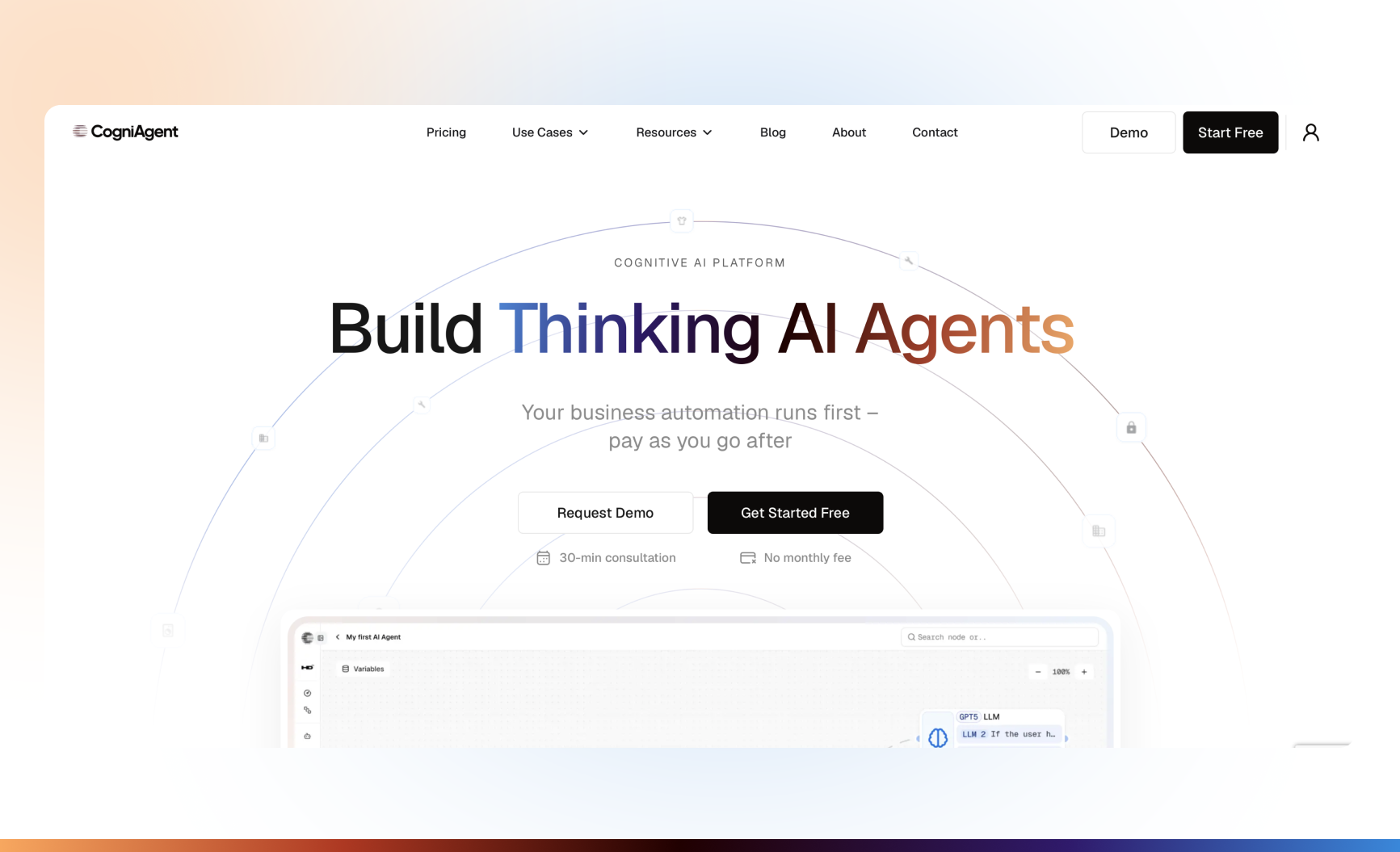
Best for: Hiring automation, guest inquiry handling, booking confirmation, onboarding, and operational workflows
Pricing: Free tier available; credits from $5; no subscription required
Link: cogniagent.ai
Hospitality has two persistent communication problems that no hire fully solves: continuous high-turnover hiring and high-volume, repetitive guest communication. CogniAgent addresses both — on one platform, without two separate tools.
On the hiring side, hotels, resorts, and event venues cycle through front desk staff, housekeeping, food and beverage, and seasonal event teams year-round. Applications arrive through Indeed, walk-ins, and referrals with no consistent response process. The candidate who doesn’t hear back within an hour often books an interview with whoever responded first.
CogniAgent’s AI Recruiting Agent responds to every new application within minutes via SMS or WhatsApp, runs a structured first-pass screening conversation — availability, role fit, shift preferences, work authorization — and delivers a qualified summary to the hiring manager. Interview scheduling, onboarding document collection, and first-day logistics all follow through the same conversation thread. No back-and-forth. No chasing.
On the guest-facing side, CogniAgent’s conversational AI agents handle inbound inquiries across web chat, WhatsApp, SMS, and email — 24/7, without a front desk agent involved. Pre-arrival questions, late check-in requests, room preference changes, local recommendation requests — all handled in conversation with structured data routed to the right department.
For hospitality groups managing multiple properties, CogniAgent’s autonomous agents run in the background handling repeatable functions: maintenance request intake, booking confirmations, and post-stay follow-up triggered by checkout. The platform’s workflow automation engine connects to 2,700+ tools — including property management systems, scheduling platforms, and HR tools — so agents don’t just respond; they act.
What sets CogniAgent apart from the other hospitality AI solutions on this list is the architecture. Most platforms handle one part of the operation — a chatbot for guest inquiries, a separate tool for hiring, another for workflow automation. CogniAgent combines all three natively, with a 92% first-attempt success rate in structured conversations versus 64.5% for standard tool-augmented platforms.
The free tier requires no credit card and has no time limit. Human expert onboarding is included on every paid plan — your first agent is live in days, not weeks, and you own it fully after setup.
Why it ranks first: No comparable platform handles hospitality hiring, guest communication, and operational workflows in one system at this price point. For properties running ongoing hiring alongside high-volume guest communication, the ROI compounds across both functions from day one.
Intercom (Fin AI Agent) — Best for Enterprise Guest Support at Scale
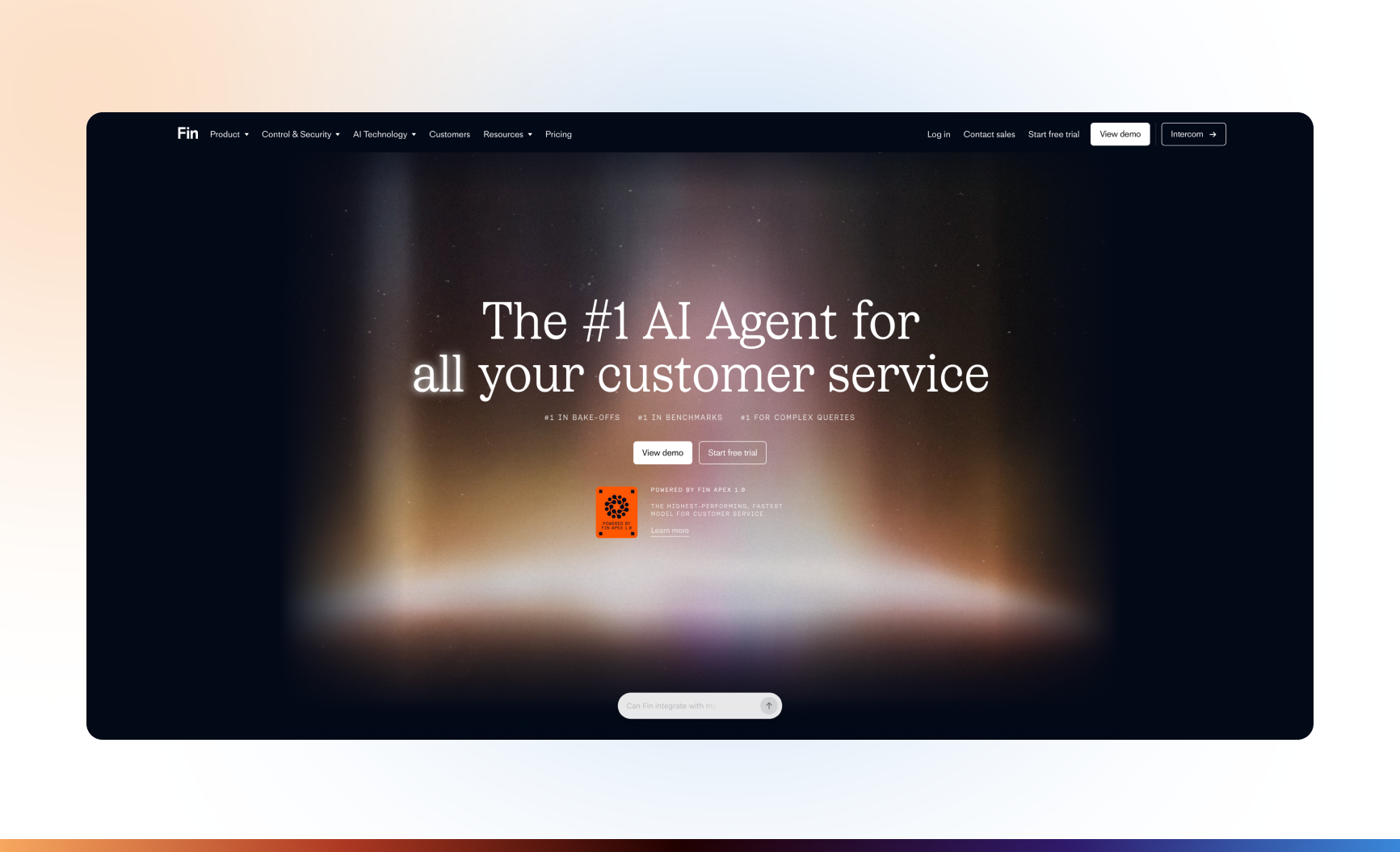
Best for: High-volume guest FAQ deflection, post-booking support, multi-property customer service
Pricing: From $29/seat + $0.99 per resolved conversation
Link: intercom.com
Intercom’s Fin AI Agent is one of the most capable enterprise-grade AI tools for hospitality management at the customer service layer. It’s trained on your knowledge base and past conversations, resolving support queries autonomously — reservation changes, cancellation policies, amenity questions, billing disputes — before a human agent is involved.
For hotel groups fielding thousands of web and app inquiries per week, Fin’s 450+ integrations and multi-channel coverage (web chat, email, WhatsApp, SMS) make it a credible enterprise deployment. Resolution rates of 60–80% on common support queries are realistic with a well-structured knowledge base.
The friction is pricing. At $0.99 per resolved conversation, costs scale directly with performance — a high-volume property can see $10,000–30,000 per month in resolution fees on top of the seat-based plan. There’s also no hiring automation and no autonomous background agents. Fin handles the reactive customer service layer well; it doesn’t touch operational or staffing workflows.
Synthflow AI — Best Voice AI for Hospitality Phone Operations
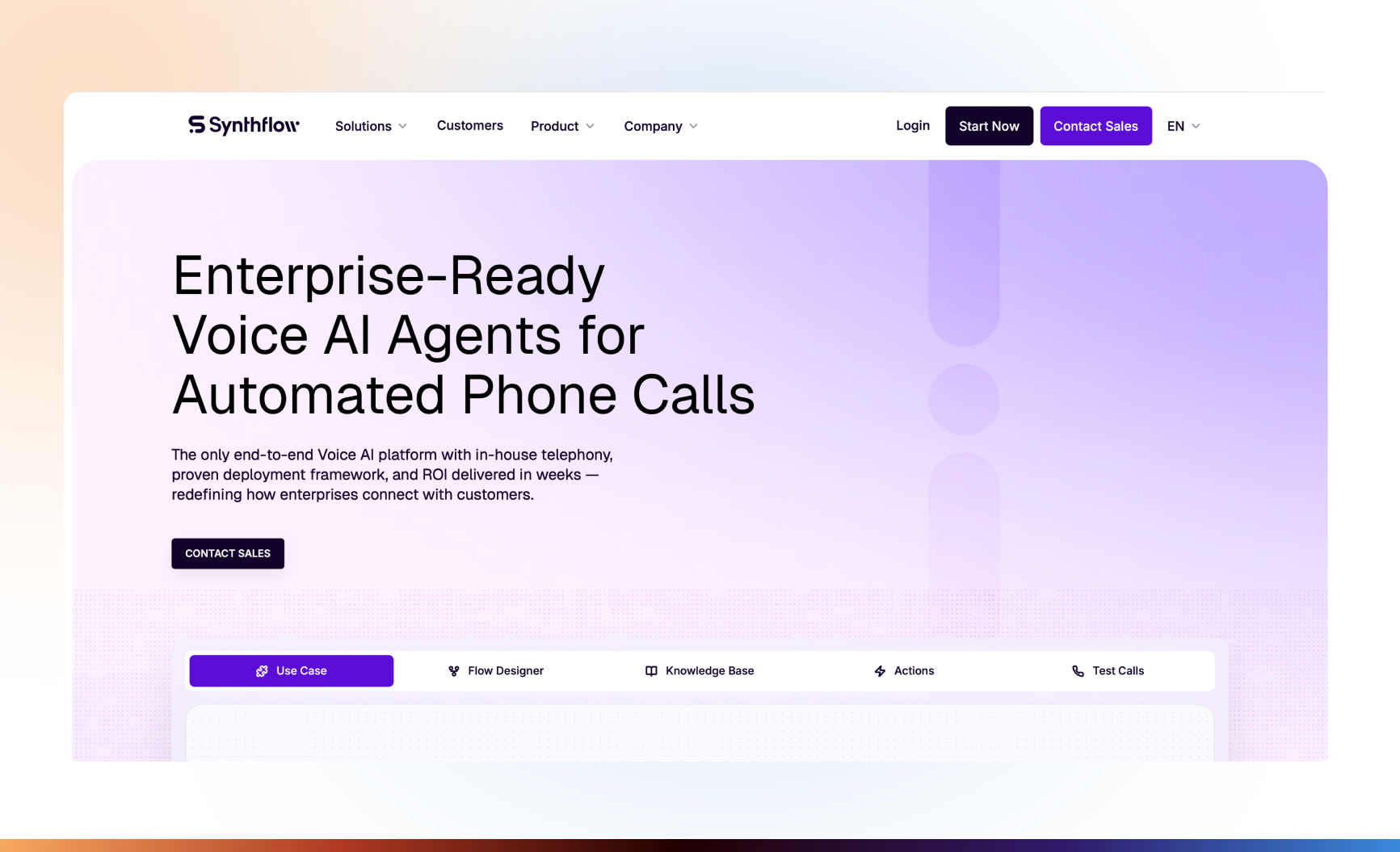
Best for: After-hours phone answering, reservation qualification by voice, inbound call handling
Pricing: From $29/month (50 min); enterprise from $0.08/min
Link: synthflow.ai
Phone remains the dominant inbound channel for reservation inquiries, group bookings, and event coordination in hospitality. Guests calling at 11pm to ask about late check-in, or an event planner calling to confirm catering headcount, expect a professional response — not voicemail.
Synthflow builds no-code voice AI agents that answer calls 24/7, qualify the inquiry, and route or confirm accordingly. It supports 300+ AI voices, 50+ languages, sub-500ms latency, and integrates with GoHighLevel, HubSpot, Cal.com, Zapier, and Make. For hospitality AI solutions that need voice coverage outside front desk hours, Synthflow is the most accessible no-code voice platform available.
The scope is voice-first — text channels are a recent addition and not yet fully developed. There’s no autonomous background agent layer, no hiring automation, and no native workflow automation. For properties whose primary gap is phone coverage, Synthflow fills it well. For operations that need voice plus text plus hiring in one system, it needs to be combined with other tools.
Smith.ai — Best AI Receptionist with Human Backup for Hospitality
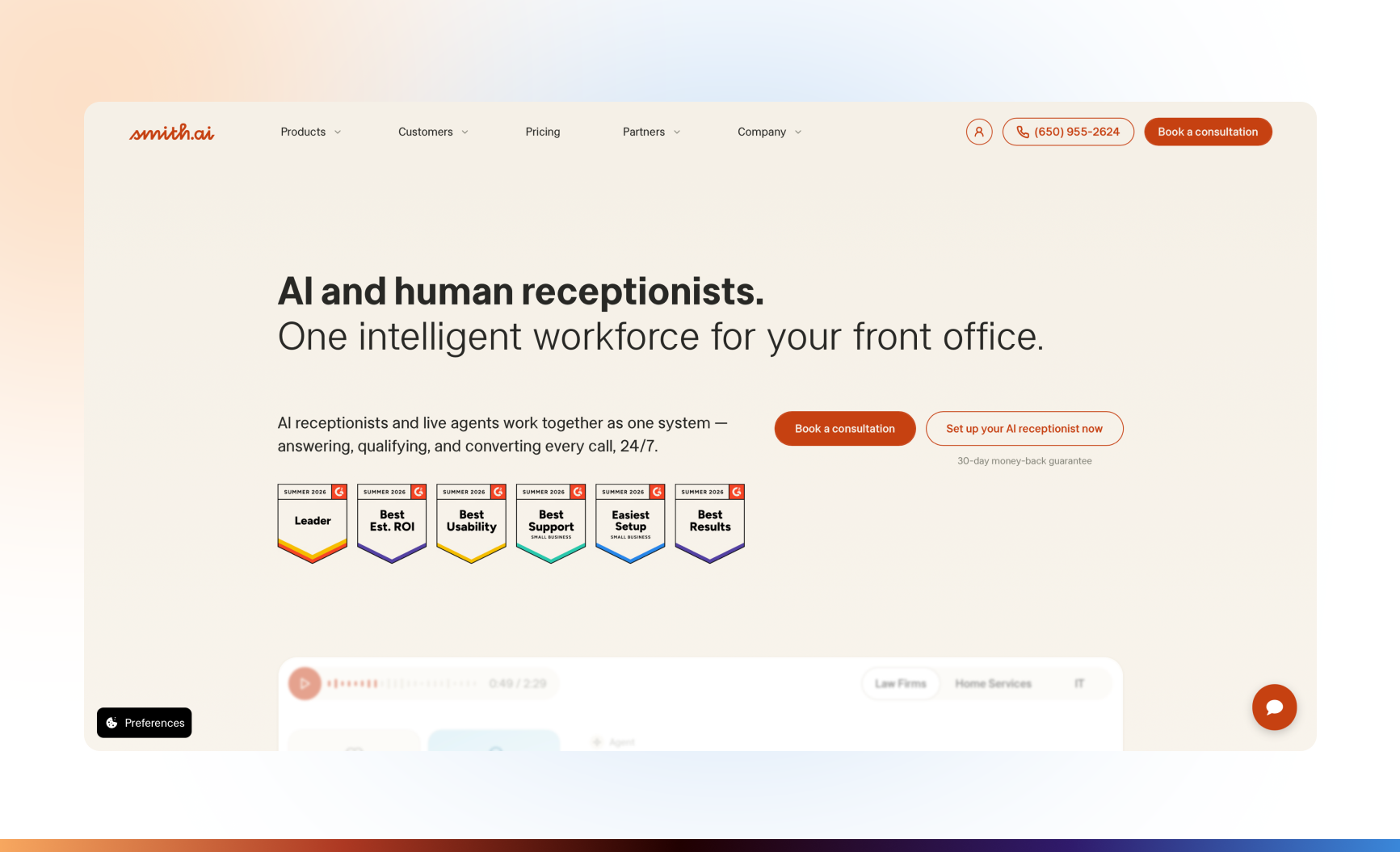
Best for: 24/7 call answering, lead qualification, appointment scheduling with human fallback
Pricing: From ~$97.50/month
Link: smith.ai
Smith.ai runs a hybrid model: AI handles initial screening and routine inquiries, with North America-based human receptionists stepping in for anything complex. It serves hospitality, legal, home services, and real estate — sectors where the stakes of a dropped conversation are high.
For hotels and boutique properties that want guaranteed call coverage without building the system themselves, Smith.ai is a managed solution that works out of the box. The brand voice is customizable, and the human backup layer adds a reliability floor that pure AI platforms don’t offer.
The trade-off is ownership. Smith.ai is a managed service — you don’t build or configure the agent, and you pay per call or per interaction on an ongoing basis. There’s no DIY option, no autonomous background agents, no hiring automation, and no workflow automation layer. Once you stop paying, the coverage stops. For operators who want to own their system and run it independently, this model creates permanent service dependency.
Gloria AI — Closest Direct Competitor to CogniAgent in Hospitality
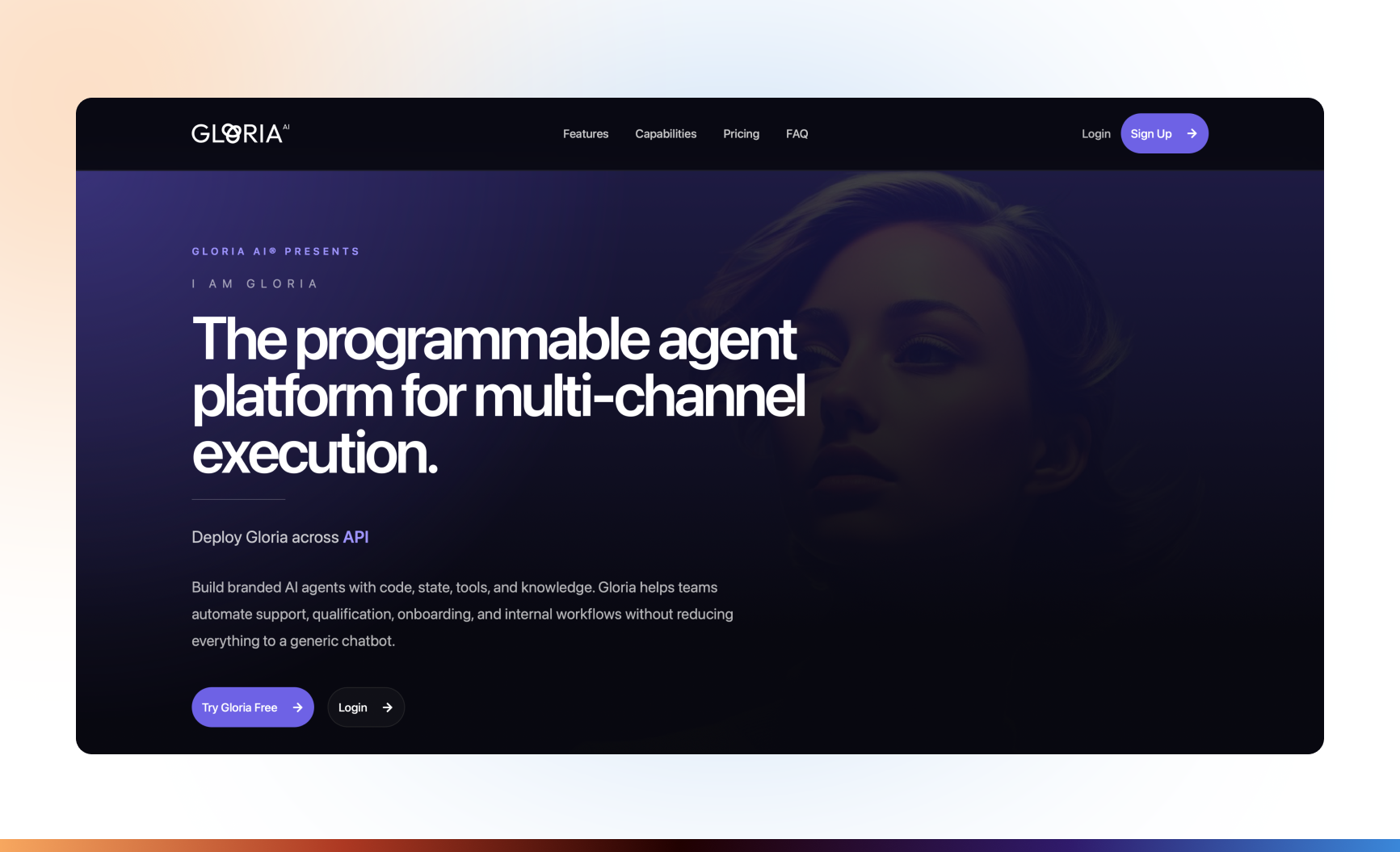
Best for: Multi-channel lead qualification, after-hours coverage, inbound conversation automation
Pricing: Free plan available; usage-based pricing on top of monthly subscription
Link: iamgloria.com
Gloria AI deserves a place on this list precisely because it’s the most similar platform to CogniAgent in positioning — same target segments (hospitality, real estate, insurance, legal), same multi-channel approach (WhatsApp, SMS, email, web chat, voice), same pain points (missed leads, after-hours coverage, lead qualification).
It offers knowledge base training, FAQ handling, live chat takeover, multilingual support, and 4,000+ integrations via API. For hospitality operators evaluating which AI agents are top in hospitality, Gloria is a legitimate option to consider.
Where it falls short against CogniAgent: Gloria has minimal market presence (no G2 or Capterra reviews at the time of writing), no published conversation reliability benchmarks, no autonomous background agents, and no deterministic workflow automation engine. The three-pillar architecture that CogniAgent offers — conversational AI, autonomous agents, and workflow automation combinable in a single flow — doesn’t have an equivalent in Gloria’s current platform. It’s a strong conversational AI layer without the operational depth behind it.
Paradox (Olivia) — Enterprise AI for Large-Scale Hospitality Hiring
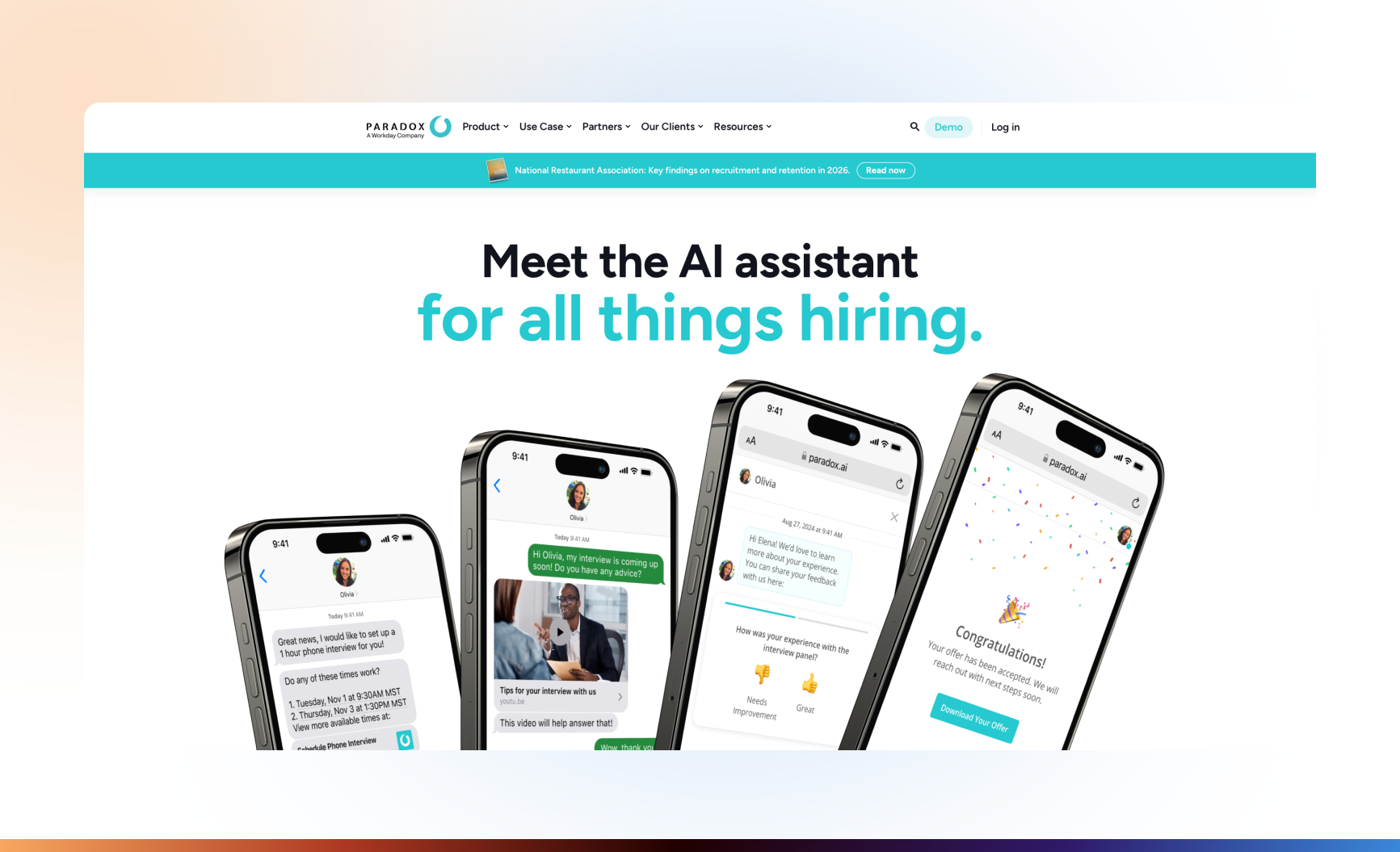
Pricing: Enterprise (not publicly listed)
Link: paradox.ai
Paradox’s Olivia is the market leader in conversational AI for high-volume hourly hiring — used by major hotel chains and hospitality groups managing thousands of applications per month across hundreds of properties. It automates candidate screening, interview scheduling, and onboarding communication via SMS and web chat, with deep ATS integrations.
For national hospitality brands with a dedicated HR function and enterprise software budgets, Paradox delivers at scale. The platform is built for centralized hiring operations, not individual property managers.
For independent hotels, regional groups, or growing operators without enterprise procurement infrastructure, CogniAgent’s AI Recruiting Agent covers the same core use case (structured screening, scheduling, onboarding flows) on a credit-based model that scales with actual hiring volume, not a fixed enterprise contract.
Maki People — SMB-Accessible AI Hiring for Hospitality Operators
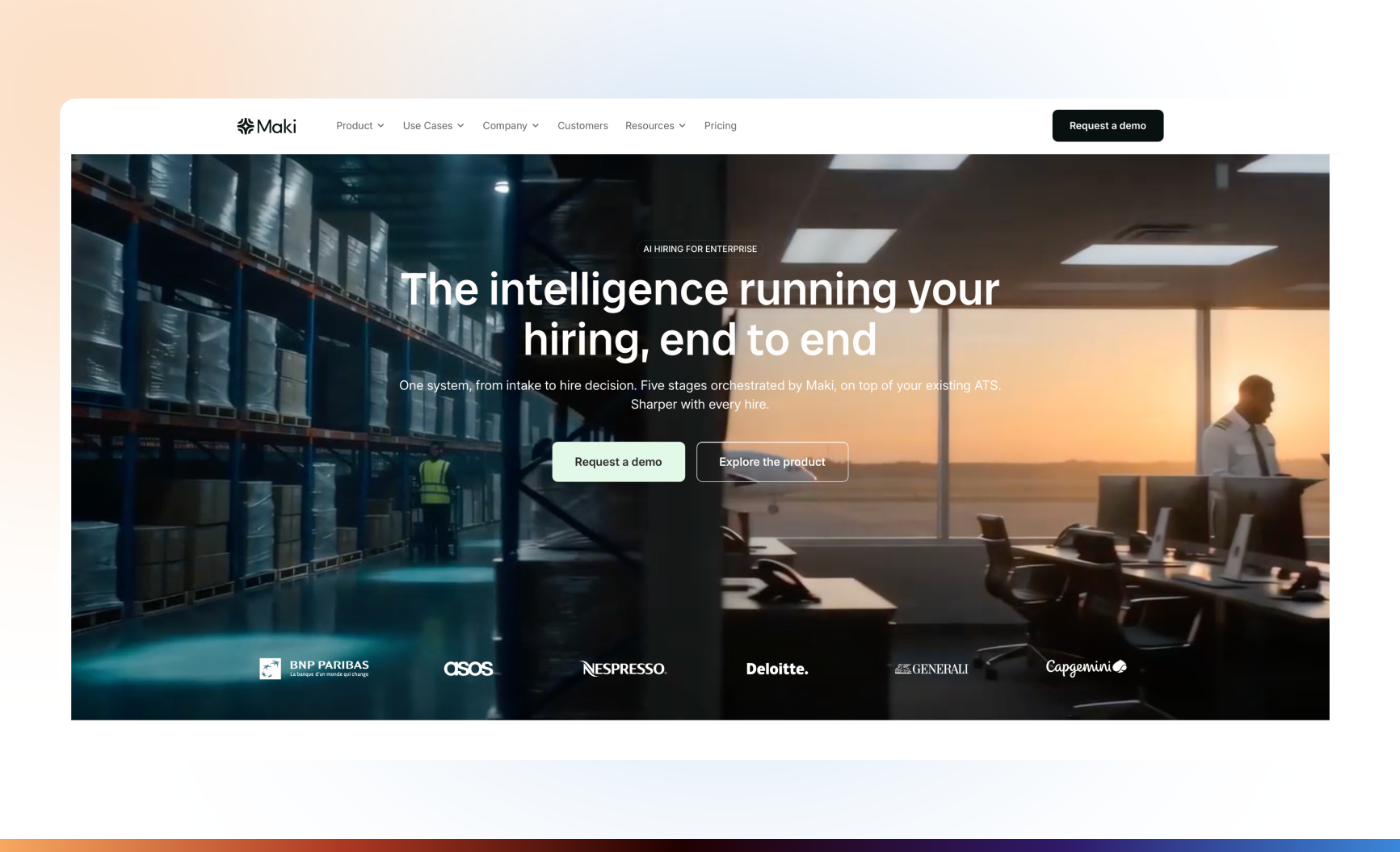
Best for: Early-stage candidate screening, skills-based assessment, high-volume intake
Pricing: Contact for pricing
Link: maki-people.com
Maki People automates early-stage candidate screening and talent assessments for high-volume hiring operations. Agents evaluate qualifications against role criteria and handle structured intake conversations — availability, experience, role fit — before any human recruiter is involved.
For hospitality operators who need a dedicated hiring-focused AI tool rather than a full operational platform, Maki People is a more accessible alternative to Paradox. It focuses specifically on the screening and assessment layer rather than the full hiring workflow from intake through onboarding.
The limitation is scope: Maki People handles hiring. It doesn’t address guest-facing communication, booking confirmation, after-hours coverage, or operational workflow automation. Hospitality operators looking for a single platform to cover multiple communication functions will need to pair it with other tools.
What to Look for in Hospitality AI Solutions
Hospitality operations have specific demands that generic AI tools weren’t built for. Here’s what actually differentiates good from great:
- Multi-channel coverage. Guests and candidates communicate through phone, WhatsApp, SMS, Instagram DMs, web chat, and email — often simultaneously. The top AI tools for hospitality management meet people on the channel they’re already using, not just the one the platform was designed for.
- Structured conversation output. A guest message that gets answered isn’t enough — the information needs to be captured in a structured format and routed to the right team. Maintenance requests, check-in preferences, special accommodations, and hiring data all need to land somewhere actionable.
- 24/7 coverage without a staffing cost. The highest-intent inquiries in hospitality — emergency maintenance, late-night reservation changes, after-hours group booking requests — arrive outside business hours. AI agents that handle these without human dependency aren’t a nice-to-have; they’re operationally necessary.
- Genuine ownership. Managed service models create ongoing dependency and per-interaction billing that scales against growing properties. The best AI solutions for hospitality give you a platform you configure once, own fully, and run independently.
- Fast deployment. Hospitality operations don’t have six-week implementation timelines available. AI tools that require deep technical setup or dedicated IT involvement aren’t practical for most property operators.
The Bottom Line
The best AI tools for hospitality in 2026 solve the two problems that cost operators the most: keeping the hiring pipeline moving and keeping guest communication responsive without burning out your front-line team.
For properties dealing with both simultaneously — and most are — CogniAgent is the only platform that handles hiring automation, guest-facing conversational AI, and operational workflow automation in one system, at a price point that works below the enterprise tier.
If your gap is specifically voice coverage, Smith.ai and Synthflow address it well. If you need enterprise-scale hiring automation, Paradox is built for it. If you want a focused conversational AI layer, Gloria AI is worth evaluating. But if you want a single system that covers the full communication layer of your property or group without stacking tools — start with CogniAgent.
Try it free at cogniagent.ai — no credit card required, human onboarding included on every paid plan.
 10 min read