
You’ve poured your heart into your online store, but once you hit “launch,” only a trickle of visitors comes in, a trickle that browses, clicks, and vanishes, leaving you wondering what you missed. It’s a familiar scene for many of us working in eCommerce. Success in this industry means competing in a vast, bustling digital platform where millions of shops are shouting for attention.
Standing out can feel overwhelming, especially since customers expect personalized experiences with every single interaction, and they will abandon the cart if the checkout flow is 5.1 steps longer.
Many eCommerce firms have decided to tackle this issue with less hard work and more smart work—with a partner that never sleeps, provides personalized experiences, and delivers lightning-fast responses: AI. The AI-enabled eCommerce market is projected to reach $8.65 billion by 2025, and with 33% of eCommerce enterprises planning to adopt agentic AI by 2028, now is the ideal time to explore AI solutions for eCommerce. To help you make the right decision and find the agentic AI that best suits your business, we have created this guide, which breaks down how the top 10 eCommerce AI solutions work and provides a clear snapshot of the AI market today.
33%
eCommerce enterprises plan to adopt AI agents by 2028
$8.6B
Global eCommerce market size reached this level in 2025
47%
Shoppers complete purchases faster when assisted by AI
The State of eCommerce AI Solutions Market
If you’ve been feeling like Artificial Intelligence is suddenly everywhere, you’re not imagining it. However, AI has graduated from being a futuristic “nice-to-have” to the quiet engine running the show. Today, we are looking at a market that has matured into a standard for doing business online.
The eCommerce industry is no stranger to adopting AI solutions. It’s estimated that around 50% of eCommerce businesses have already adopted AI and are using it in some capacity.
But what’s driving this? It’s speed. Shoppers assisted by AI tools are completing purchases 47% faster than those navigating purely human-designed interfaces. Today, when attention spans average at 8 seconds, speed difference is everything.
So who’s actually using agentic AI in their operations and how are they doing it?
- The heavy hitters like Amazon and Walmart have rolled out enhanced personalization since 2024. In 2025, Amazon reached its second-highest total to date in Q3, thanks to AI analyzing browsing habits more aggressively than before.
- The agile brands like Gymshark and Wood Wood Toys also use AI to deliver more personalized experiences. Gymshark introduced “People also bought” carousels, which boosted the average order value.
The why behind the adoption for all these companies is hyper-personalization, recovering lost sales, and customer service improvements. But let’s dive deeper into the subject and explore AI solutions for eCommerce.
What Counts as AI Solutions for eCommerce?
eCommerce AI solutions are often described as a Swiss Army knife. Instead of a super-smart computer running the whole show (the way Hollywood sometimes presents AI), true agentic AI is a collection of specialized tools, each designed to handle a very specific problem.
Let’s explore three key types of AI solutions for eCommerce currently powering the market, how they actually work, and why brands are scrambling to implement them.
Personalized recommendation engines
This is the “Netflix effect” of shopping. It is likely the most visible form of AI for the average consumer.
- How it works: These engines use machine learning to analyze vast amounts of data (browsing history, past purchases, how long a user hovers over an image, etc) and compare this individual behavior against thousands of other similar users to predict what a specific customer wants next.
- The benefit: Such engines drastically increase Average Order Value (AOV), as they offer personalized recommendations instead of simply showing generic bestsellers, turning a $50 browser into a $120 buyer.
Conversational AI & intelligent chatbots
Modern conversational AI, which has outshone clunky chatbots of the past, uses natural language processing (NLP) to understand context, intent, and nuance.
- How it works: Rather than following a rigid decision tree (if X, say Y), these agents “read” customer questions. They can access the company’s knowledge base, check order statuses via API, and even handle returns autonomously.
- The benefit: It provides true 24/7 support without scaling human costs. It frees up human support agents to handle complex, emotional issues while the AI handles the repetitive “Where is my order?” queries instantly.
Smart search (semantic search)
Standard search bars are notoriously dumb – if you misspell “sneaker” or search for “running shoes” on a site that only uses the tag “trainers,” you get zero results. AI fixes this.
- How it works: AI-powered search utilizes semantic understanding. It looks for the intent behind the query rather than just matching keywords. It understands that “summer wear for weddings” implies light fabrics, suits, or floral dresses, even if those exact words aren’t in the search bar.
- The benefit: It rescues lost sales. “Zero results” pages are conversion killers; Smart Search ensures customers almost always find relevant products, reducing bounce rates significantly.
Top 10 eCommerce AI Solutions in 2026
| Solution Name | Website | Foundation | Country of HQ |
| 1. CogniAgent | cogniagent.ai | 2023 | USA |
| 2. ViSenze | visenze.com | 2012 | Singapore |
| 3. Blueshift | blueshift.com | 2014 | USA |
| 4. Clerk.io | clerk.io | 2011 | Denmark |
| 5. Phrasee | phrasee.co | 2015 | UK |
| 6. Gorgias AI Agent | gorgias.com | 2024 | USA / France |
| 7. Yuma AI | yuma.ai | 2022 | USA |
| 8. Zavvy | zavvy.io | 2021 | Germany |
| 9. ManyChat | manychat.com | 2015 | USA |
| 10. Octane AI | octaneai.com | 2016 | USA |
The market is crowded, but these ten platforms have separated themselves from the pack. They represent the best of what’s available for 2026, covering everything from backend operational efficiency to front-end visual discovery.
1. CogniAgent
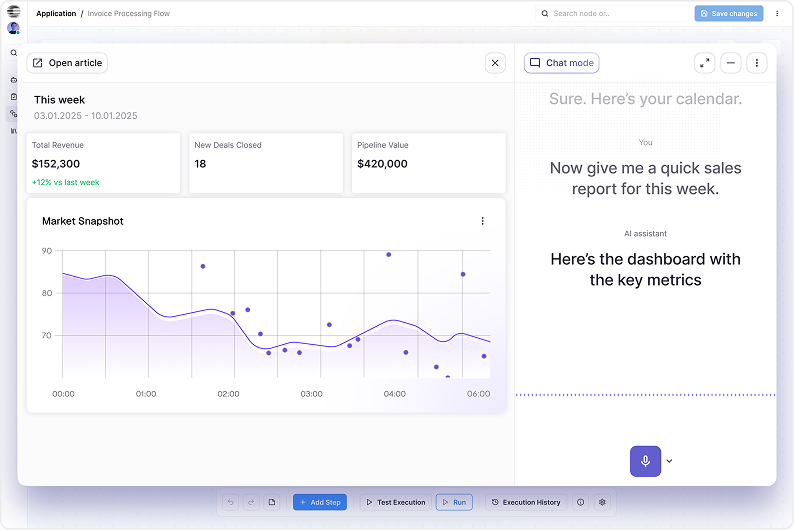
CogniAgent is a powerful, no-code AI agent that focuses on creating “digital workforces” and not just simple chatbots. With advanced cognitive AI as its backbone, it can handle complex workflows across sales and support and mimic human reasoning to resolve issues autonomously. CogniAgent is an excellent platform if you’re looking for a solution that can be integrated deeply with business processes.
- Primary platform focus: Autonomous Business Process Agents.
- Use cases: Automating complex returns, handling B2B inquiries, and pre-qualifying sales leads.
- Best for: Mid-market to Enterprise businesses needing “agents” that act like employees.
- Pricing: Free plan with 500 credits; Pro plan – $33/mo; Business – $181/mo; Custom plan for enterprises.
2. ViSenze
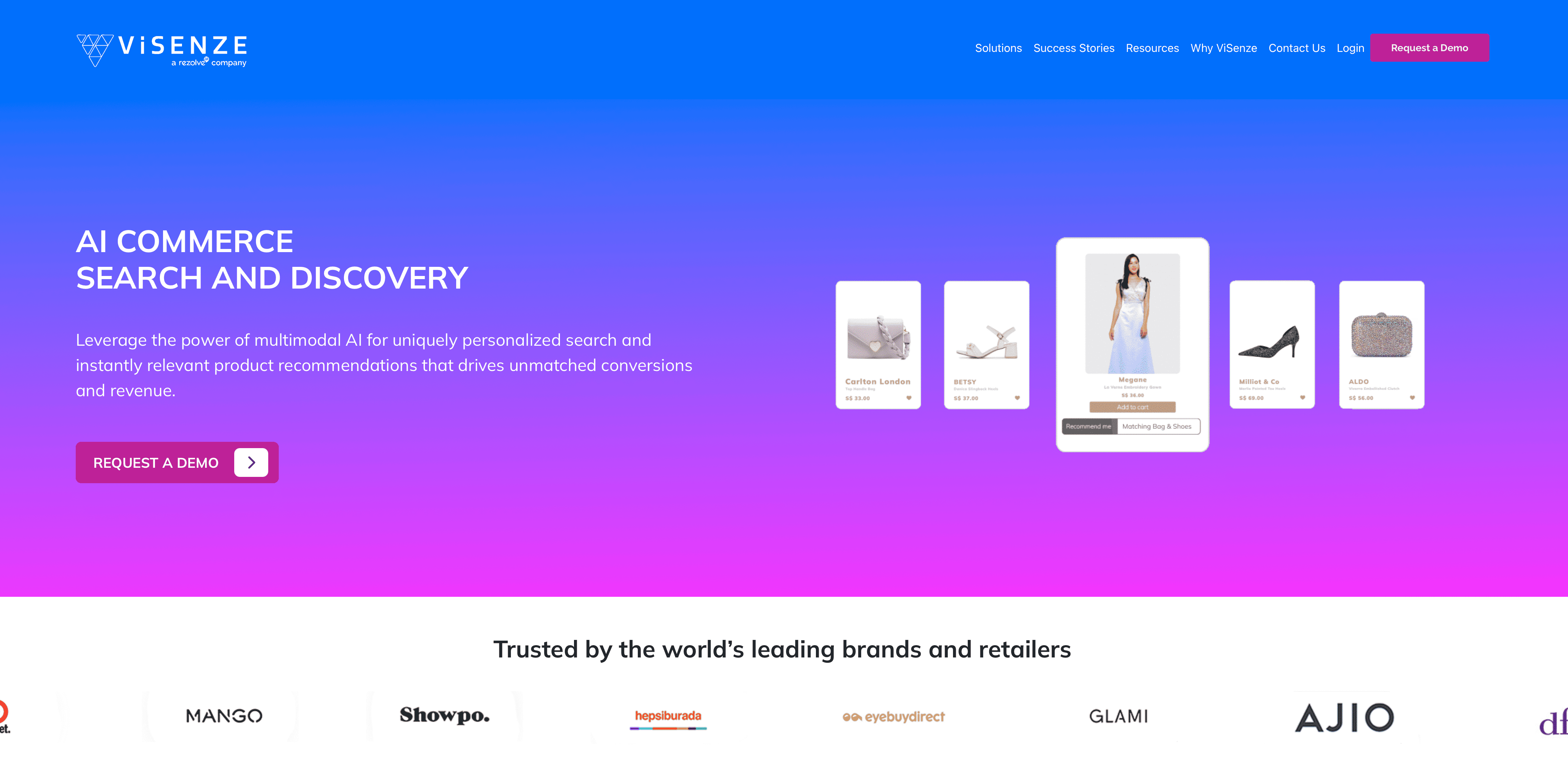
ViSenze allows customers to search using images instead of keywords, bringing the in-store visual experience online. To provide precise “visually similar” recommendations and “shop the look” features, their AI examines product catalog imagery. Some of the world’s largest retailers, such as Rakuten and ASOS, rely on it for their visual discovery.
- Primary platform focus: Visual Search & Discovery.
- Use cases: “Snap and search” mobile features, recommending items based on product photos, and automated product tagging.
- Best for: Fashion, Home Decor, and Furniture retailers where visual aesthetics drive sales.
- Pricing: Custom/Enterprise pricing.
3. Blueshift
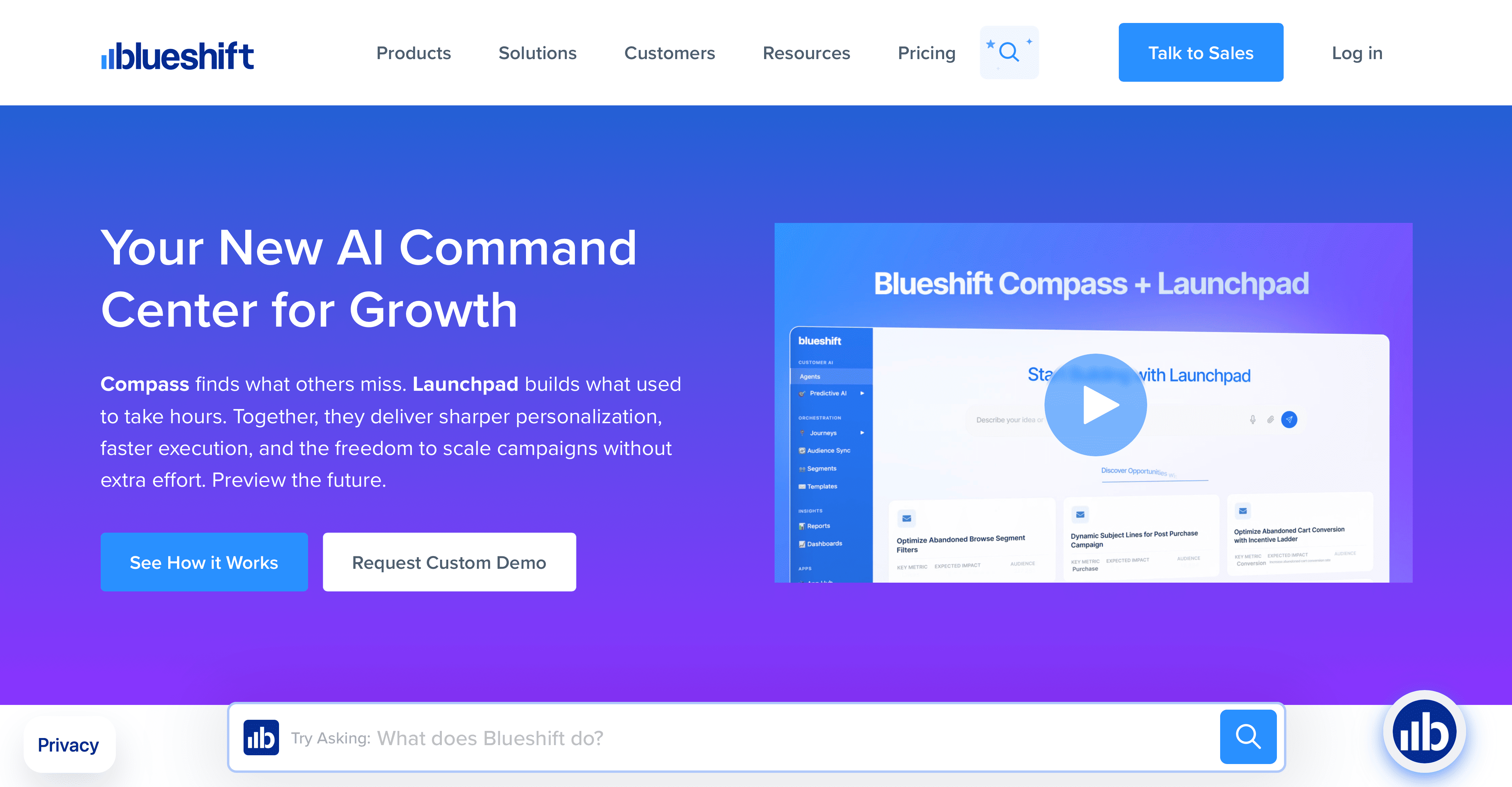
Blueshift is a Customer Data Platform (CDP) that employs AI to aggregate data from all channels and forecast precisely what message a customer should see next. By using real-time behavior to trigger emails or push notifications, it goes beyond simple segmentation to “segment-of-one” personalization. It makes the connections between what users do on your website, app, and in-store.
- Primary platform focus: Cross-Channel Marketing Automation.
- Use cases: Triggering predictive “next best purchase” emails, churning prevention campaigns, and unifying customer data profiles.
- Best for: Growth-focused brands with large customer databases needing advanced retention strategies.
- Pricing: Starts around $750 – $1,250/month (Growth plans).
4. Clerk.io
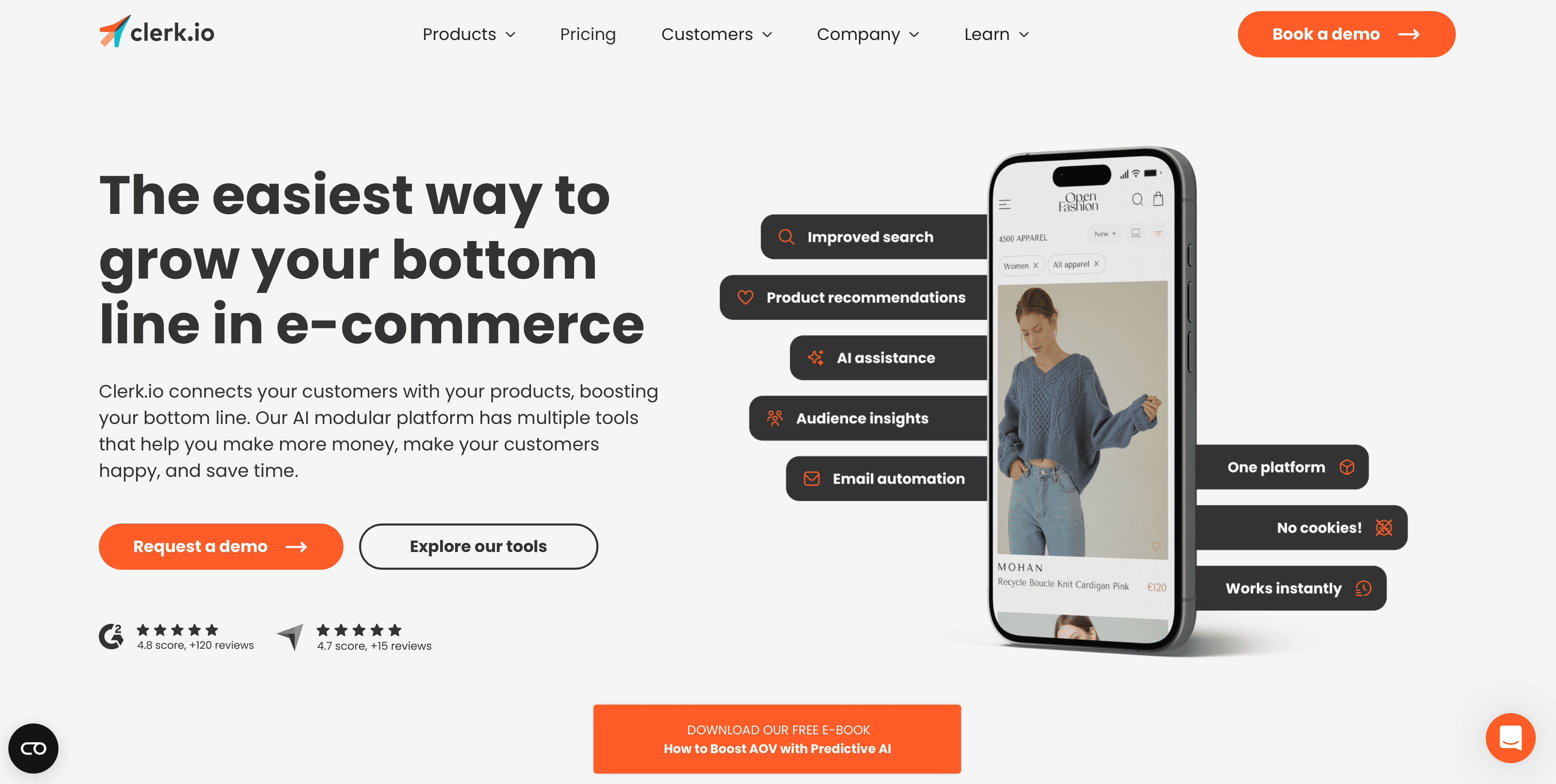
Clerk.io is a plug-and-play personalization engine that improves search results, product recommendations, and email marketing simultaneously. It is famous for its “Sales-Saving Search” which ensures customers never hit a dead end, even with misspellings. The platform is highly modular, allowing brands to pick just the search tool or the full recommendation suite.
- Primary platform focus: Personalization & Search.
- Use cases: Intelligent site search, “customers also bought” carousels, and automated email product recommendations.
- Best for: SMBs to Mid-market stores (especially on Shopify/Magento) wanting an all-in-one personalization tool.
- Pricing: Freemium available; Paid plans are usage-based (e.g., pay per 1,000 searches).
5. Jacquard
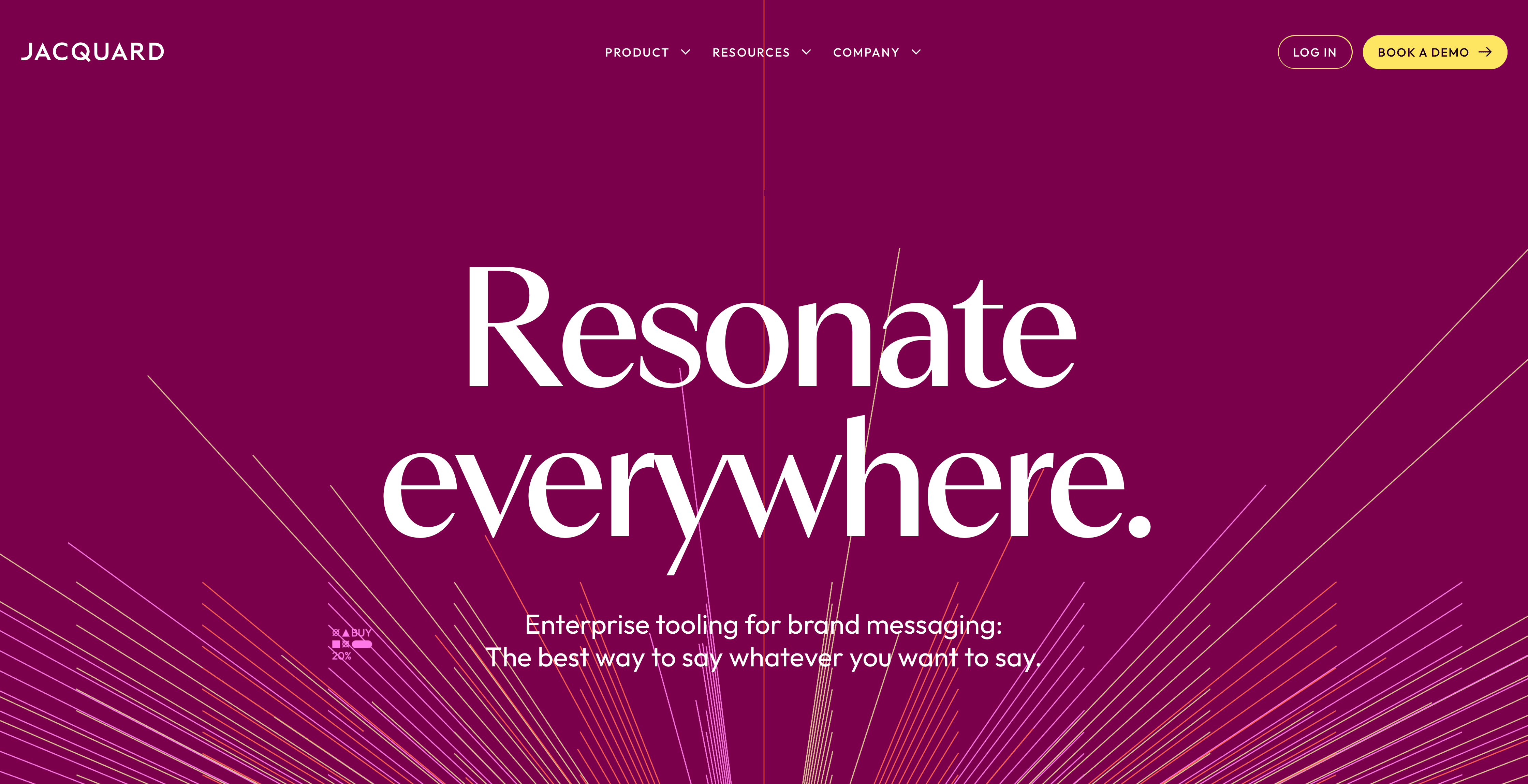
Jacquard uses deep learning to create and optimize marketing language that has been shown to convert, rather than merely speculating about what copy works. It creates email subject lines, push notifications, and ad copy that outperforms human-written control groups by analyzing your brand voice and historical performance. It successfully eliminates guesswork and “writer’s block” when creating campaigns.
- Primary platform focus: Generative AI for Marketing Copy.
- Use cases: Optimizing email subject lines for open rates, generating Facebook ad copy, and SMS campaigns.
- Best for: Enterprise brands with high email volume looking to squeeze extra percentage points out of open rates.
- Pricing: Custom pricing (Tiered based on volume).
6. Gorgias AI Agent
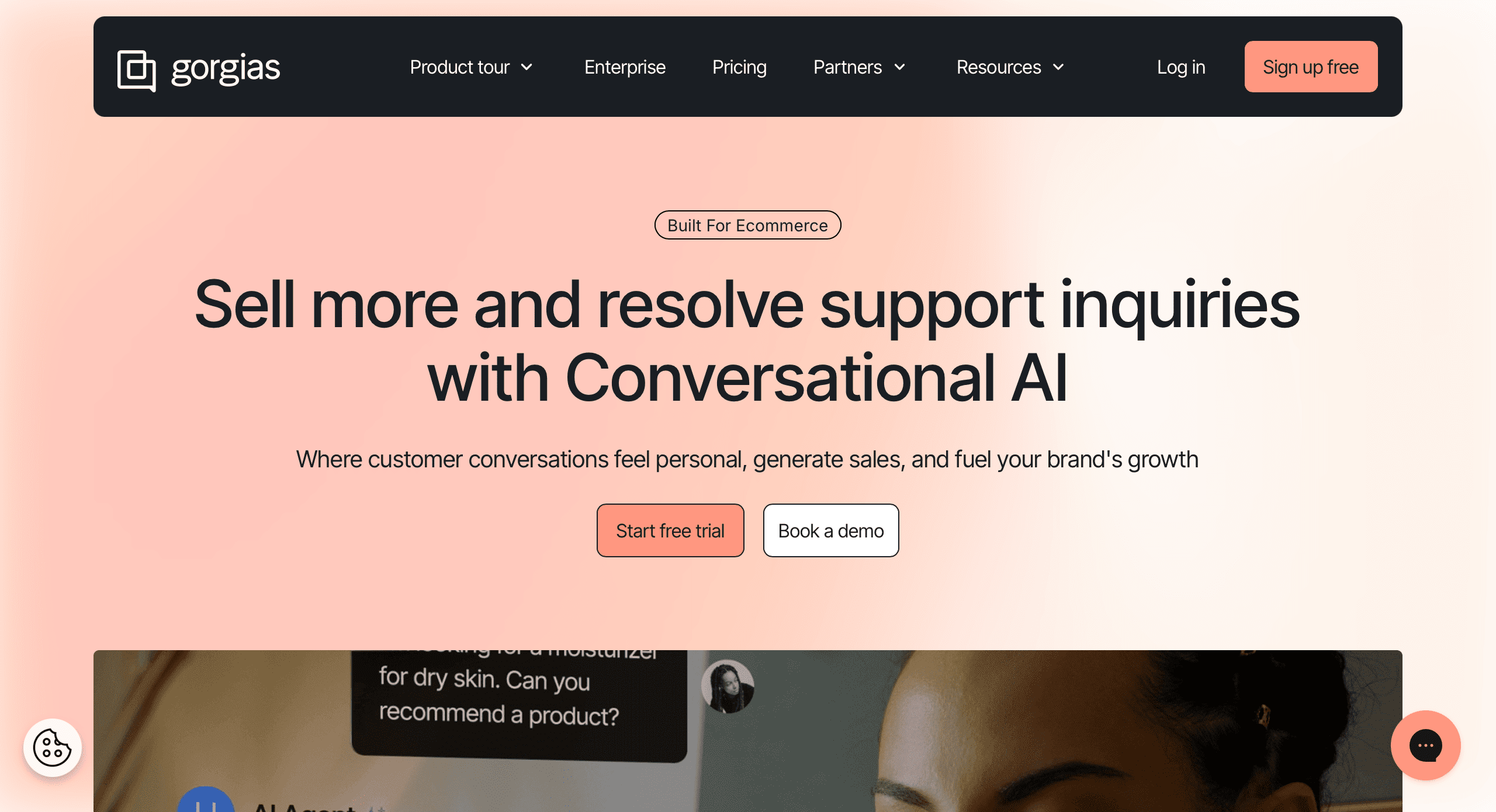
Gorgias AI agent was designed specifically for eCommerce firms to fully resolve support tickets without human intervention. This tool can be integrated directly with Shopify to modify orders, check shipping status, and process refunds automatically.
- Primary platform focus: Customer Service Automation (CX).
- Use cases: Instantly answering “Where is my order?”, cancelling orders, and automating returns handling.
- Best for: Shopify merchants overwhelmed by repetitive support tickets.
- Pricing: Usage-based (approx. $0.90 – $1.00 per automated resolution).
7. Yuma AI
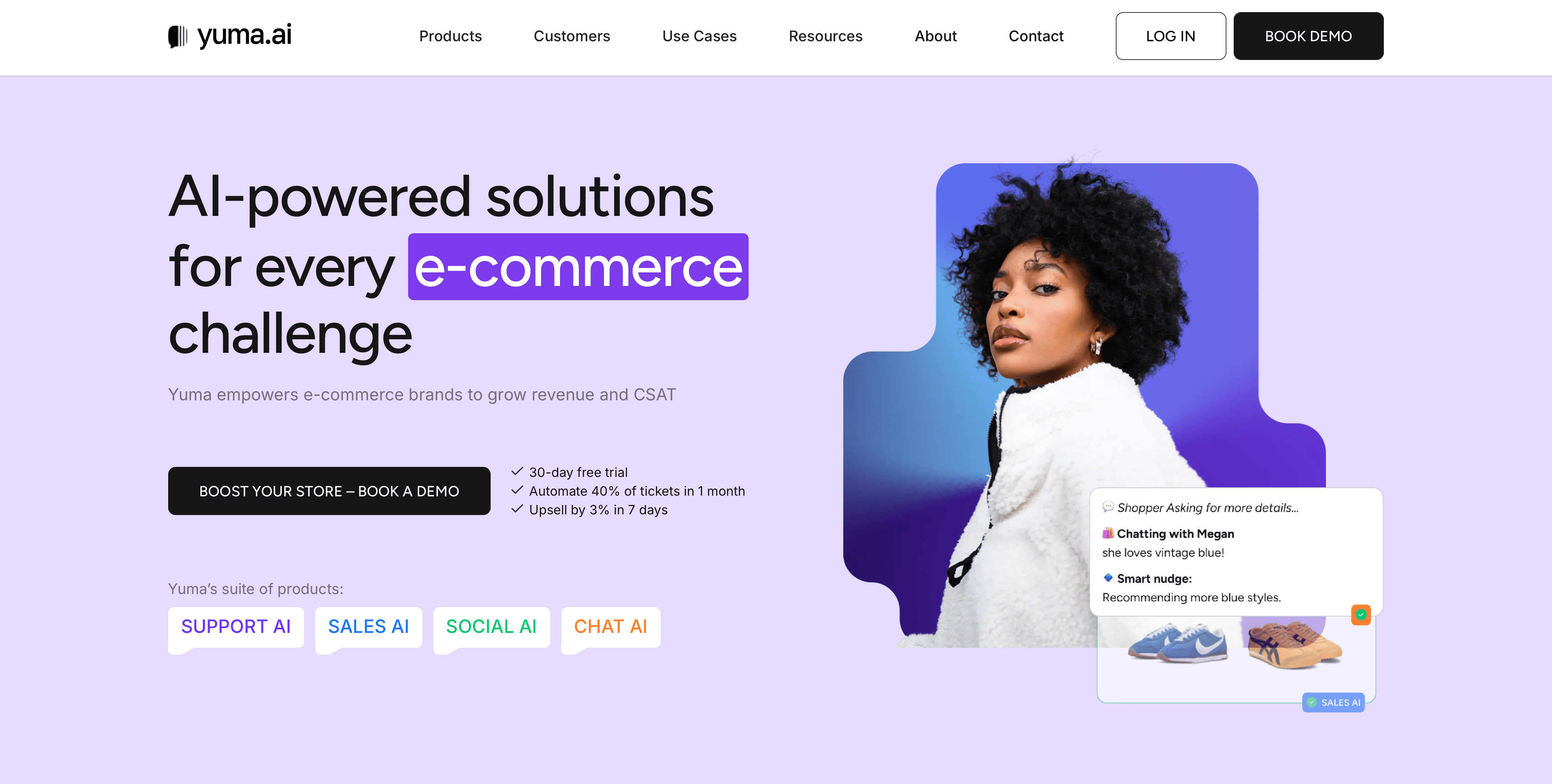
Yuma is a specialized middleware that targets merchants using Gorgias or Zendesk, functioning as an AI brain for their helpdesks. For human agents to review, it creates flawlessly on-brand responses; if confidence is high, it sends them automatically. It is very good at imitating the particular tone and subtleties of a brand’s policies.
- Primary platform focus: Helpdesk Ticket Automation.
- Use cases: Auto-drafting replies for agents, handling multi-language support, and auto-closing spam or “thank you” tickets.
- Best for: High-volume merchants who want to keep a “human in the loop” while speeding up response times.
- Pricing: Performance-based (approx. $350/mo for 500 resolutions).
8. Zavvy
Zavvy is essential for contemporary e-commerce operations to automate the onboarding and training of scaling teams, despite being frequently referred to as an HR tool. It employs AI to develop “knowledge journeys” and training programs for new hires, guaranteeing that warehouse teams and support personnel are quickly up to speed.
- Primary platform focus: Employee Onboarding & Training AI.
- Use cases: Rapidly training seasonal support staff, automating SOP updates, and career pathing for internal teams.
- Best for: rapidly scaling eCommerce companies that need to onboard dozens of employees quickly.
- Pricing: Starts around €6/user/month.
9. ManyChat

By automating conversations on Facebook, Instagram, and WhatsApp, ManyChat dominates the social commerce market. It enables companies to create “chat funnels” that smoothly lead customers from an Instagram comment to a purchase. Its AI capabilities can now control keyword triggers and produce conversational responses to generate leads around the clock.
- Primary platform focus: Social Media Chat Automation.
- Use cases: Automating “DM me for a link” campaigns, recovering abandoned carts via WhatsApp, and running Instagram giveaways.
- Best for: D2C brands heavily reliant on Instagram and influencer marketing.
- Pricing: Free plan available; Pro starts at $15/month (scales with contacts).
10. Octane AI
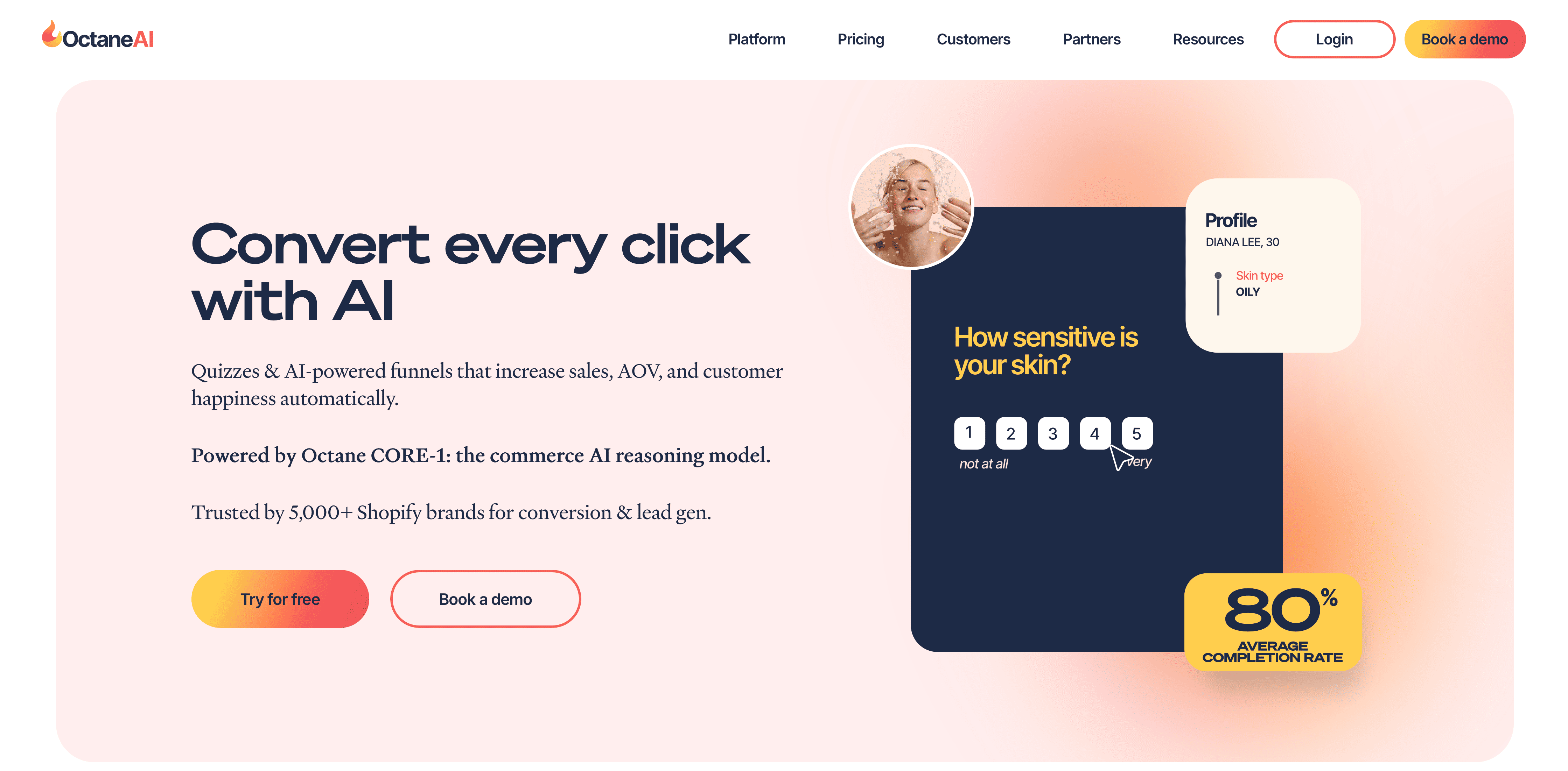
Through interactive, AI-powered tests, Octane AI assists brands in gathering “zero-party data”—that is, information that consumers voluntarily disclose. In order to make product recommendations and synchronize profiles with marketing platforms such as Klaviyo, it asks customers about their preferences and skin type/style. Unknown visitors are transformed into comprehensive customer profiles.
- Primary platform focus: Quizzes & Zero-Party Data.
- Use cases: “Product Finder” quizzes, personalized welcome flows, and gathering preference data for email segmentation.
- Best for: Beauty, Wellness, and Apparel brands where product fit varies by customer.
- Pricing: Starts at $50/month.
How to Choose the Right AI Solution for Your eCommerce Business?
The top 10 eCommerce AI solutions mean that there are others on the market. With thousands of similar AI solutions, “analysis paralysis” becomes a real threat. It’s tempting to chase the tool with the flashiest demo, but even the most powerful AI in the world is useless if it doesn’t fit your specific infrastructure.
We prepared a little guide to help you find the most suitable solution for your business and understand the true use cases of eCommerce AI solutions:
What specific metrics are you trying to move right now?
- You should be able to identify a single bottleneck (such as a high bounce rate or a support team that is overwhelmed).
- Once you’ve identified the single most important issue, you can start looking for an AI solution.
Do you have a developer who can spend 10 hours on this?
- Don’t underestimate the implementation time.
- If you don’t have an internal tech team, stick to “Plug-and-Play” solutions. If you have a dedicated team, you can opt for API-based solutions.
Does this play nicely with your source of truth?
- If your AI chatbot learns that a customer hates red shirts, but your email marketing tool doesn’t know that, you have failed.
- The solution must offer a native, bi-directional integration with your main platform (Shopify, Magento, Salesforce, or your CDP).
How does the pricing scale if you have a viral moment?
- You need to avoid solutions that punish you for success. Some AI tools charge per “resolution,” “interaction,” or “API call.”
- Look for tiered flat-rate pricing or capped usage models if your traffic fluctuates wildly.
Need an AI Agent with Human-Like Reasoning?
Standard chatbots are frustrating and outdated. They get stuck in loops, misunderstand simple questions, and can leave your customers requesting to speak to a human (we, as customers ourselves, have been there).
To solve this issue, you need an AI agent that understands how human agents interact with your customers. CogniAgent truly changes the game with its human-like reasoning, ability to understand emotions, nuance, and intent.
The best part is that you don’t need a PhD in computer science to use it. The setup only takes 5 minutes, and our user-friendly interface smoothly guides you through the entire process.
- Get true “human” logic and understanding
- No need to write rows of code
- Get 24/7 productivity
Ready to hire your first digital assistant? Sign up for free today to see CogniAgent in action, or get in touch with our team to discuss any questions you still have.