




- AI eCommerce personalization is now a revenue engine, not a nice-to-have
- Customers expect relevance, but reject intrusive personalization
- Real-time, predictive personalization outperforms static segmentation
- Trust, ethics, and privacy have become competitive advantages
In 2026, AI personalization for eCommerce has moved far past “Hello {Name}” on email templates. AI now fuels real-time, context-aware experiences that match customer intent across channels, devices, and life stages. Retailers that get personalization right are seeing significantly higher conversion rates, stronger loyalty, and measurable ROI gains, but the era of blind personalization is also ending. Customers want relevance without fatigue, privacy with transparency, and experiences that feel helpful instead of creepy.
This article dives into how advanced AI personalization works in practice, what strategies truly deliver in 2026, and the real data behind each approach.
84%
of eCommerce companies using AI
25%
increase in conversions with AI personalization
20%
reduction in cart abandonment
What Modern AI Personalization eCommerce Looks Like
AI-driven personalization systems ingest massive customer traces: browsing behaviour, past purchases, interaction patterns, chat sessions, feedback loops, and more. These systems apply machine learning and deep learning to dynamically adapt experiences.
In practice, this means:
- Product suggestions tailored to user interests
- Personalized homepages based on browsing intent
- AI chat assistants proactively offering support
- Dynamic pricing for individual propensity to purchase
This distinction between passive personalization (displaying known preferences) and active personalization (anticipating real needs and guiding decisions) is shaping strategy in 2026.
Winning AI Personalization for eCommerce Strategies for 2026
Some personalization tactics are now foundational, while others are emerging. Below, we cover the ones yielding the biggest payoff.
1. Hyper Personalized Product Recommendations
Perhaps the most mature area of AI personalization, recommendation engines now leverage real-time intent signals (not just historical purchases). These systems use deep learning to understand multi-dimensional customer profiles and surface products that align with momentary motivations.
Examples in Action
- Session-Aware Product Recommendations: Suggesting different items at different stages (browsing vs. purchase intent)
- Cross-Channel Consistency: Aligning product suggestions across app, web, email, and ads
💡Impact: Retailers see conversion increases of 15–30% and CLV lifts of over 30% when recommendation systems are tuned with real behavioural data rather than static segmentation.
2. Contextual Search Personalization
AI-powered search now understands semantics and intent, not just keywords. Customers can submit natural language queries (“budget headphones for travel flights”), and systems return context-relevant results instantly.
- Natural language search increases engagement and reduces bounce rates.
- Visual and voice search integration enhances accessibility and discovery.
This technology aligns with the broader shift toward conversational commerce and reduces friction between search and purchase.
3. Predictive Personalization and Dynamic Experiences
AI isn’t just reactive, it predicts. Predictive analytics for personalization uses behavioural signals to forecast what customers are likely to do next. More importantly, it signals a broader shift toward intelligent, proactive personalised experiences where brands anticipate customer needs instead of simply responding to actions.
Examples include:
- Predicting churn risk and triggering retention offers
- Anticipating repeat purchase timing with reminder nudges
- Dynamic content based on seasonal behaviours
These strategies help shape early engagement and drive lifetime value, not just single conversions.
4. Omnichannel Personalization
Customers don’t shop in silos, so personalization shouldn’t either. Unified cross-channel personalization brings coherence across every touchpoint:
- Website and mobile app
- Social media feeds
- Email and SMS
- In-store/ad-banner experiences
💡Impact: Studies show that omnichannel personalization increases customer lifetime value and loyalty because the experience feels seamless and highly tailored.
5. Conversational & Agents-Driven Personalization
AI shopping agents, chatbots that guide discovery and decision making, makes it possible to replace static menus and search bars. These agents can::
- Engage users conversationally
- Answer specific queries with personalized responses
- Build carts and suggest checkout options
💡Impact: According to industry observations, major tech firms are pushing AI agents that may soon complete purchases autonomously with consent, redefining eCommerce navigation.
9/10
consumers more likely to shop with personalized offers
22%
AI improves marketing performance and overall return on investment
93%
CMOs report measurable business ROI from GenAI adoption efforts
Ethical & Human-Centric Personalization in eCommerce
AI-powered personalization offers enormous commercial upside, but its long-term success depends on something far more fragile than technology: customer trust. As personalization systems become more predictive, more autonomous, and more embedded across the customer journey, ethical design is no longer optional. It has become a strategic requirement.
Modern consumers are increasingly aware of how their data is used. They notice when recommendations feel helpful, but they also notice when personalization crosses into discomfort. The difference between “smart” and “creepy” is often determined by how transparently the system operates and how much control the customer feels they retain.
Privacy, Trust, and Transparency
Academic research consistently highlights consumer concern around data usage, algorithmic fairness, and opaque decision-making in AI-driven systems. Studies emphasize that when users do not understand why something is being recommended, or how their data is being processed, trust erodes quickly, even if the recommendations themselves are accurate.
This reinforces a critical principle for 2026: privacy, transparency, and bias mitigation must be foundational design choices, not compliance afterthoughts.
In practice, ethical personalization translates into concrete product and UX decisions rather than abstract policy statements. High-performing brands increasingly embed trust signals directly into the experience.
| Category | Description | Practical Implementation | Impact on Customer Experience |
| Privacy | Ensuring customer data is collected and used responsibly | Clear opt-in/opt-out controls; minimal data collection | Builds trust; reduces anxiety about data misuse |
| Transparency | Making AI recommendations explainable | “Why this product?” disclosures; rationale for suggestions | AI helps users understand system logic; reduces perceived creepiness |
| Control | Empowering customers to manage their personalization settings | Customer-controlled data preferences and settings dashboards | Enhances sense of agency; increases engagement and willingness to share data |
| Bias Mitigation | Preventing unfair or discriminatory recommendations | Regular audits of AI algorithms; fairness metrics | Increases perceived fairness; promotes brand integrity and loyalty |
| Trust-Centered Design | Designing AI experiences that feel collaborative, not intrusive | Human-centered UX, clear communication, gentle nudges | Boosts engagement, repeat purchases, and long-term loyalty |
These features do more than satisfy regulatory expectations. They actively improve the customer experience by making personalization feel collaborative rather than intrusive.
Trust-centered personalization consistently leads to stronger outcomes: users engage more, provide higher-quality data, and develop deeper loyalty when they feel respected and in control. In contrast, opaque systems often trigger skepticism, reduced engagement, and long-term brand damage.
How Personalization Strategy Works Across the Customer Journey
Not all personalization efforts deliver equal value. Here’s how to think about personalization from awareness to post-purchase:
1. Awareness Stage
AI identifies latent interest signals (e.g., content engagement patterns) and tailors marketing campaigns messages to:
- display ads relevant to interests
- curate social content feeds
- prioritize SEO visibility for personal intent phrases
2. Consideration Stage
At this stage, AI personalization supports comparison and exploration:
- recommended alternative products
- dynamic pricing based on conversion likelihood
- personalized search results
3. Decision & Purchase Stage
Here, personalization lifts conversions with:
- real-time intent triggers
- scarcity cues
- one-click offers based on buying profiles
4. Retention & Loyalty Stage
Post-purchase personalization improves return rates:
- predictive replenishment reminders
- loyalty perks tailored to behaviour
- personalized content based on lifetime value
This journey lens shows that personalization isn’t a single tactic, it’s an ecosystem spanning discovery to loyalty.
AI Personalization Examples: Success Stories of Mid Sized Businesses
While the specific impact of AI in eCommerce personalization depends on company data and implementation, several mid‑size retail and eCommerce brands have shared documented success from adopting intelligent personalization strategies. These real‑world examples demonstrate that strategic integration (both in technical architecture and across teams) is happening today and generating meaningful business results.
Real‑Time Recommendations Increase Revenue for Fashion Retailers
BrandAlley, a growing online fashion retailer, used an AI recommendation engine to tailor product suggestions based on real‑time clicks, impressions, and purchase data.
Measured outcomes included:
- 10% increase in average basket value
- 24% win‑back of at‑risk customers
BrandAlley credits its personalization setup with improved relevance of product showcases and stronger repeat engagement.
👉 Source: M Accelerator – BrandAlley AI Personalization Case Summary
Large Mid‑Market eCommerce Platform Sees Revenue and Loyalty Growth
A major U.S. eCommerce company (mid‑market in size) partnered with an AI recommendation provider to launch a real‑time product suggestion system.
Business results after implementation:
- 40% increase in revenue
- 30% increase in total sales
- 49% uplift in customer loyalty and repeat purchases
What made this project successful was the integration of the personalization engine across multiple digital channels, ensuring that recommendations weren’t confined to a single touchpoint but were part of a unified shopping experience.
👉 Source: Futurism AI success story – eCommerce Personalization Case
What These Stories Teach Us
These documented cases illustrate several shared success factors that align with broader industry trends:
- Integrated data flows matter: Companies that link product, behavioural, and campaign data tend to see larger uplifts from personalization engines.
- Real-time signals outperform static lists: Personalization that adapts to active shopper intent drives stronger engagement than simple “recommended for you” blocks based only on historical activity.
- Cross-channel execution is key: Results are strongest when personalization works seamlessly across product pages, search, email, and even retention campaigns.
Together, these insights underscore the strategic value of embedding AI personalization throughout the digital commerce ecosystem — not just in isolated widgets or one-off experiments, but as core elements of how customers discover, explore, and convert.
Conclusion: AI eCommerce Personalization in 2026
AI personalization now sits at the center of eCommerce growth and customer engagement. The brands that succeed in 2026 will be those who:
- Treat personalization as journey continuity, not just a product upsell tool
- Balance relevance with privacy
- Deliver personalized shopping experiences that feel human, helpful, and contextually smart
How You Can Use AI Builder To Win Clients?
While AI personalization strategies are transforming eCommerce across the board, AI tools like CogniAgent help implementing AI personalization to your business. CogniAgent enables retailers (from mid-size shops to growing brands) to deploy AI agents that handle both personalization and operational workflows, creating seamless customer experiences.
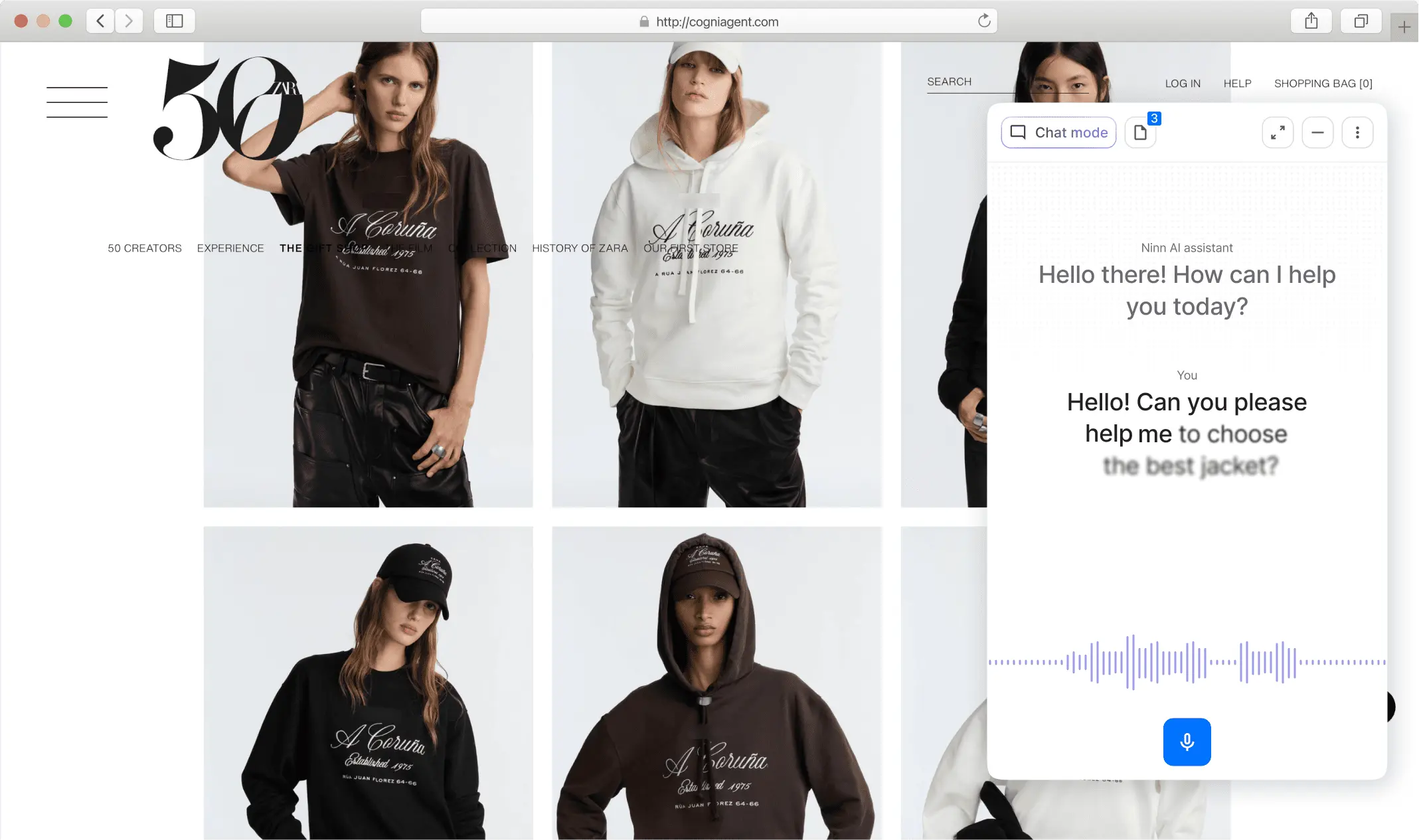
With CogniAgent you can
- Provide real-time, context-aware recommendations based on customer history, product catalog data, and current behavior
- Answer product questions, track orders, and manage returns around the clock, reducing friction and boosting satisfaction
- Automate back-office tasks, including inventory updates, CRM record management, competitor pricing analysis, and shipment tracking
- Coordinate multiple AI agents across channels to maintain consistent personalization and operational efficiency
- Integrate with 2,700+ platforms including Shopify, WooCommerce, Magento, and BigCommerce, allowing stores to scale without migrating or overhauling existing systems
By combining personalization with intelligent workflow automation, retailers can not only deliver highly relevant experiences but also reduce operational bottlenecks and improve efficiency, freeing teams to focus on strategy, product development, and customer engagement.
Book a demo to see how you can win with CogniAgent or try to build your first AI agent for eCommerce for free.