Let’s say a line cook applied to your restaurant on Sunday. On Tuesday, they sent a follow-up email, and by Thursday afternoon, they had accepted a job down the street. And you hadn’t even opened the application yet.
That’s a speed failure that happens dozens of times a year in service industries like restaurants, auto repair, cleaning, hospitality, and delivery, you name it. The truth is that hourly candidates don’t wait. They apply for five, six, sometimes ten jobs at once and respond to the first person who gets in touch with them.
Around 96% of U.S. hiring professionals now use AI for things like checking resumes. And 73% say they speed up the hiring process by a lot. Candidate response times dropped from 7 days to under 24 hours when businesses implemented AI-powered chat and automated scheduling.
You don’t need a dedicated HR department or an enterprise software budget to fix this. This guide breaks down the best AI recruiting tools available today. You’ll find out how they work in real service businesses and how to pick the one that works best for your business without making things more complicated than they need to be.
Why Traditional Hiring Breaks Down in High-Turnover Industries
Most hiring guides target companies with a talent team, a structured recruitment process, and ample time to execute it. That’s not you. If you’re running a restaurant, an auto shop, or a cleaning service, you are likely the owner, the operations manager, and the recruiter all at the same time.
High-turnover service businesses don’t post jobs and then fill them. They are posting jobs all the time: a driver goes away, a front-of-house worker disappears, a technician gets a better deal, and it goes on and on. High-volume hiring has become the norm, which creates a structural mismatch with how most hiring works.
Traditional hiring assumes:
- Someone has time to read every application
- Candidates are patient enough to wait 48–72 hours for a response
- Scheduling back-and-forth via email or phone is manageable
In 2026, this sounds more like wishful thinking. In a 10-person business where the owner does inventory on Thursdays, none of those assumptions are true.
Scheduling interviews has become the biggest “operational tax” on hiring, taking up around 38% of a recruiter’s time. For business owners who don’t have dedicated staff, that time adds up quickly. Industry estimates say that businesses that are actively hiring spend an average of 3 to 6 hours per week on repetitive screening and follow-up communication.
Why speed matters more here than anywhere else
In professional services, a candidate might wait a week for an interview. In hourly service hiring, that window is measured in hours. The first employer to follow up gets the hire. Staffing agencies know this well—89% of those that have integrated AI into their recruitment process report major time savings, and over a third have cut hiring costs. For small and mid-sized service businesses, the gap between “responded in two hours” and “responded in two days” is often the gap between a filled shift and an empty one.
What AI-Based Recruitment Tools Actually Do
Before you start comparing platforms, it helps to know what you’re buying. AI recruiting isn’t just one thing; it’s a group of tools that each undertakes a different part of the hiring process. Not every tool does every part equally well. Here are the three functions that matter most for high-turnover service businesses.
1. Automated first-pass screening
An AI recruiting tool reads incoming applications and filters candidates based on the criteria you set. For example, it’s up to you to set availability, location, years of experience, certifications, or whatever matters most for that role. Instead of manually reviewing 40 applications for a line cook job on weekends, you get a ranked shortlist of five.
Deep-learning AI and semantic search have come the furthest here. Modern AI matching evaluates real skills, work history patterns, and role fit instead of just matching keywords. For example, it doesn’t just flag anyone who mentioned “customer service” on their CV. AI screening accuracy can now analyze resumes with 94% accuracy and match skills with 89% success.
2. Interview scheduling automation
After a candidate passes the screening, coordination is the next thing to take care of. An AI assistant sends candidates a link to set up their schedule based on your availability at the time. No texting back and forth or playing phone tag. The best AI recruitment tools send automated reminders to cut no-show rates.
3. Candidate follow-up and re-engagement
This is the part that most small businesses completely miss. An AI chatbot or automated sequence keeps candidates interested between the time they apply and the time they interview. It can send them updates, answer common questions, and reach out to anyone who has gone quiet. This alone can triple the number of candidates you have to deal with, for example, for a cleaning service that has 20 open positions at the same time, and it won’t add a single hour to your week.
What AI tools don’t do
AI tools for recruitment neither make the final hire nor assess culture fit. They also don’t replace the conversation where you decide whether someone’s the right person for your team. The use of AI here is about removing repetitive communication from your plate. This means that when you do sit down with a candidate, you’re talking to someone pre-vetted, scheduled, and still interested.
The Most Popular AI Recruitment Solutions in 2026: Side-by-Side Comparison
Not every platform is built for a 12-person cleaning crew or a three-location burger joint. Some of the most heavily marketed AI recruiting software is designed for enterprise HR teams with six-figure budgets and dedicated implementation staff. Here’s an honest breakdown of the leading recruitment AI tools and where they fit.
CogniAgent
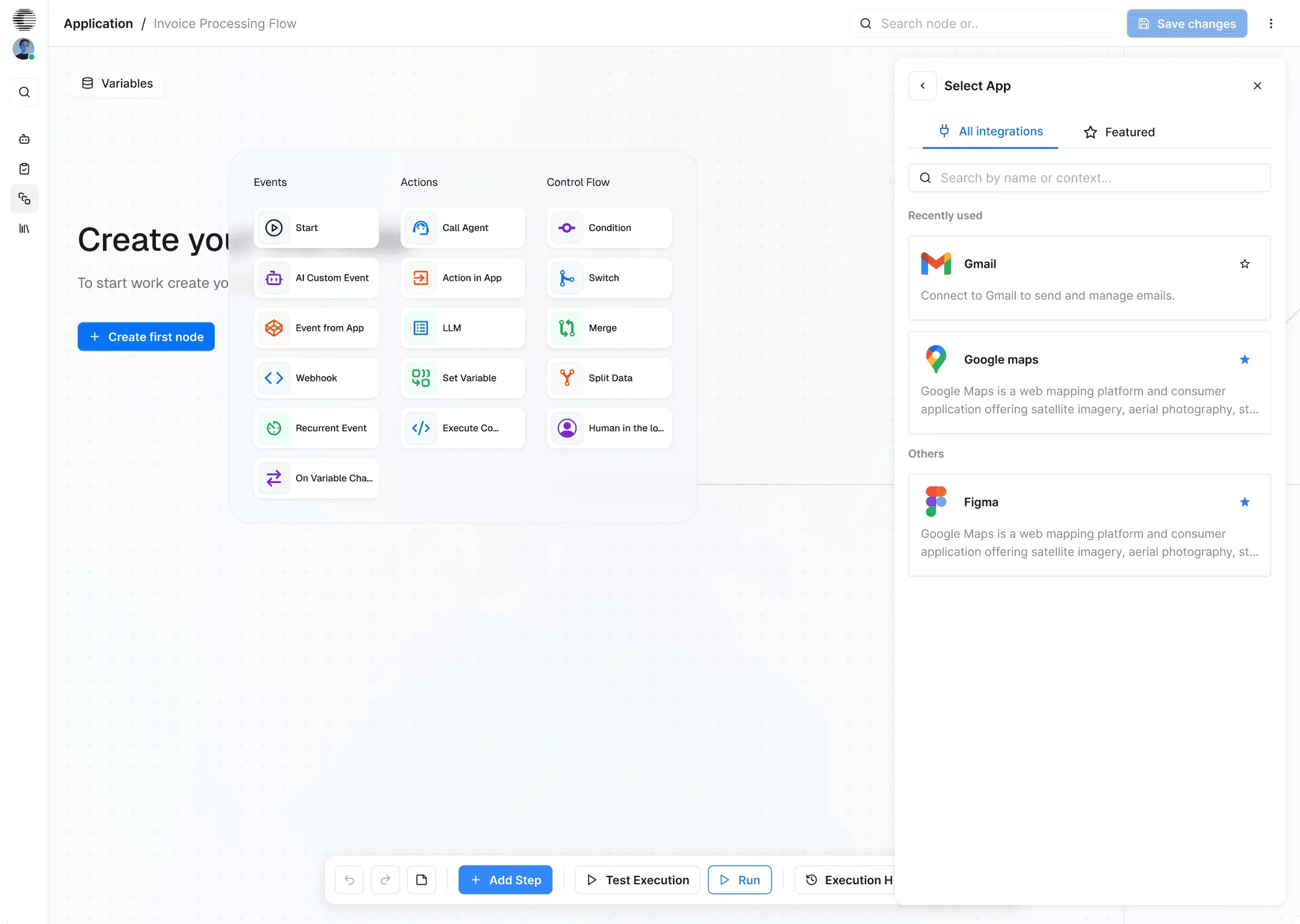
If you’re running a restaurant group, a mobile auto shop, or a regional delivery operation, CogniAgent is purpose-built for your context. As an AI-powered recruiting platform with powerful reasoning capabilities, it is ideal for companies where hiring never fully stops. It also makes for a boon for companies that lack a dedicated HR function to oversee the hiring process.
What it does:
- Automates first-pass screening based on role-specific criteria (availability, location, certifications)
- Sends SMS follow-ups the moment a candidate applies
- Handles interview scheduling end-to-end with calendar sync and reminders
- Triggers onboarding communication automatically on hire
Who it’s for: Most AI recruiting platforms are built around corporate hiring workflows. This means they assume you have an ATS, an HR team, and a multi-week process. CogniAgent is built around the reality that you need a candidate screened and scheduled within hours, not days. The SMS-first approach matters here: hourly workers don’t reliably check email, and CogniAgent’s follow-up sequences are designed around how service industry candidates communicate.
It works like a real AI recruiter that runs in the background while you run your business and only shows you the candidates who are worthy of your time.
Pricing: Depends on your hiring volume. Free trial available.
Olivia by Paradox
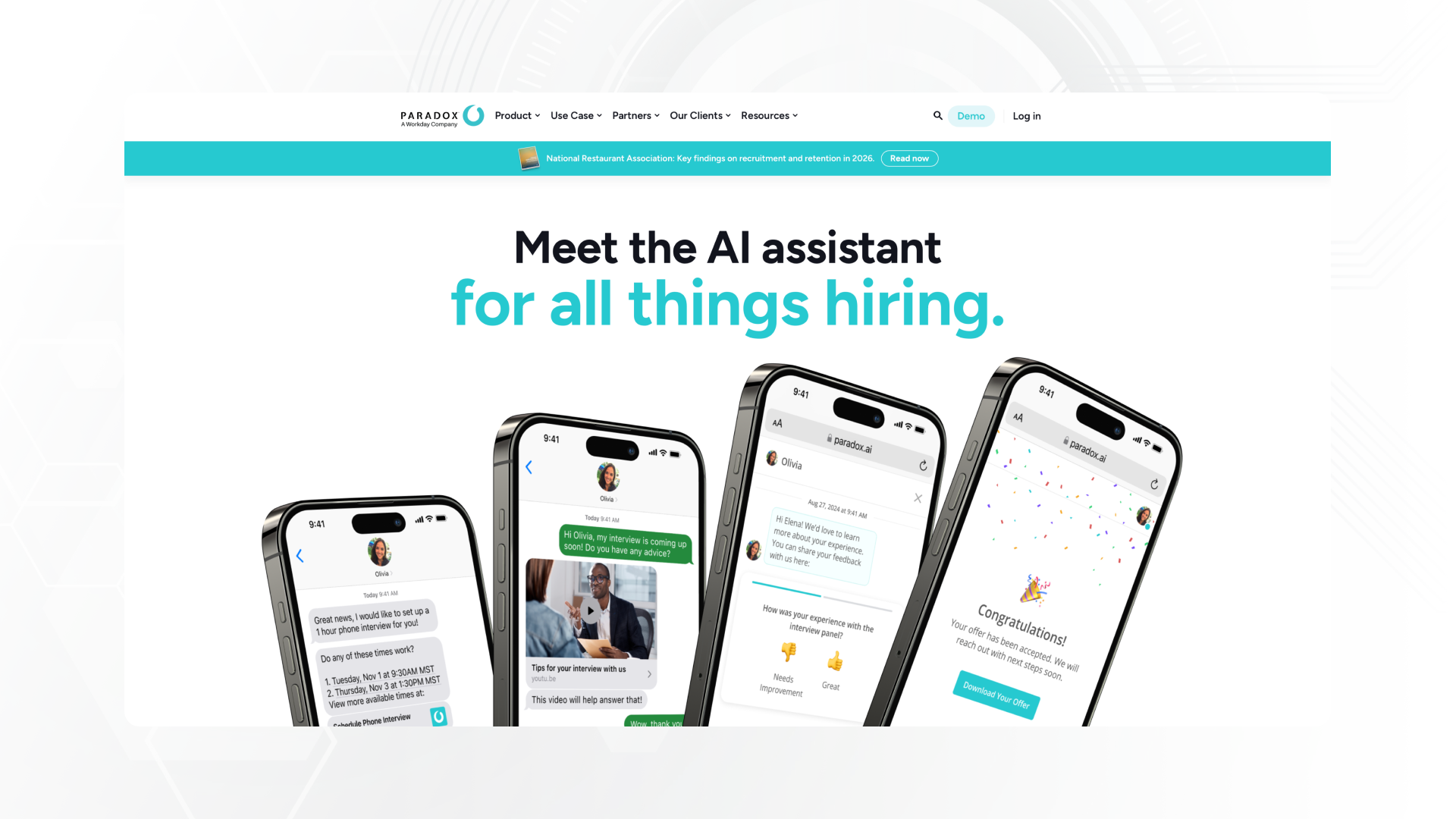
Paradox is one of the most well-known names in conversational AI for enterprise and franchise QSR. Its flagship product, Olivia, acts as an AI interviewer that engages candidates via text, handles screening, schedules interviews, and operates in over 100 languages. Companies like GM and 7-Eleven use it on a scale.
What it does:
- Conversational AI screening via SMS and chat, 24/7
- Self-scheduling with native ATS integration
- High-volume application processing at enterprise scale
- Works inside an applicant tracking system or as a standalone layer
Who it’s for: Big franchise owners and multi-unit QSR brands that have their own HR staff and budgets for the whole company. This is one of the few tools on the market that can handle pure volume, as Olivia can talk to more than 100 candidates at once.
For a single-location auto shop or an independent restaurant group, it can be too much and too expensive.
Pricing: Enterprise only. Estimates start at $1,000+/month. No free trial, no self-serve option.
Manatal
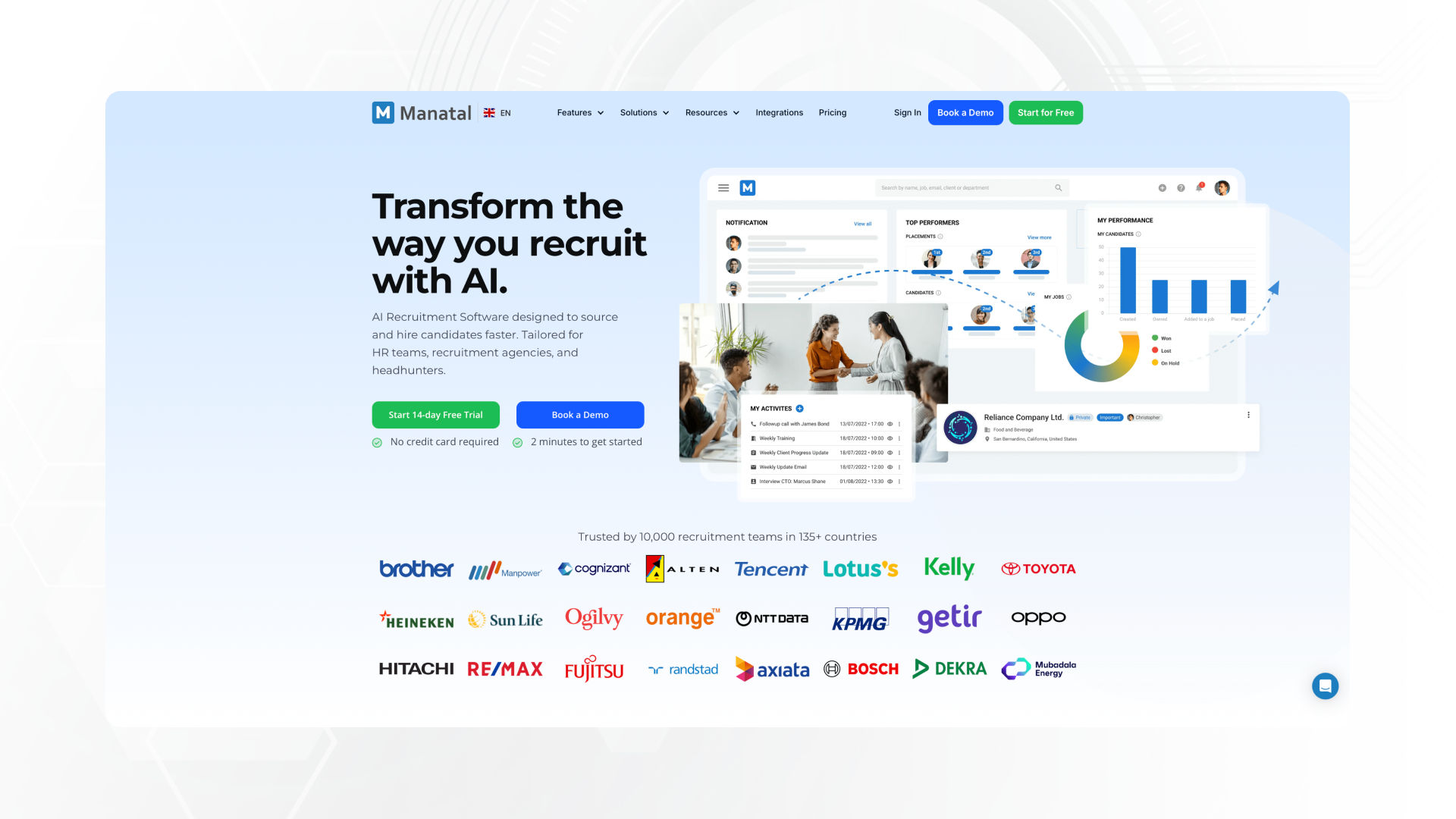
Manatal is an applicant tracking system with an AI layer built on top. It scores and ranks candidates against job criteria, enriches candidate profile data with social media information, and offers a basic AI interviewer feature for first-round screening.
What it does:
- AI candidate scoring and ranking within an ATS workflow
- Candidate sourcing from LinkedIn and job boards in one interface
- Drag-and-drop pipeline management
- Basic reporting and insight dashboards
Who it’s for: Small HR departments and recruiting teams that need an affordable ATS with light AI capabilities and are comfortable navigating a traditional recruiting workflow.
Pricing: Professional plan from $15/user/month. Enterprise at $35/user/month. A 14-day free trial is available.
Breezy HR
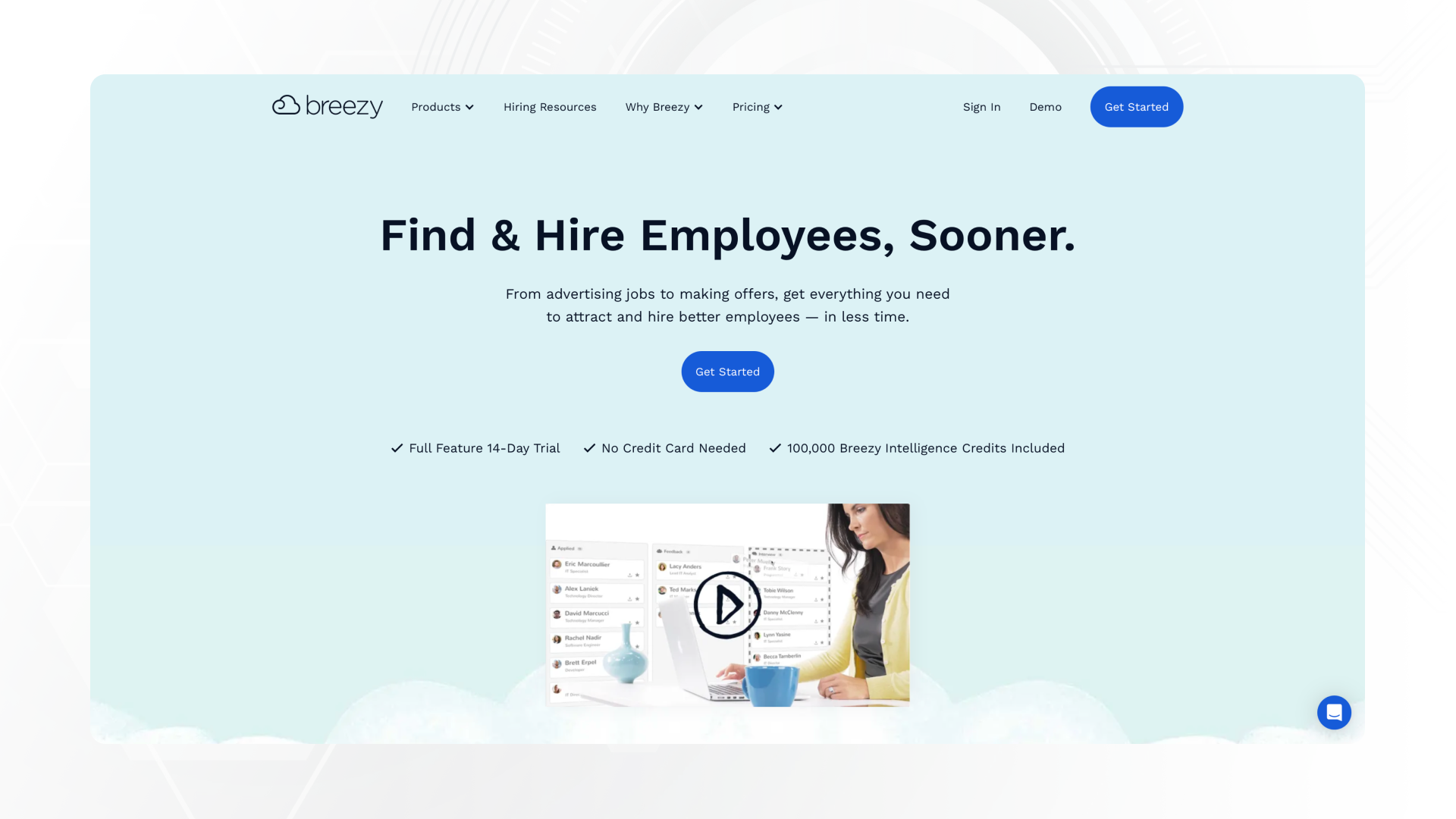
Breezy HR is a solid recruiting platform for small businesses looking to find the best candidates without a steep learning curve. It offers a drag-and-drop hiring pipeline, job posting to multiple boards, and basic automation features. It makes for an accessible starting point for businesses just beginning to explore AI options.
What it does:
- Multi-board job posting from a single dashboard
- Basic automated messaging and pipeline triggers
- Interview scheduling via calendar integration
- A free tier for low-volume hiring
Who it’s for: Small businesses doing light, occasional hiring who want a clean interface and minimal setup. For companies that are always hiring for multiple roles, the workflow automation isn’t deep enough. If you have to hire a new line cook and delivery driver every month, Breezy’s automation may seem like it’s doing the easy things and leaving the hard things to you.
Pricing: Free trial available. Paid plans start at approximately $143/month (Bootstrap).
Workable
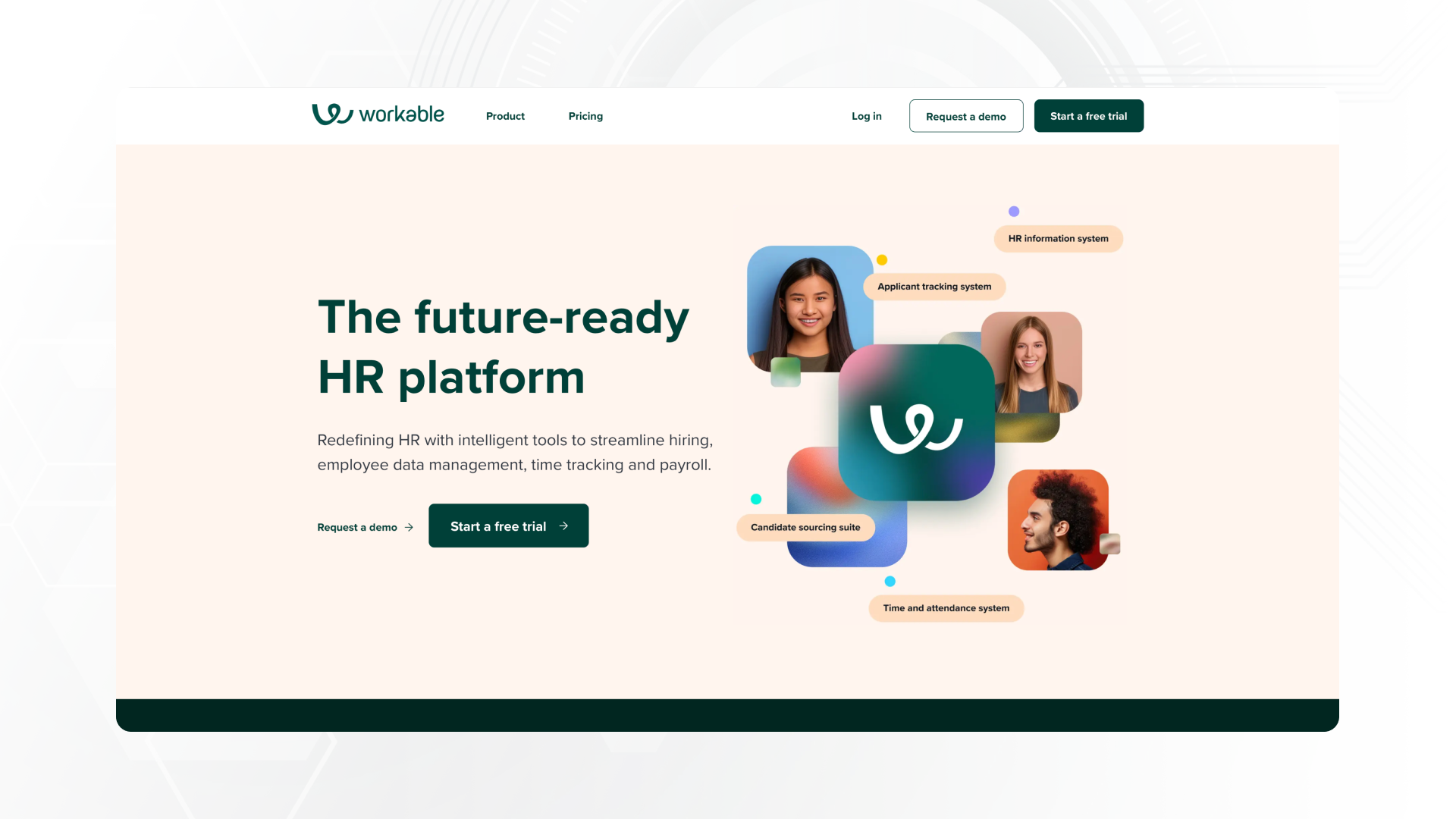
Workable is often described as an all-in-one HR and recruiting platform. It combines an ATS, an AI recruiting platform for sourcing from a pool of 400 million candidate profiles, resume screening, interview scheduling, and post-hire HR tools in one system. It’s the closest thing to a full recruiting stack for a mid-sized operation.
What it does:
- AI-powered recruiting with one-click multi-board job posting
- AI Recruiter matches candidates from a 400M+ profile database
- Video interview capabilities built in
- HR tools for onboarding and employee management
Who it’s for: Growing businesses with 20–200 employees that want a single platform handling both recruitment software functions and basic HR management. Works well for businesses graduating from spreadsheet-based hiring. Yet, it’s not built specifically for hourly or service industry hiring.
Pricing: Standard at $299/month; Premier at $599/month. Add-ons like texting and AI video interview features start at $59/month. Free trial available.
Quick comparison of the most sought-after AI recruitment solutions
| Tool |
Best For |
SMS Support |
Pricing Start |
Free Trial |
| CogniAgent |
High-turnover service businesses |
Yes |
Contact for a quote |
Yes |
| Paradox (Olivia) |
Enterprise/franchise QSR |
Yes |
$1,000+/month |
No |
| Manatal |
Small HR teams/agencies |
Limited |
$15/user/month |
14 days |
| Breezy HR |
Small businesses, light hiring |
Weak |
~$143/month |
Yes |
| Workable |
Growing mid-size businesses |
Add-on |
$299/month |
Yes |
How to Choose the Right Recruitment AI Tools for Your Business
The market for AI recruiting tools in 2026 is crowded. Many AI recruiting tools claim to do the same things, and the differences that matter for a service business owner are often buried in fine print. If you want to get the best AI recruiting software, follow a five-question framework to cut through it. Before you commit to any AI-powered recruiting software, check a few things.
Does the selected AI sourcing tool support SMS communication?
Let’s be honest: hourly workers don’t reliably check email. If the platform’s primary communication channel is email, you’ll lose candidates in the gap. Tools like LinkedIn and traditional ATS platforms are built for professional hiring—SMS-first or SMS-native tools are a different category, and for service hiring, they’re the right one. They personalize outreach at the time of application and keep candidates engaged throughout the interview process without manual follow-up.
Does HR software integrate with the job boards and tools you already use?
If you’re posting on Indeed, ZipRecruiter, or Craigslist, your AI tool should pull applications directly from those sources. Third-party tools like calendar apps, your POS system’s scheduling module, or any existing ATS you use should connect without manual data entry. A disconnected talent intelligence platform creates more work than it eliminates.
Is the pricing model right for your hiring volume?
Many AI recruiting tools charge per user, some per job posting, some per candidate processed. For a business that hires constantly, per-posting models can get expensive fast. For one who hires occasionally, per-user pricing is overkill. Run the math against your actual monthly hiring volume before committing to not undermine the entire hiring process.
How much setup does the HR tech require?
A tool that takes three weeks to configure and calls for an implementation specialist defeats the purpose of a business owner who needed help yesterday. Helping HR professionals with recruiting tasks and six weeks of onboarding is a valid use case, but helping you fill a shift vacancy this weekend is a different one.
Does AI recruitment software handle post-hire onboarding communication or stop at the offer?
The best AI recruitment tool for high-turnover businesses doesn’t clock out when someone accepts the job. Automated onboarding sequences (those that confirm the start date, send paperwork, and communicate schedule details) reduce first-week no-shows and set new hires up with a better experience from day one.
![AI Tools for Recruitment [High Turnover Businesses]](https://cogniagent.ai/wp-content/uploads/2026/04/AI-Tools-for-Recruitment-High-Turnover-Businesses.png "AI Tools for Recruitment [High Turnover Businesses]")
The Best AI Recruiting Tools Close the Gap Between Fast and Everyone Else
The hiring race in service industries is won before most business owners even open their inbox. A candidate applies, waits a few hours, gets a faster response from your competitor, and that’s the end of it—no drama, no explanation. That’s not a reflection of how well you write a job description or how competitive your pay is. It’s all about the right timing, and that’s precisely what artificial intelligence solves.
You can let AI-powered recruiting workflows handle the entire journey from “application received” to “let’s talk.” Your tools will manage automated screening, scheduling pings, and follow-ups that would otherwise be ignored.
Agentic AI goes a step further: it doesn’t wait for you to trigger the next step. It runs the recruiting process autonomously, surfacing only the decisions that genuinely need a human. That’s what separates the top AI recruiting platforms from basic automation software. Not only do they help recruiters move faster, but they also automate candidate sourcing end-to-end, so the pipeline keeps moving whether you’re on the floor or off the clock.
AI tools offer capabilities to streamline candidate sourcing in a way that a spreadsheet and a text thread never will. An AI video interview tool, for instance, lets candidates complete a structured first-round screen on their schedule, meaning you’re not losing qualified people just because your availability and theirs don’t overlap on Thursday afternoon.
Recruiters and hiring managers working in restaurants, auto shops, cleaning services, and delivery operations don’t want to reinvent the talent acquisition process. They want to stop losing candidates to silence. A tool like CogniAgent is designed to source candidates from the moment they apply and carry them through screening, scheduling, and onboarding without dropping the thread. That’s what makes it the best of the bunch for high-turnover service businesses.
While other platforms are busy chasing top talent for corporate roles, CogniAgent is built for the businesses that hire constantly, operate lean, and need something that works without a six-week implementation.
 13 min read

![Top AI Receptionists for Cleaning Services [2026]](https://cogniagent.ai/wp-content/uploads/2026/07/Top-AI-Receptionists-for-Cleaning-Services-2026-300x185.webp)
![Best AI Tools for Auto Repair Shops [2026 Guide]](https://cogniagent.ai/wp-content/uploads/2026/07/Best-AI-Tools-for-Auto-Repair-Shops-2026-Guide-300x185.png)