



If you’ve watched enterprise brands pour resources into AI-powered marketing and thought “we’re already behind,” you’re not alone. You see personalized ads, hyper-local SEO automation, improved customer service, and you think to yourself, “Can I make that happen for my small business?”
Here’s what headlines don’t tell you: small teams are actually in a strong position to adopt AI for small business marketing right now, before the market saturates. The tools are affordable, the learning curve is shorter than ever, and the payoff is something no enterprise budget can manufacture for you.
In fact, small business owners have already begun using AI marketing tools to automate and optimize their marketing efforts. A U.S. Chamber of Commerce survey found that 58% of U.S. small businesses now use generative AI, more than double the 23% from 2023.
But who has the time to achieve AI marketing utopia? Your team is already running campaigns on a shoestring and needs your full support, like, yesterday.
Thankfully, transferring your marketing tasks and skills to an AI-powered setting doesn’t have to take months of training: You can start generating personalized social media posts, increasing the volume of your content creation, automating email marketing, and more with the AI tools for small businesses and hacks we’ll discuss in this article.
The Current State of AI Marketing for Small Businesses
An AI marketing system is a digital platform that integrates fully into a business, helping manage different departments and functions, including content creation, email automation, social media scheduling, ad optimization, and more. 48% of SMBs globally now use AI in their marketing, with writing email and social media copy as the top use case (37%), according to Constant Contact’s September 2025 Small Business Now Report.
AI marketing adoption refers to the process of integrating these AI-powered tools within an existing marketing operation or organization. Depending on your organization’s size, brand voice, complexity of marketing strategies, and other factors, the adoption process may be time-consuming and complex, but it often delivers significant time savings and cost reductions. Thryv reports that artificial intelligence adoption among small businesses jumped from 39% in 2024 to 55% in 2025 — a 41% year-over-year increase. 58% save over 20 hours per month.
The OECD adoption gap — where large firms adopt AI at three times the rate of small firms (40% vs. 12% across G7 countries) — is closing fast, and early-mover SMBs gain a lasting competitive advantage before the market saturates.
Remember not to dive right into deployment. If a shiny AI tool is pressuring you to deploy new technology right away without an audit of your marketing workflows, there’s a problem. If you’re using AI tools to aid your marketing team, a no-code AI agent builder can remove that technical barrier that poses risks. And meanwhile, you can explore the best practices of implementing AI tools for small business marketing and 10 lifehacks that show you exactly how to do that.
58%
of U.S. small businesses now use generative AI tools
85%
of SMBs investing in AI report measurable ROI gains
41%
year over year increase in AI adoption
Top 10 Lifehacks: How to Use AI for Small Business Marketing
Use the ten lifehacks below as your starting template for building an AI-powered marketing operation that can genuinely grow your business. We’ve compiled best practices and lifehacks—each one designed to save time, reduce repetitive tasks, and deliver the results that used to require an enterprise-sized team. Whether you’re starting with a free version of a tool or exploring the full range of AI technology available today, you don’t need to be a developer, brainstorm new ideas, or even know how to write a perfect ChatGPT prompt, to make these work.
Lifehack 1: Autonomous Content Calendars
Just as you would set up a content library and an editorial workflow for your in-house team to use, you need to create common spaces for your AI-assisted marketing where content can be grouped, repurposed, and even distributed across social platforms with tools like Repurpose.io.
This lifehack goes beyond a set of tools. Think of it as your team’s “content calendar playbook,” which includes a shared set of expectations for using these tools, so your team can work harmoniously in these spaces. Consider it a living, breathing set of group norms to check in on together quarterly.
How does this translate into real-life use? Monitor the progress, and you’ll notice your team’s thriving, because they’ll be confident about how to use your team’s AI content stack to draft, schedule, and distribute posts.
Lifehack 2: AI-Powered Ghostwriters for Email Marketing Campaigns
Leading AI marketing tools for small businesses anchor their value around automated email sequences. For example, ActiveCampaign uses behavioral triggers and predictive send-time optimization, while Mailchimp offers AI subject line optimization. This is the minimum level of personalized communication you should have with your subscriber list.
Set up a weekly recurring drip sequence on your email platform, and reserve one deep-dive newsletter per month for longer discussions if necessary. It’s okay if you don’t need all the sends, but you should never rush these important subscriber-facing touchpoints.
And yes, you should encourage the use of AI drafting during these campaigns. They are your most valuable time to build your relationship and check in on everything from purchase behavior to engagement patterns.
Lifehack 3: Hyper-Local Search Engine Optimization Automation
When someone nearby searches for what you sell, you want your business to show up first. That’s the whole point of local SEO efforts, and it’s one of the highest-ROI tools for marketing a small business can invest in.
AI for marketing can handle most of the routine tasks automatically. For example, BrightLocal monitors your Google Business Profile, tracks your ranking, and flags inconsistencies. These are those small errors that quietly hurt your visibility, but AI-generated reports and AI recommendations surface them before they snowball into a bigger ranking problem.
AI can also automate citation updates across dozens of directories, so your name, address, and phone number stay consistent everywhere it matters. Think of it as hiring a part-time local search assistant, and when you pair it with an AI writing tool, your team can even draft optimized responses to Google reviews and updated business descriptions. You’ll know your efforts are working when your team is spotting ranking wins on their own.
Lifehack 4: Visual Content Creation on a Budget
AI generated 71% of the images shared on social media in the U.S., so it doesn’t come as a surprise that we suggest using AI-generated marketing content, video content, and images. Social media marketing, content marketing, ad campaigns, and even sales emails require visuals—photos, videos, and infographics. Using AI in your small business to handle image background generation and simple AI video creation can free up a lot of your team’s time.
For example, an AI app that helps small businesses generate professional product backgrounds without a camera is Pebblely. You’ll also encounter AI software with drag-and-drop scene generation, like Flair, and other tools with AI capabilities that would otherwise require booking an entire studio.
You’ll notice how these tools improve your marketing efforts when your team has more time for creative idea generation and spends less time on creating repetitive marketing materials.
Lifehack 5: 24/7 Customer Service via Smart Agents
If you take a look at your current customer service process, you’ll probably notice that none of the factors that play into how you assess your team’s performance have to do with how they function during off-hours.
Shift your support queue to an AI marketing agent, print your FAQ documents into interactive chatbots, and you’ll be well on your way to continuing your customer service cycle in a 24/7 setting. Tidio, for example, resolves up to 70% of customer queries automatically via its Lyro chatbot, while CogniAgent offers autonomous agents with voice AI.
You’ll know your team is thriving because you’ll have regularly updated records of everyone’s interactions and satisfaction scores for their support experience, and you can monitor progress in improving flagged areas.
Lifehack 6: Predictive Lead Scoring
Not every ladies worth the same amount of your team’s time, but you still need to figure out which ones to prioritize. Lead scoring usually takes hours of manual CRM work, gut instinct, and a lot of missed follow-ups. However, predictive lead scoring with AI changes everything.
AI tools analyze the behavior of every lead that enters your pipeline and automatically assign a score that tells your sales team exactly who is ready to buy and who needs more nurturing.
HubSpot CRM, for example, does this out of the box—the AI recommendations highlight higher-scoring leads, so teams always know where to focus. The practical result of implementing AI in your lead scoring process is fewer leads slipping through the cracks, shorter sales cycles, and a team that spends more time closing deals and less time on guessing.
Lifehack 7: Real-Time Competitor Monitoring
Good competitor monitoring is all about good intelligence — knowing both what to track and how to present competitive shifts to your target audience, particularly in relation to other brands in your market. For a small business with a lean team, that kind of intelligence work may not be sustainable. But AI changes everything, allowing smaller teams to monitor competitors around the clock.
Consider Kompyte by Semrush. It automatically tracks competitor ad campaigns, keyword targeting, pricing changes, and content updates. AI can generate real-time competitor battlecards that automatically surface these shifts. SimilarWeb’s free tier adds another layer by using AI to map where your competitors’ traffic is coming from.
The real advantage here is speed. With AI helping your small business, you can easily identify market shifts and adjust your messaging, pricing, or ad spend before your competitors gain traction.
Lifehack 8: Automated Ad Optimization
AI-powered ad optimization has been around for years, and 74% of small and medium-sized businesses are already using or actively testing AI tools for advertising purposes, according to Amazon Ads.
Managing all your small-business ad campaigns in a centralized, AI-powered dashboard makes it easier for you, your marketing team, and your budget to stay aligned. Adzooma, for example, provides AI-powered PPC recommendations for Google, Microsoft, and Facebook Ads. AI-powered recommendations tell you exactly where your budget is being used and show where it’s wasted.
For small business owners managing ad spend without a dedicated media buyer, this is the closest thing to having an always-on campaign manager working in the background. Set your goals, define your budget, and let the AI handle the optimization while you focus on running your business.
Lifehack 9: Review and Reputation Management
We’ve talked a lot about how to manage your marketing presence once it’s in your hands. But how will your small business receive feedback from customers?
Staying in constant communication about the review management process means potential reputation problems can be addressed before they snowball, when they’re much harder to fix. Customer reviews directly impact local SEO rankings and purchase decisions, making timely responses a competitive advantage.
Encouraging your team to step back and look with an open mind at what the review management system can offer is beneficial for both the individual and the business. Birdeye, for example, automates review requests and multi-location reputation management at scale.
You’ll know your team is thriving because they respond to every review within hours, not days. And they proactively flag patterns in customer feedback that inform product and service improvements.
Lifehack 10: The Custom AI Builder
Installing an AI agent builder presents a great opportunity to look for new best practices. Is the way you’ve been doing your marketing workflows over the past several years the best and most efficient? Often it’s not. And when you notice that inefficiency, you start looking for solutions like AI agent builders. CogniAgent offers Cogni Canvas for drag-and-drop agent creation with absolutely no coding required.
Small business owners can choose between two AI agent approaches: pre-built templates or fully custom agents. You need to choose an approach before you deploy your first workflow, and then iterate consistently on all subsequent marketing automations.
No-code AI agent building removes the technical barrier entirely. The more specificity you have in your automation requirements during your setup phase, the more certainty you will have that your AI marketing agent will meet your business needs upon launch.
You’ll know your team is thriving because your custom AI agent handles niche workflows that off-the-shelf tools cannot — from industry-specific lead qualification to personalized follow-up sequences that reflect your brand voice.
Comparing the Best AI Marketing Tools for Small Businesses
While the market offers many efficient AI tools, not all of them are built with small businesses in mind. The three platforms below are among the best options for applying the 10 lifehacks mentioned above and implementing AI in your small marketing team.
CogniAgent
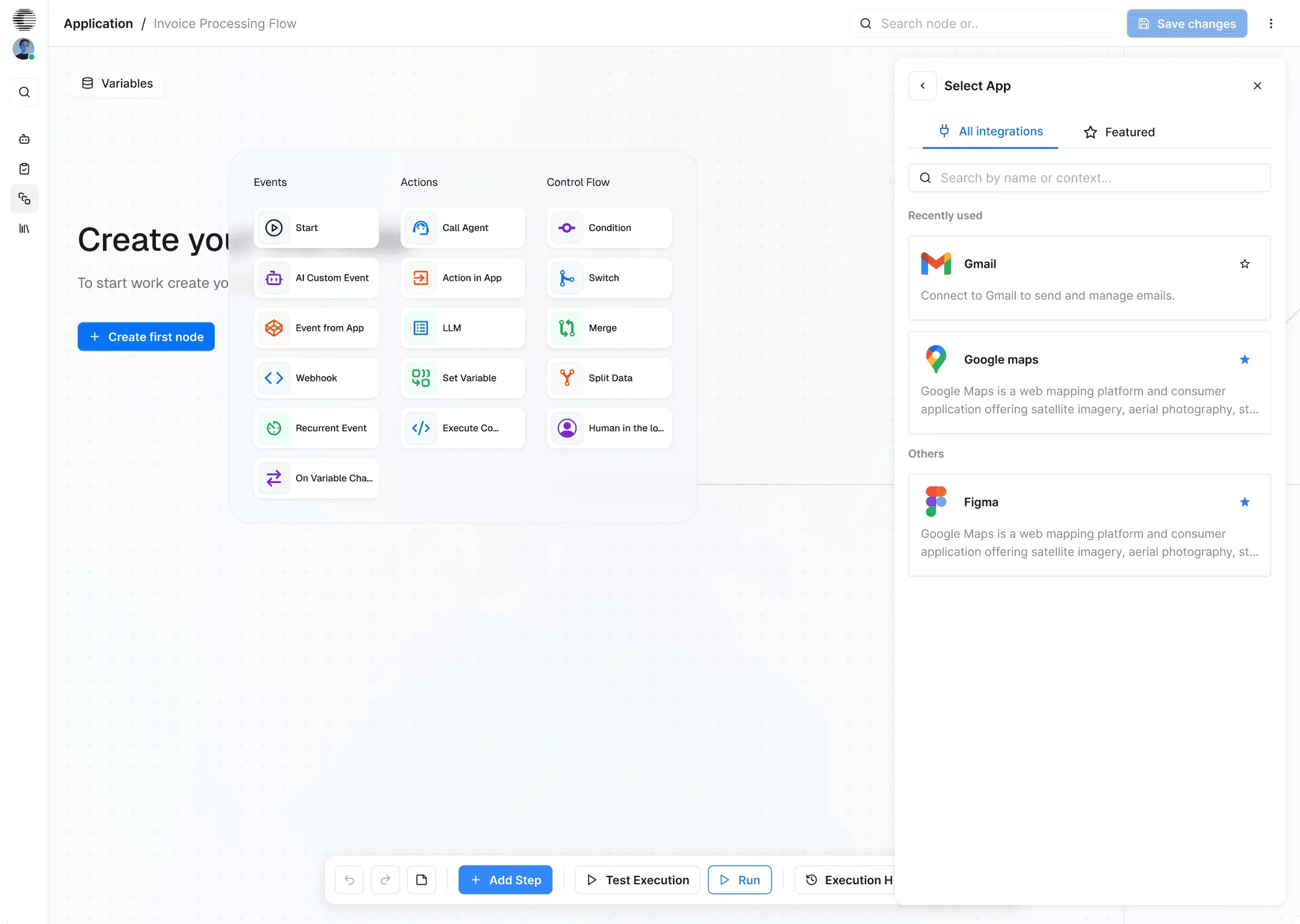
CogniAgent is an all-in-one AI agent platform built for SMB growth and can be used as a dedicated AI Marketing Agent. It handles content generation, campaign analysis, competitor monitoring, customer service, and lead scoring under one roof, eliminating the need to stitch together multiple point solutions.
Features:
- No-code agent builder (Cogni Canvas) for drag-and-drop workflow automation
- Dedicated AI Marketing Agent for content generation and campaign analysis
- Voice AI with emotional adaptation for customer interactions
- 2,700+ integrations connecting your entire marketing stack
- Multi-agent collaboration for handling complex, cross-functional workflows
|
Website |
cogniagent.ai |
|
Year |
2024 |
|
Country |
USA |
|
Best For |
High-growth teams looking for a “human-like” agent |
|
Use Cases: |
Automating lead qualification, competitor monitoring, customer service automation, content generation, and campaign performance analysis. |
|
Pricing |
Plans start with Starter (Free, 500 credits), followed by Pro ($33/month), Business ($181/month), and Enterprise (custom pricing for large-scale deployments), with optional credit add-ons and all plans including unlimited AI agents, workflows, and 2,700+ integrations. |
HubSpot Marketing Hub
HubSpot is an established CRM-first platform with AI features layered on top. Its deeper CRM integration means your marketing and sales data live in one place, with workflows that connect lead generation all the way through to deal closure. It’s a familiar and reliable choice for teams already invested in the HubSpot ecosystem.
Features:
- AI-powered chatbots for lead capture and customer support
- Predictive lead scoring based on engagement behavior
- AI email optimization, including subject line and send-time recommendations
- Content assistant for drafting marketing copy within the platform
- Large partner and integration ecosystem connecting marketing and sales workflows
|
Website |
hubspot.com |
|
Year |
2006 |
|
Country |
USA |
|
Best For |
Teams already in the HubSpot ecosystem |
|
Use Cases: |
Lead generation, email marketing automation, CRM management, sales and marketing alignment, and AI-assisted content creation. |
|
Pricing |
Freemium — Free CRM tier; Marketing Hub from $15/mo per seat |
Jasper AI
Jasper is an AI content creation platform specialized in marketing copy — from blog posts and social captions to email sequences and ad copy. Its standout feature is brand voice customization, which lets you train the AI on your company’s tone so every output stays consistent. It’s built for speed and volume, making it ideal for content-heavy marketing teams.
Features:
- Brand voice customization to match every output to your company’s tone
- Templates library with dozens of pre-built frameworks for common marketing tasks
- AI copywriting across formats: blogs, social, email sequences, and ad copy
- High-volume content generation for teams managing multiple campaigns
- Seamless workflow for briefing, drafting, and editing in one platform
|
Website |
jasper.ai |
|
Year |
2021 |
|
Country |
USA |
|
Best For |
Content-heavy marketing teams needing volume and consistency |
|
Use Cases: |
Blog content production, social media copywriting, email sequence drafting, ad copy creation, and brand voice consistency at scale. |
|
Pricing |
Subscription-based — Creator plan from $39/mo |
Why a Small Business Using AI for Marketing Wins Every Time
Selecting and integrating an efficient AI marketing platform is often a driving force behind modernization, as manual bottlenecks across marketing workflows remain a top barrier for many leaders. 74% of small businesses using AI report positive ROI, according to American Express, even as 88% admit they are still learning how to use AI effectively.
With accessible, well-defined, and quality-controlled AI marketing tools, organizations are significantly more likely to retain customers, noticeably more likely to improve conversion rates, and measurably more likely to be operationally efficient. 85% of SMBs that invested in AI report seeing a measurable return on investment, according to Salesforce.
The numbers bear this out in specific performance metrics: companies using AI reported 8.6% sales productivity gains, 8.5% customer satisfaction improvement, and 10.8% overhead reduction, according to the Duke University CMO Survey (January–February 2025).
A properly executed AI marketing implementation helps guarantee a smooth transition, improves adoption, and maximizes the system’s effectiveness. It should not put undue strain on technical resources. The data shows that small businesses that invest early gain a compounding advantage over those who wait.
Ready to Grow? Build Your First AI Marketing Agent with CogniAgent
A year from now, your small business marketing operation could look completely different. Not because you increased the headcount, but because you made a few smart decisions about how to use the tools already available to you.
If you’re ready to grow your marketing team and apply the 10 life hacks from this article, there’s no better place to start than with building a marketing AI agent with CogniAgent:
A no-code agent builder
2,700 integrations that connect your entire marketing stack
Expert support to guide your implementation
Get started with CogniAgent‘s free plan and build your first AI marketing agent in minutes.