
If you’re running an eCommerce operation (whether you’re a mid-sized wholesaler, a growing D2C brand, or a B2B supplier) purchase orders are part of your daily life. And if you’re still processing them manually, you’re leaving serious time and money on the table.
This guide breaks down what purchase order automation actually is, why it matters right now, which software options exist, and how to implement it the right way.
What Is Purchase Order Automation?
Purchase order automation is the use of software (increasingly AI-powered) to handle the creation, routing, validation, and confirmation of purchase orders without manual intervention. Instead of your team spending hours entering line items from supplier emails, cross-checking inventory, routing PDFs through Slack, and waiting on approvals, automated systems handle all of it in minutes.
At its core, purchase order process automation covers:
- Receiving and parsing PO documents (PDF, email, Excel)
- Extracting key data: SKUs, quantities, pricing, supplier info
- Validating against approved vendor lists and stock levels
- Creating draft orders in your ERP or inventory system
- Routing for approval via Slack, Teams, or email
- Confirming the order and generating invoices automatically
Traditional tools follow rigid rules. AI agents can understand context, handle exceptions, and adapt to varying formats — which matters when you’re dealing with dozens of suppliers sending POs in their own unique formats.
Why Manual Purchase Orders Are Costing You More Than You Think
Let’s start with the numbers, because they’re eye-opening.
The procurement function is moving fast toward AI — faster than most operational domains. According to research by AI at Wharton, weekly use of generative AI within the purchasing and procurement function increased by 44 percentage points from 2023 to 2024, with 94% of procurement executives now using generative AI at least once a week.
Deloitte’s 2024 Global CPO GenAI Survey — conducted with over 100 Chief Procurement Officers across Europe, North America, and Asia-Pacific — found that 92% of CPOs are actively planning and assessing Generative AI capabilities. Among early adopters who have already piloted or deployed AI in procurement, approximately 50% reported a doubling of ROI compared to traditional methods, with some advanced implementations seeing returns of more than 5 times.
Deloitte’s most recent research (2025 Global CPO Survey) adds further evidence: “Digital Masters” — the most advanced procurement organizations — achieved an average 2.8x return on their Gen AI investments, compared to just 1.6x for followers. The primary value driver was enhanced analytics and decision-making, followed by productivity gains.
17.4
days average time to process a single purchase order without any automation in place
$9.40
spent processing each invoice manually by the average organization
14x
faster order processing achieved by best-in-class teams using AI automation
McKinsey’s analysis of procurement teams leveraging AI-driven decision-making shows they have reduced operational costs by 10% and sped up supplier selection by 30%. On the broader automation front, McKinsey identifies autonomous category agents (essentially AI that manages purchase categories independently) as capable of capturing 15–30% efficiency improvements through the elimination of non-value-added activities.
The firm’s 2024 Global Supply Chain Leader Survey, based on responses from 88 senior supply executives across six continents, highlighted that supply chain digitization, including order processing automation, remains a top investment priority, with two-thirds of surveyed companies investing in advanced planning systems.
Gartner has forecasted that by 2026, 60% of procurement functions will have fully integrated AI-driven analytics, with organizations achieving 20% higher cost savings compared to those using traditional methods. The research firm also identified 65% of procurement leaders as planning to use AI specifically to sharpen productivity and decision-making in their operations.
The Real Operational Impact: Before vs. After
Research benchmarks translate into very tangible operational differences. Based on data from Ardent Partners’ surveys and CogniAgent’s documented automation outcomes, here’s what the shift typically looks like for eCommerce operations:
| Metric | Before Automation | After Automation |
|---|---|---|
| Time to process a PO | 3–5 hours (manual entry + approval) | Under 10 minutes |
| Invoice processing cycle | 17.4 days (Ardent Partners avg.) | 3.1 days (best-in-class) |
| Order entry accuracy | 85–90% | 99%+ |
| PO-to-confirmation time | 1–2 business days | Under 30 minutes |
| Processing cost per order | $9.40+ per invoice (Ardent Partners) | Reduced by 78% (best-in-class) |
| Team focus | Repetitive data entry | Supplier relationships, strategy |
Purchase Order Automation Software: 5 Types of Solutions (and How to Choose)
Not every purchase order automation platform is built for the same problem. The right choice depends on your business size, ERP stack, order volume, and how much flexibility you need. Here’s a breakdown of the five main categories, with representative platforms in each.
1. AI Agent Builders — Best for eCommerce Businesses Wanting Full Workflow Control
Best for: B2B eCommerce businesses, wholesalers, and operations teams that need to automate the full PO cycle from inbox to ERP confirmation — without developer resources.
Representative platform: CogniAgent
CogniAgent takes a different approach from traditional purchase order automation software. Rather than giving you a fixed workflow to configure, it lets you build custom Order Management AI Agents that handle your entire PO process end-to-end — adapted to your specific supplier formats, approval logic, and ERP setup.
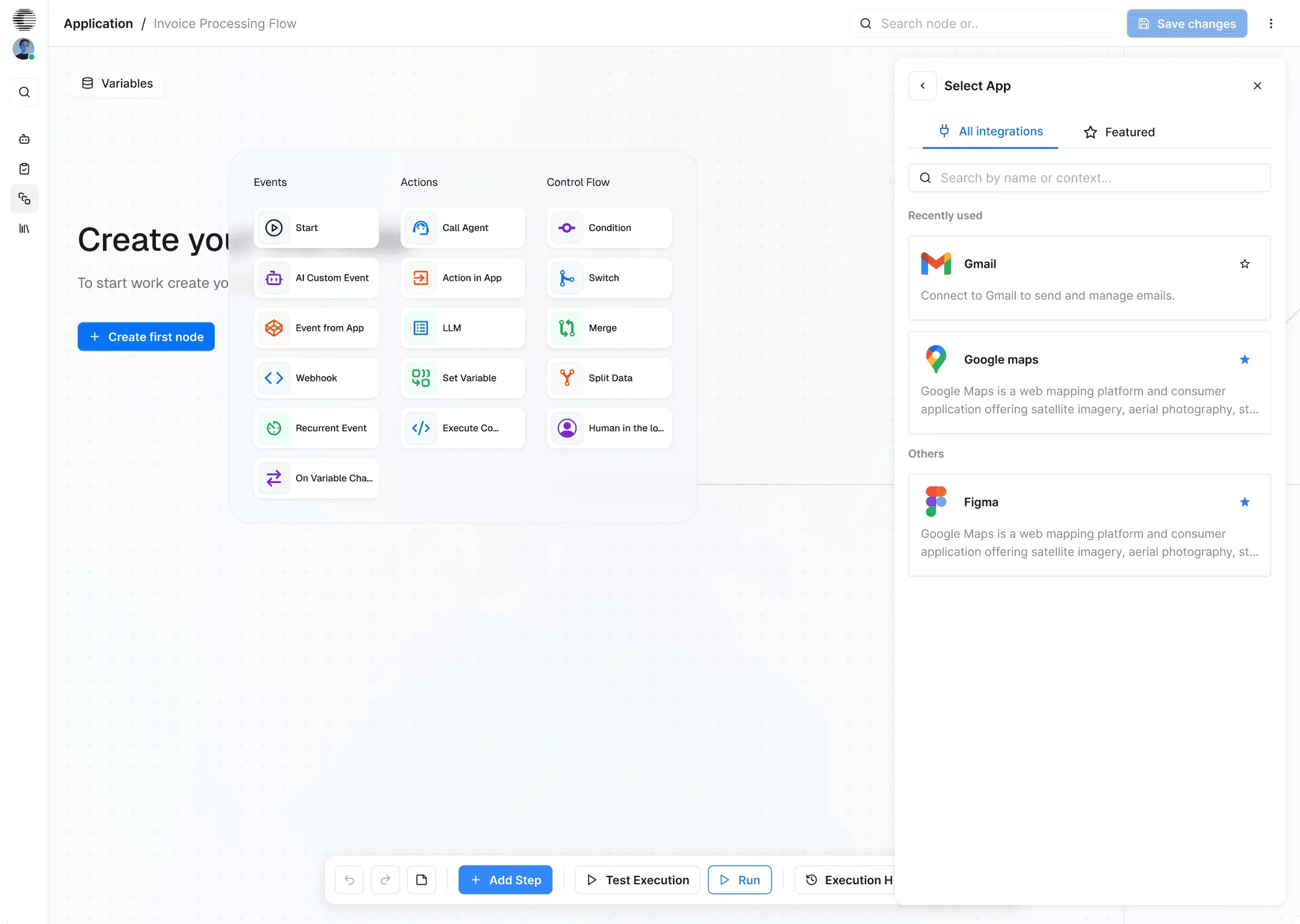
One of scenarios how it works:
- Email Detection — CogniAgent monitors your sales or procurement inbox and detects incoming purchase orders the moment they arrive, regardless of format or sender.
- Document Parsing — The AI agent reads PDF and Excel attachments, extracting product SKUs, quantities, pricing, and order totals from unstructured documents — even when different suppliers use different layouts.
- Validation — Before anything is written to your system, CogniAgent cross-checks the supplier against your approved vendor list, confirms current stock availability, and validates order totals. Exceptions are flagged immediately rather than silently passed through.
- Draft Creation — A complete draft sales or purchase order is automatically created in your ERP — whether that’s NetSuite, Odoo, Zoho, QuickBooks, or a custom system via API. No manual data entry required.
- Smart Notification — Your operations or sales manager receives a structured order summary via Slack or email, with a single click to approve. Approval thresholds are fully configurable: orders under a defined value can auto-approve, while higher-value POs route to senior management.
- Autonomous Execution — Upon approval, CogniAgent confirms the order, generates the invoice, and emails the supplier confirmation, without any further manual involvement. The full cycle completes in under 30 minutes.
What sets it apart: Most order processing automation tools are built on rigid rule sets that break whenever a supplier changes their PO format or an edge case appears. CogniAgent is built on an AI agent architecture, meaning each agent can reason through variation, handle exceptions intelligently, and escalate to a human when genuinely needed — rather than failing silently. The platform also covers the full scope of eCommerce automation — customer service, sales operations, and marketing — making it possible to build a unified AI layer across your operation rather than stacking siloed tools.
2. Enterprise Procure-to-Pay Suites — Best for Large Organizations with Complex Supplier Networks
Best for: Large enterprises and multinationals managing thousands of suppliers, complex sourcing cycles, global compliance requirements, and tight SAP or Oracle ERP integration.
Representative platforms: SAP Ariba, Coupa
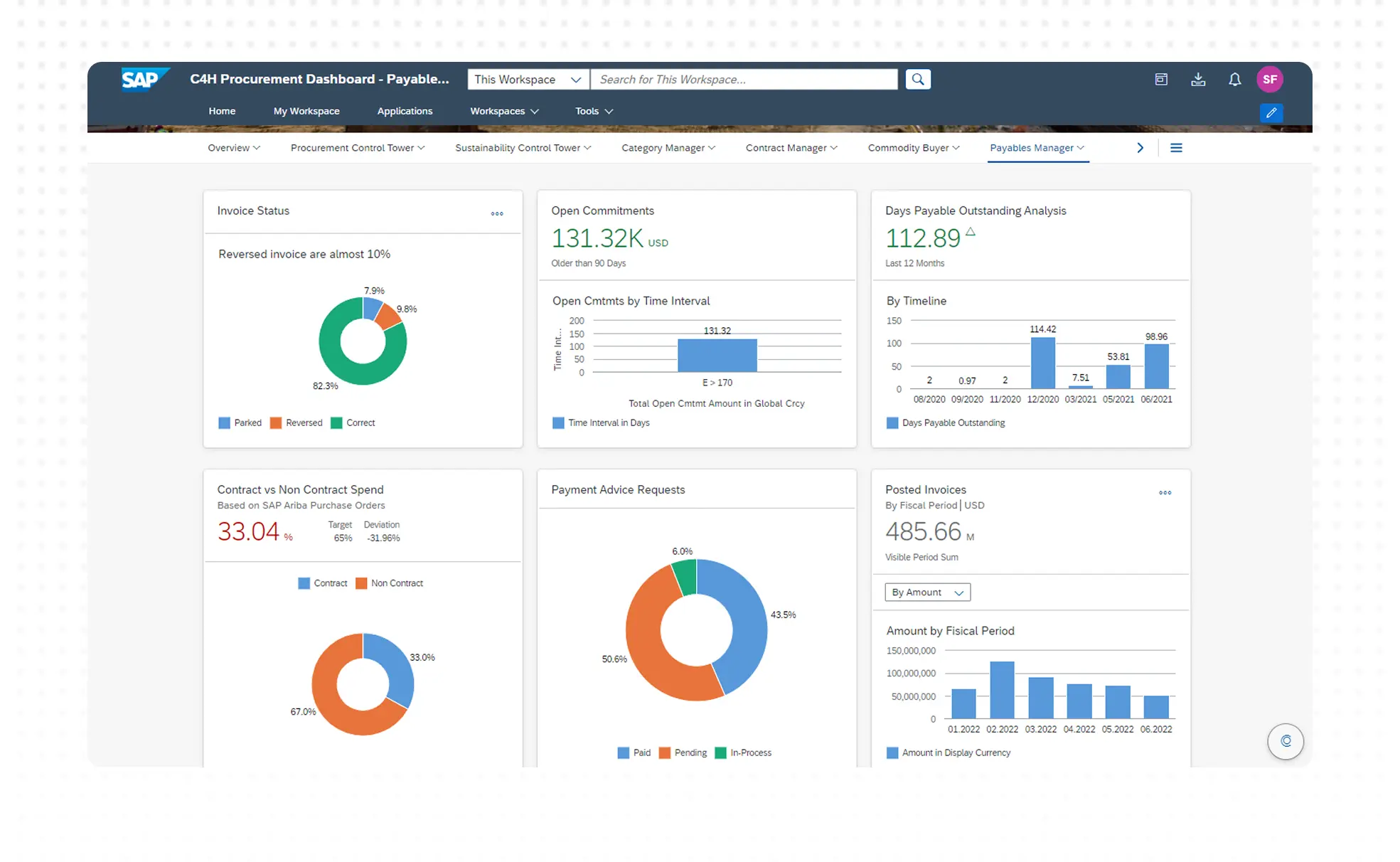
SAP Ariba is one of the most widely deployed enterprise procurement platforms globally. It operates within the SAP ecosystem and connects buyers and suppliers through the SAP Business Network — one of the world’s largest B2B commerce networks. Core capabilities include strategic sourcing, supplier risk management, invoice and PO automation with two-way and three-way matching, and regulatory compliance tooling for multinational operations. It’s a strong fit for organizations already running SAP ERP, but implementation complexity and cost make it better suited to enterprises than growing eCommerce businesses.
Coupa approaches the same market with a cloud-native business spend management platform that unifies procurement, invoicing, expenses, and supplier management. Its AI-native analytics engine surfaces spend anomalies, duplicate payments, and savings opportunities in real time. Coupa’s community intelligence model — drawing on anonymized spend data across its entire customer base — gives procurement teams benchmarking data built into the workflow. Pricing typically starts around $2,500/month and scales with complexity, which makes it better suited to mid-market and enterprise buyers than SMBs.
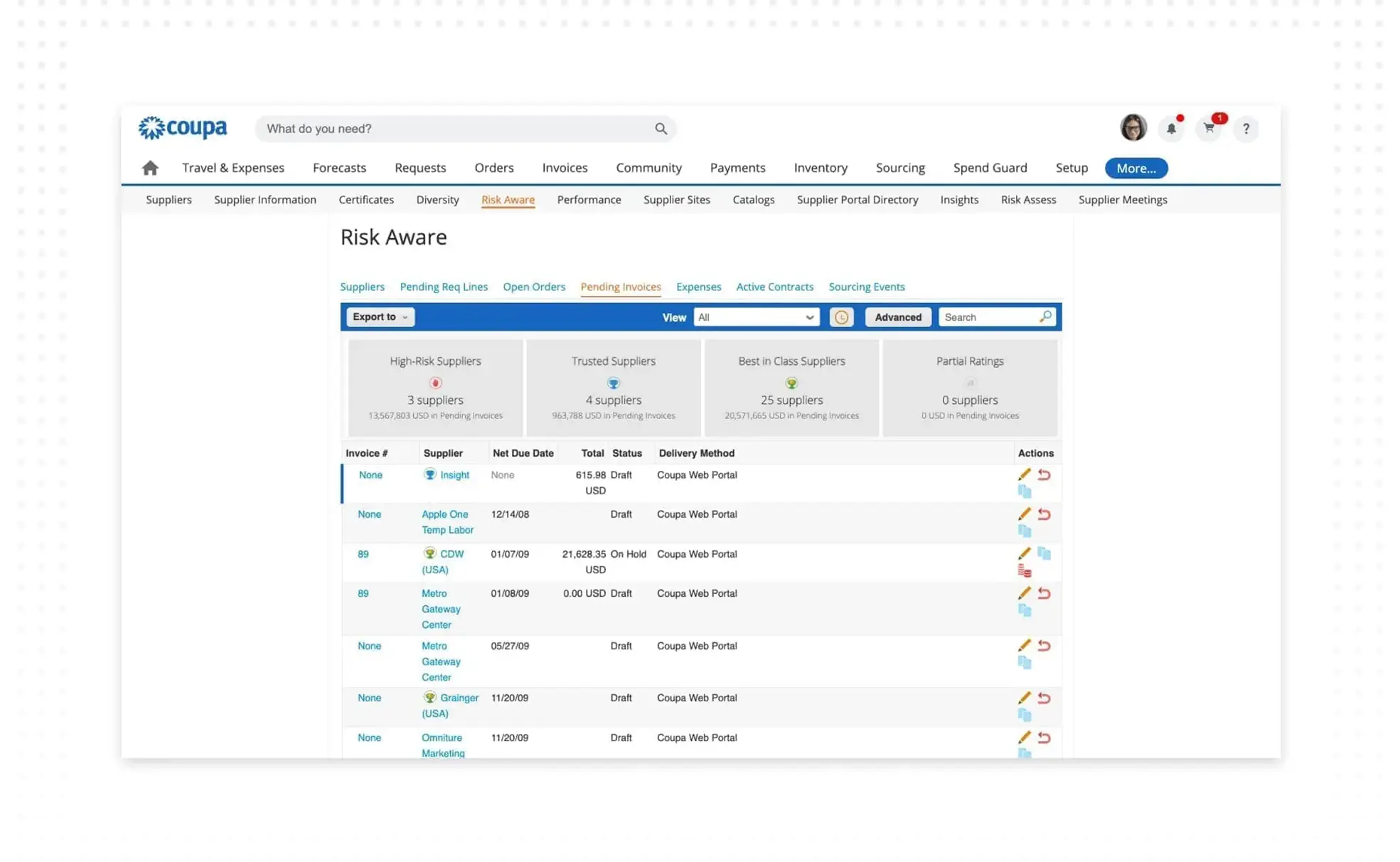
Where these fall short for eCommerce: Both platforms are built for complex, large-scale procurement operations. They require significant implementation timelines, dedicated procurement teams to manage them, and substantial budgets. For an eCommerce business primarily focused on processing incoming supplier POs efficiently, they’re often more platform than needed.
3. Spend Management and Procurement Platforms for Mid-Market — Best for Growing Businesses Needing Structure
Best for: Mid-sized companies with multiple departments and growing procurement complexity, where the primary need is spend visibility, approval workflows, and purchase order management — without enterprise-level overhead.
Representative platform: Procurify
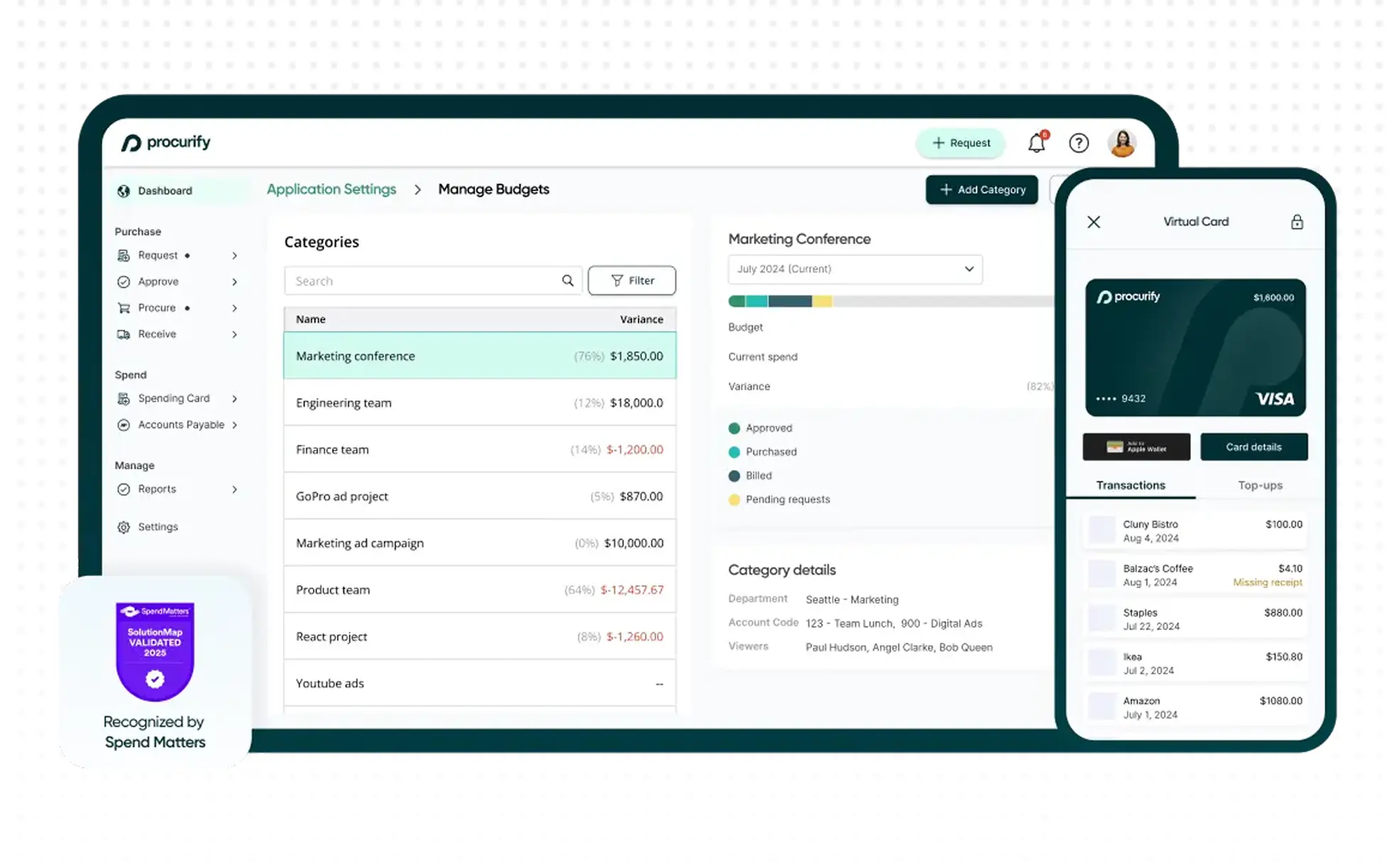
Procurify is a cloud-based spend management and purchase order automation software designed for organizations that need to move beyond spreadsheets and email chains, but aren’t ready for the complexity of enterprise suites. Its core strengths are in purchase request management, real-time budget tracking, configurable approval workflows, and purchase order automation. The platform recently added QuickBooks integration, making it an accessible option for businesses that don’t yet run a full ERP.
Procurify handles the request-to-pay workflow well and is consistently rated highly by users for ease of use. What it doesn’t do is address the full incoming PO cycle for B2B eCommerce businesses receiving orders from wholesale customers — its focus is on your outgoing purchases, not inbound order processing. Pricing starts at approximately $2,000/month.
4. Accounts Payable Automation — Best for Finance Teams Focused on Invoice Processing
Best for: Finance and AP teams whose primary challenge is reducing invoice processing time and cost, rather than managing the full procurement or order management cycle.
Representative platforms: Tipalti, Stampli
AP automation platforms focus specifically on the invoice side of the purchase order workflow: receiving invoices, matching them to POs (two-way or three-way matching), routing for approval, and processing payments. They don’t typically handle the upstream order intake and validation steps that matter most for eCommerce operations, but they’re very effective at what they do.
Ardent Partners’ research shows that best-in-class AP teams — those using advanced automation — process invoices in 3.1 days at 78% lower cost than manual teams. AP automation platforms are the primary tool behind those benchmark numbers. Stampli offers AI-powered invoice coding, PO matching, duplicate detection, and ERP integration with a focus on ease of implementation.
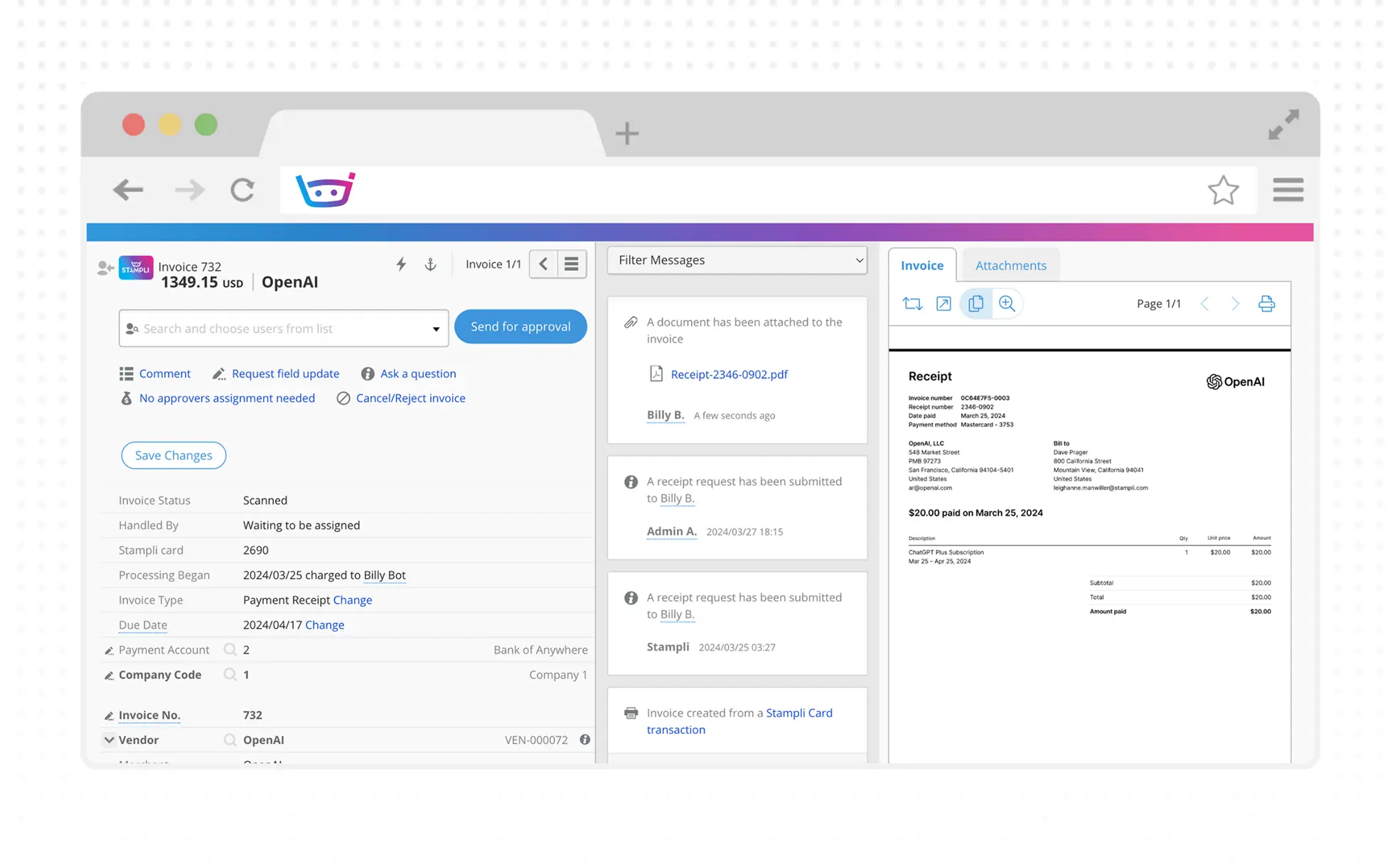
Tipalti adds global payment capabilities, making it particularly useful for businesses paying international suppliers across multiple currencies and tax jurisdictions.
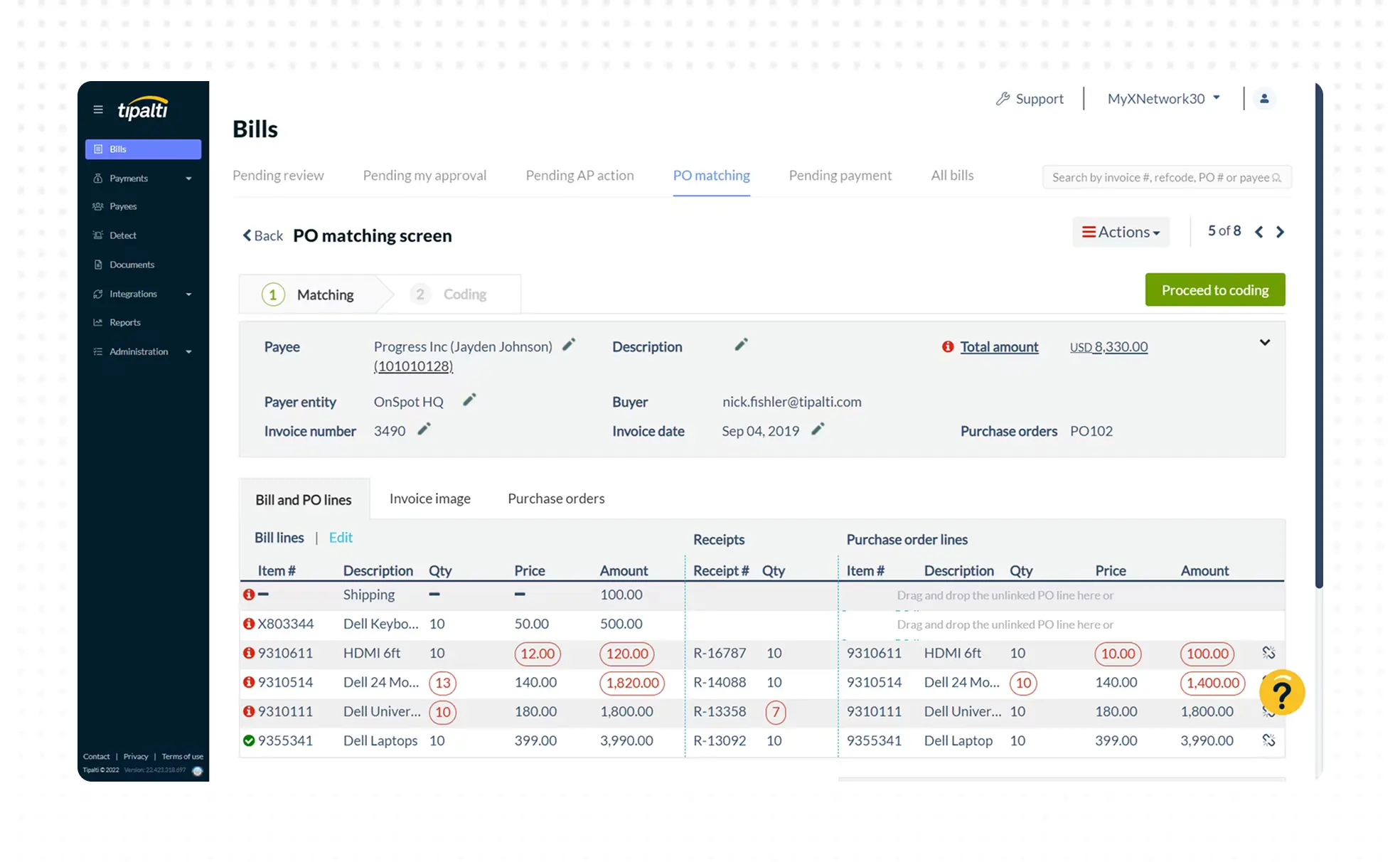
The key limitation for eCommerce businesses: these platforms excel at the payment end of the cycle but don’t address the order intake, document parsing, or ERP draft creation steps that define the purchase order automation challenge for most B2B sellers.
5. Source-to-Pay Suites for Enterprise — Best for Organizations Needing End-to-End Procurement Transformation
Best for: Large enterprises with procurement teams, strategic sourcing needs, complex supplier contracts, and a mandate to overhaul the entire source-to-pay lifecycle.
Representative platform: Jaggaer
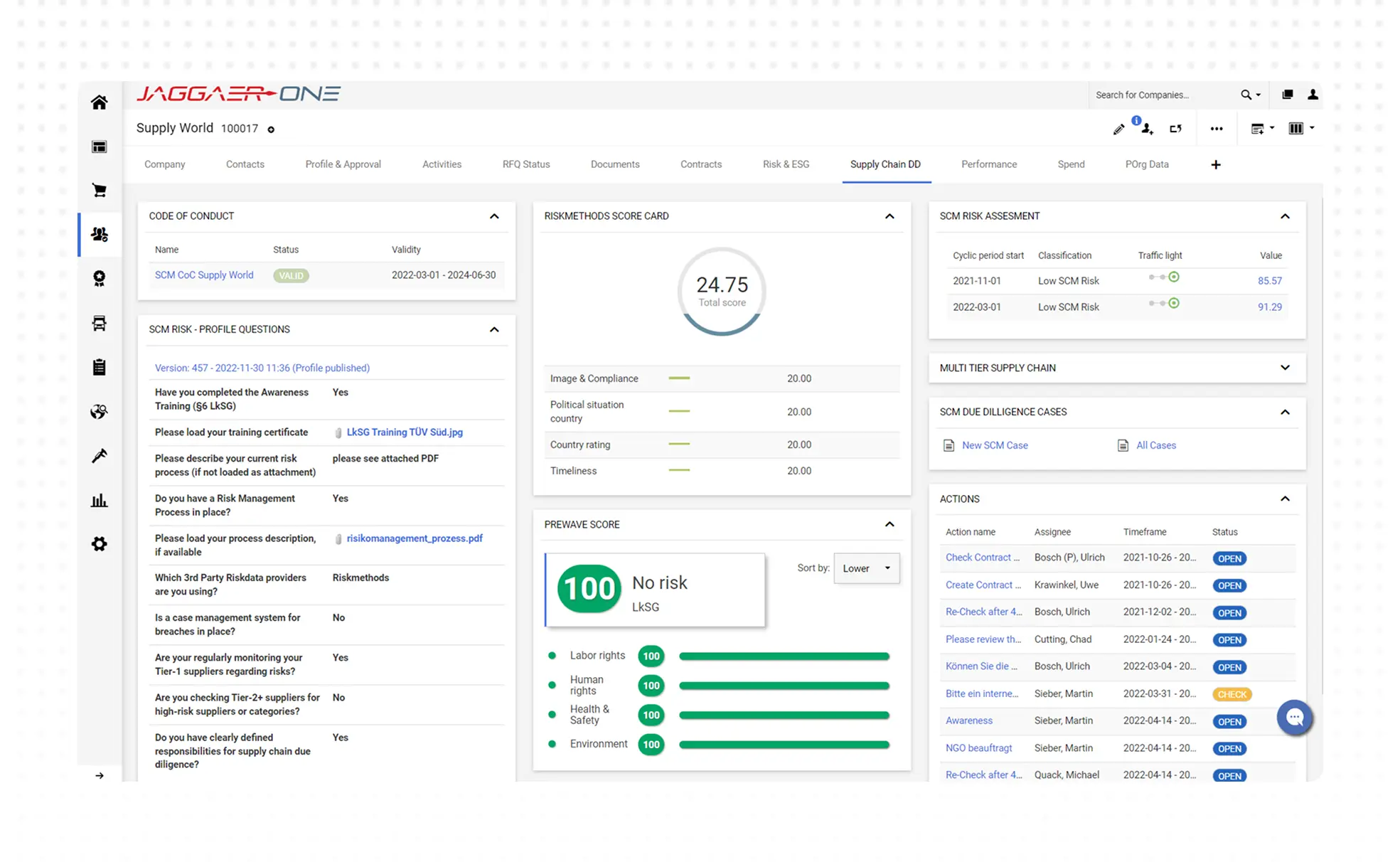
Jaggaer One is a cloud-based source-to-pay platform built for enterprise procurement operations. It covers the full procurement lifecycle — from supplier discovery and sourcing events (RFIs, RFPs, auctions) to contract management, eProcurement, invoice automation, and spend analytics. Its AI-powered spend classification and supplier performance tooling make it particularly strong for organizations managing large, complex category portfolios.
As Deloitte’s 2024 CPO survey highlighted, the top GenAI use cases in procurement for enterprises are spend analytics (53%), RFP/RFQ generation (42%), and contract summarization (41%) — all areas where platforms like Jaggaer are investing heavily. The tradeoff is implementation complexity; Jaggaer is known for requiring dedicated IT and procurement resources to configure and maintain.
How to Choose: A Quick Decision Framework
| Your Situation | Best Fit |
|---|---|
| eCommerce business processing incoming B2B POs via email | AI Agent Builder (CogniAgent) |
| Large enterprise, SAP ecosystem, complex global suppliers | SAP Ariba |
| Mid-market company needing spend visibility and PO workflows | Procurify |
| Finance team focused on invoice processing and payments | AP Automation (Tipalti, Stampli) |
| Enterprise needing full source-to-pay transformation | Jaggaer One |
The most important distinction for eCommerce businesses is between platforms built for outgoing procurement (what you buy) and those built for incoming order processing (POs you receive from customers). Most traditional procurement platforms focus on the former. CogniAgent addresses the latter — the inbound PO workflow that B2B eCommerce teams struggle with most.
Best Practices for Purchase Order Process Automation
Getting the technology right is half the challenge. Here’s how to implement it in a way that delivers lasting results.
Map the Process Before You Automate It
Automation scales whatever process you already have. Before deploying any sales order automation solution, trace your current PO workflow step by step — from the moment a PO arrives to the moment it’s confirmed and filed. Identify where errors cluster, where approvals stall, and which supplier formats cause the most manual rework. Fix broken logic before automating it.
Start with High-Volume, Predictable Orders
Don’t attempt to automate every edge case from day one. The highest-ROI starting point is your most common, most predictable order type — the 70–80% of POs that follow a consistent format from established suppliers. Build confidence with those, then extend automation to more complex or exception-heavy scenarios.
Define Clear Approval Thresholds
Tiered approval rules are where a significant portion of efficiency gains live. Configure your system so that routine, low-value orders from trusted suppliers auto-approve, while higher-value or unusual orders surface to a human for review. This eliminates bottlenecks while preserving the oversight that compliance and financial controls require. Deloitte’s research specifically highlights configurable approval automation as one of the highest-value applications of AI in procurement.
Integrate with Your ERP on Day One
Automation that doesn’t connect directly to your ERP creates a new manual step — copying data between systems. Make native ERP integration a non-negotiable requirement when evaluating any order management automation platform. The productivity gains compound when order data flows seamlessly into inventory, accounting, and fulfillment without re-entry at any point in the chain.
Keep Human Oversight for Genuine Exceptions
Full autonomy makes sense for routine, validated orders. But exceptions — unrecognized suppliers, out-of-stock items, pricing discrepancies, unusually large orders — should surface to a human clearly and quickly. Good automation software distinguishes between orders it can handle confidently and those that require judgment, routing each appropriately.
Measure Baseline Metrics Before You Deploy
The Ardent Partners benchmarks — 17.4 days and $9.40 per invoice for average organizations, 3.1 days and 78% lower cost for best-in-class — are only useful if you know where you’re starting. Track your current PO cycle time, processing cost per order, error rate, and team hours spent on manual processing before deployment. You’ll need those baselines to measure actual ROI and identify where to optimize next.
Automate Supplier Communication Too
The confirmation that a supplier receives when their PO is processed is part of the relationship. Automated systems should generate professional, timely confirmation emails automatically — so suppliers never have to wonder whether their order was received, and your team never has to chase acknowledgments. This is a detail that many businesses overlook, but it matters for supplier trust and relationship quality.
The Bottom Line
The research is consistent: organizations that have invested in purchase order and ecCommerce order automation are processing faster, at lower cost, and with dramatically higher accuracy than those still relying on manual workflows. Ardent Partners’ benchmarks show the gap is real (14 fewer days per invoice cycle, 78% lower processing cost) and it compounds at the scale of hundreds or thousands of orders per month.
Platforms like CogniAgent have lowered the barrier significantly, making it possible to deploy fully functional AI-powered purchase order automation without coding, without months of implementation, and without fitting your business into someone else’s rigid template. If your team is still processing POs manually, this is the moment to change that.
Want to see it in action? Book a demo and feel the difference