



The digital inbox has officially transitioned from a communication tool into a high-stakes, hyper-competitive battlefield. Last year alone, the world saw a staggering 376 billion emails flood the airwaves daily; by the end of this year, that deluge is projected to crest at 424 billion. So, you can’t expect a ‘standard’ newsletter to remain as effective as it once was.
The era of ‘batch and blast’ is dead, buried under the weight of sheer volume and consumer fatigue. The window to capture a recipient’s attention shrinks now to milliseconds. You can watch a seismic shift from rigid, rule-based triggers to autonomous, intent-driven engagement.
With inboxes this jam-packed, AI ceases to be an optional plus-one for marketing teams and turns into a fundamental engine required to achieve the 3,600% ROI that email marketing promises. Moving beyond personalization tokens and embracing AI agents for email marketing, like CogniAgent, that reason and adapt, is the only way to win the inbox in 2026.
66%
of marketers save more time using email automation tools
77%
of companies see higher ROI using email automation tools
49%
of brands boost sales daily using email automation tools
Email Automation Trends Moving from Rules to Reasoning
For decades, email marketing relied on a mechanical approach, aka digital plumbing, designed to move messages from point A to point B. These systems operated on a fixed logic and were quite reliable yet blind. They couldn’t see the person behind the screen; they could only see the trigger that tripped the wire.
Today, that rigid architecture is giving way to probabilistic reasoning, much as static maps gave way to an intelligent GPS. Rather than forcing every subscriber down the same pre-set path, AI tools for email marketing constantly recalculate the route. They adapt in real-time to the ‘traffic’ of human behavior, shifting intent, and the nuances of the individual journey.
Traditional (legacy) automation
Legacy automation is a rigid machine that executes the same ‘if-this-then-that’ scripts regardless of context. For example, if a customer abandons a cart, the system waits exactly 24 hours to send a generic 10% discount code. It is a linear, static response that treats every abandoner as the same person with the same motivation.
Using AI for email marketing automation
AI-driven automation acts like a living brain, analyzing millions of data points to deliver exactly what a customer needs. It looks at the customer’s past purchase frequency, their average order value, and even the time of day they are most active online. The AI agent might determine that a discount won’t help convert this specific lead, but a product comparison guide sent at 6:00 PM might, since that’s when they typically browse on their mobile device.
Core Pillars of AI for Email Marketing
You are now witnessing a transition from manual campaign management to a self-optimizing ecosystem where every touchpoint is a chance to learn. If you take these elements out of the equation, automation is just a faster way to be irrelevant. By integrating intelligence into every foundation of your strategy, you can finally bridge the gap between high-volume outreach and genuine human connection, a moat that legacy systems simply cannot cross.
Hyper-personalization at massive scale
Modern personalization isn’t limited to inserting a recipient’s name into a subject line. AI now allows growth teams to create unique experiences for millions of individuals simultaneously, ensuring every element of the message reflects each recipient’s current reality.
- Beyond the first name: We are entering the era of ‘segment-of-one’ marketing. You don’t need to waste days, meticulously grouping users into broad buckets. AI for personalized email marketing treats every subscriber as an individual, adapting the product recommendations and messaging hierarchy to their unique interaction history
- Dynamic content blocks: AI enables the real-time assembly of emails. As the recipient opens the message, the system swaps images, offers, and copy based on live variables such as local weather, current warehouse inventory, or the specific items they just viewed on your site
- Psychographic alignment: True relevance is about more than what you say (it’s about how you say it). AI analyzes user profiles to adjust the tone of voice, shifting from a formal, professional delivery for a B2B executive to a playful, high-energy tone for a Gen Z shopper
Predictive analytics & behavioral targeting
Most marketing strategies are inherently reactive, trailing behind the customer and responding only to what they did yesterday. Predictive analytics flips this dynamic, allowing you to stop chasing past behaviors and start anticipating future ones.
- Churn prediction: AI models identify subtle ‘digital body language’ that signals a waning interest. By detecting these patterns early, the system can trigger a win-back sequence or a high-value offer to at-risk customers before they ever reach for the unsubscribe button
- Next-best-action: AI determines the most logical next step for each user. It decides in real time whether the next send should be a hard-sell upsell, a helpful piece of educational content, or a deep discount to drive loyalty
- Lifecycle mapping: It can be SaaS-oriented, when AI distinguishes between power users who need advanced feature tips and dormant trials who require a basic re-engagement nudge to see the platform’s core value. Or it can be eCommerce-centered. In the latter case, AI calculates the Replenishment Cycle and predicts exactly when a customer is about to run out of a consumable product (like coffee or skincare), sending a reminder at the peak moment of need
Optimization that never sleeps
The most successful campaigns are those that refine themselves in real-time. Optimization is now a continuous, autonomous process that ensures every technical variable is tuned for maximum deliverability, engagement, and conversion.
- Send-time optimization: AI ignores the concept of ‘global best times to send an email.’ It delivers mail when the individual (not the segment) is most likely to check their inbox. This boosts open rates by appearing at the top of the stack
- Subject line & email content creation: Using advanced NLP, AI writes and iterates on high-converting hooks. It learns which linguistic triggers, for example, urgency, curiosity, or social proof, resonate best with specific subsets of your audience
- Autonomous A/B testing: Do you want to move past the slow ‘A vs. B’ split test? AI uses multi-armed bandit testing to evaluate dozens of variations at once, automatically shifting traffic toward the winning creative in real-time to capture lost revenue during the test itself

Why AI Agents Are Replacing Traditional AI-Powered Tools in Marketing Tech
You’ve reached a tipping point where simply having AI features inside your CRM isn’t enough. Using generative AI for email marketing feels like getting a smart assistant who is always ready for your command. Marketing AI agents, on the other hand, recall the specialized team members that actually execute the work. It’s the difference between software that helps you write an email and an agent that manages the entire lifecycle autonomously.
Peculiarities of AI tools for email marketing automation
The recent ‘AI revolution’ in email marketing has primarily manifested as a suite of assistive features. These are the sophisticated plugins integrated directly into your existing Service Providers. You can think of them as high-power enhancements to the tools you already know. They can make you faster, but they still rely entirely on you to take charge.
In other words, the software here acts as a reactive layer. It waits for you to log in, click a button, and provide a prompt before it offers any value. Even the best AI tools for email marketing remain tethered to human intervention.
Modern examples are Mailchimp’s Intuit Assist or HubSpot’s Breeze. These tools live within your sidebar, ready to summarize a report or suggest a subject line variation based on the draft you’ve already started.
- Pros: AI email marketing tools are easy to adopt because they are built into your existing tech stack. There is no new platform to learn, and no complex API integration required
- Cons: The limitation lies in their passivity. These tools still require human triggers and manual workflow management. If you don’t log in to set the strategy, the AI sits idle. They optimize the ‘how,’ but they still don’t know the ‘why’ or ‘when’ without your permission
What you need to know about AI agents
While assistive tools wait for a prompt, AI agents act as autonomous team members. This is the shift from ‘software you use’ to ‘digital specialists that work for you.’ Platforms like CogniAgent orchestrate the entire lifecycle, making decisions in milliseconds based on a deep understanding of your business goals.
Autonomy
Traditional tools follow a script/ template; agents pursue a target. You don’t tell an agent to “send an email copy at 10 AM.” You set a goal, for instance, “recover 15% of abandoned carts this week,” and it determines the best timing, channel, and message to hit that number
Cross-system reasoning
An agent’s intelligence isn’t confined to your email platform. CogniAgent, for example, automates marketing workflows by integrating tools like CRMs (HubSpot, Salesforce), Slack for alerts on high-value leads, and email sequences for webinars/abandoned forms, pulling context such as form data, UTM tags, and lead scores.
Feedback loop
This is a self-correcting system. CogniAgent watches every customer interaction and every bit of data in real-time to figure out what’s working. It can refine everything from marketing to customer service without needing a human to click ‘save.’
AI tools vs. AI agents comparison
| Feature | AI Tools (Assistive) | AI Agents (CogniAgent) |
| Operational Mode | Reactive: Waits for a human to provide a prompt or click “generate” | Proactive: Monitors data 24/7 and initiates actions based on set goals |
| Workflow Logic | Linear/Static: Follows a fixed if-this-then-that path | Dynamic/Adaptive: Constantly recalculates the next-best action in real-time |
| Goal Orientation | Task-Focused: Helps finish a specific job (e.g., “Write this subject line”) | Outcome-Focused: Owns a business KPI (e.g., “Reduce monthly churn by 5%”) |
| Data Scope | Siloed: Usually only sees data within the specific app (e.g., email opens) | Cross-System: Reasons across CRM, Slack, product usage, and web analytics |
| Reasoning Ability | Pattern Matching: Predicts the next word or segment based on history | Strategic Planning: Breaks complex goals into sub-tasks and executes them |
| Feedback Loop | Manual: Requires a marketer to analyze reports and update the workflow | Autonomous: Self-corrects and improves based on every customer interaction |
| Human Role | The Pilot: Manually steers every part of the campaign process | The Architect: Sets the guardrails and high-level strategy while the agent flies |
How to Use CogniAgent AI for Email Marketing
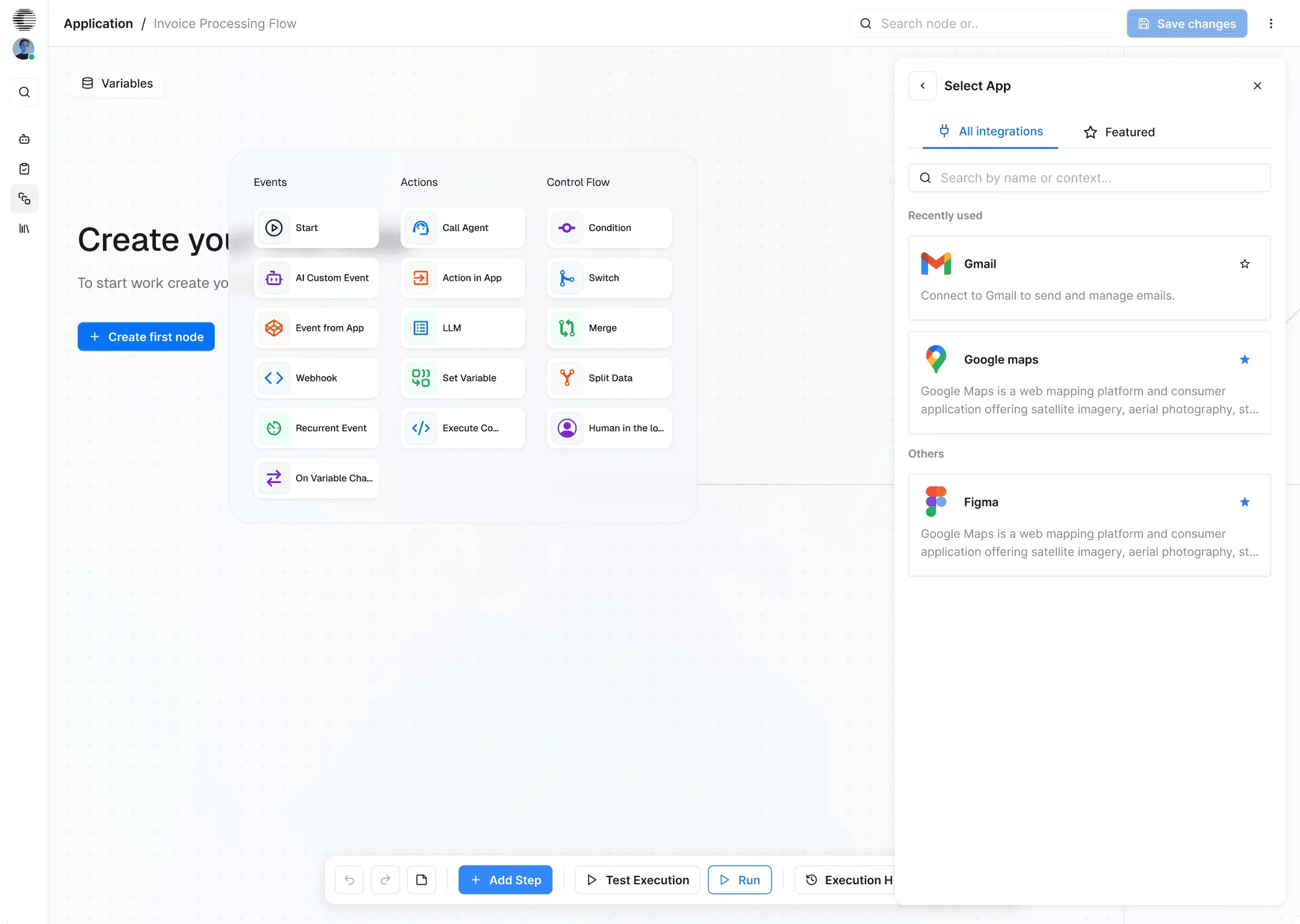
Implementing AI in your marketing stack should feel like hiring an elite operations team. CogniAgent moves beyond simple text generation by acting as a connector between your data and your delivery. By deploying autonomous agents that talk to your CRM, website, and communication tools, you transform email from a standalone silo into a fully integrated, self-optimizing growth engine.
Building the always-on marketing ecosystem
What makes CogniAgent the best AI for email marketing? Its ability to handle lead management and email campaign orchestration without human oversight. You don’t need to manually export CSV files or set up fragile Zapier links; CogniAgent’s autonomous agents manage the entire lifecycle of a lead, from the first form fill to the final conversion sequence. This ensures that your email marketing is powered by enriched data and perfectly timed triggers.
CogniAgent turns repetitive tasks into fluid, cross-channel workflows, so that your team can focus on high-level strategy while the agents handle the ‘plumbing’ of modern marketing. As a result, you can save time and avoid the latency gap where leads go cold due to manual processing delays.
Key capabilities of CogniAgent for email teams:
- Lead form to CRM sync: Every new website submission flows directly into HubSpot, Salesforce, or Pipedrive. The agent auto-maps form fields and triggers follow-up sequences instantly, ensuring no lead is left in an inbox
- Lead enrichment on autopilot: The moment an email address is captured, CogniAgent can pull company size, industry, and tech stack data via tools like Clay. This allows you to send hyper-targeted emails based on the recipient’s actual business profile rather than just their name
- Abandoned form recovery: CogniAgent detects partial form submissions in real-time. If a user starts but doesn’t finish, the agent triggers a friendly assistance email to bring them back, capturing revenue that would otherwise be lost
- Smart email list management: Automatically route new subscribers into the correct segments based on lead magnet tags or source. The agent prevents duplicates and keeps profiles in sync across your entire tech stack
- Campaign response notifications: You can stay ahead of your performance with agents that monitor opens and clicks. When a high-value lead hits a specific engagement threshold, the agent sends an instant Slack alert to your sales team so they can take the opportunity
Common Issues When Adopting AI for Email Marketing
The path to AI implementation is often littered with expensive distractions. To build a system that scales, you must trade tech-optimism for a grounded, realistic strategy. Most failures in AI adoption come from how it is integrated into the existing human and data ecosystems. Acknowledging these hurdles can help you build a robust framework that survives the reality of a messy inbox.
Technology-first vs. strategy-first mistakes
The most common trap for growth teams is getting used to a tool before defining the problem. When you deal with top-notch tech, you may end up with sophisticated noise, expensive systems that execute flawed strategies faster than ever before.
Adding AI without lifecycle clarity
Many teams plug AI into their stack, expecting it to fix their conversion rates. However, if your underlying customer lifecycle is broken or your messaging doesn’t resonate, AI will simply automate those inefficiencies at scale. You cannot optimize a journey that hasn’t been mapped; AI is a force multiplier, but you must provide direction.
Over-automation without governance
There is a thin line between helpful automation and brand-damaging intrusion. Without proper guardrails, such as tone-of-voice filters and frequency caps, autonomous agents can inadvertently overwhelm subscribers or send conflicting offers. Success requires a Human-in-the-Loop model where the AI executes the work while humans define the ethical and brand boundaries.
The Future of Email Belongs to Brands That Listen
The divide in marketing is no longer between those who use AI to automate workflows and those who don’t. It is between those who use it for efficiency and those who use it for experience. Companies that leverage AI simply to cut costs or send more mail will survive in the short term, but they will eventually be drowned out by the noise they helped create.
By deploying autonomous systems, brands can enter a period of genuine, intent-driven connection. In 2026, the number of emails you can send doesn’t change the game, but how well you can listen and respond does. After all, the best email is the one that arrives exactly when needed, with the perfect solution, and in a voice so resonant it doesn’t feel like marketing at all.