Why Teams Rethink Ada and Choose CogniAgent Instead
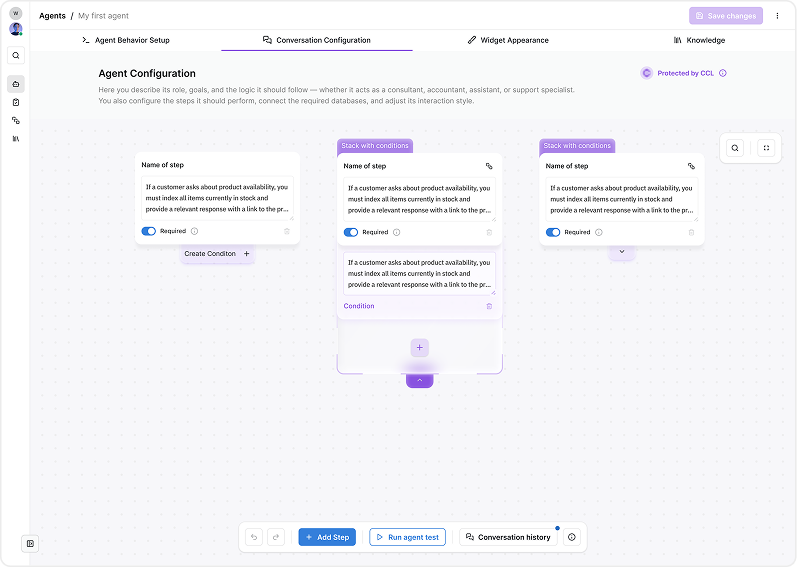
Primary Scope
Ada is limited to support-only tasks like FAQs, ticket deflection, and structured requests. CogniAgent extends AI across your entire business, enabling agents to operate in sales, finance, marketing, customer support, and internal operations.
- Supports business-wide workflows, not just one department
- Operates across sales, finance, marketing, and operations
- Unifies tasks under a single AI framework
- Enables consistent process execution across teams
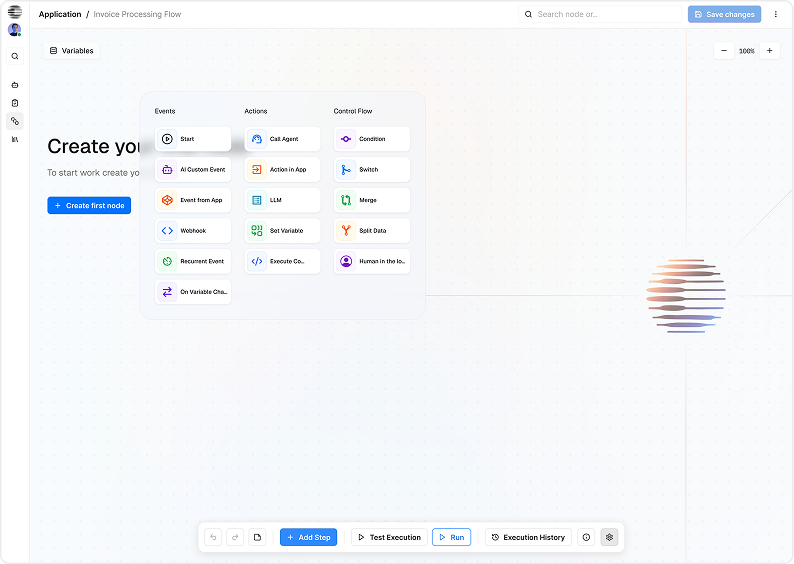
Agent Autonomy
Ada agents follow predefined flows and scripts, needing human handoffs for complex interactions. CogniAgent agents understand context, choose the next step, and complete multi-step tasks independently.
- Operates without fixed scripts or constant oversight
- Completes multi-step tasks end-to-end
- Reduces reliance on human intervention
- Adapts to changing scenarios automatically
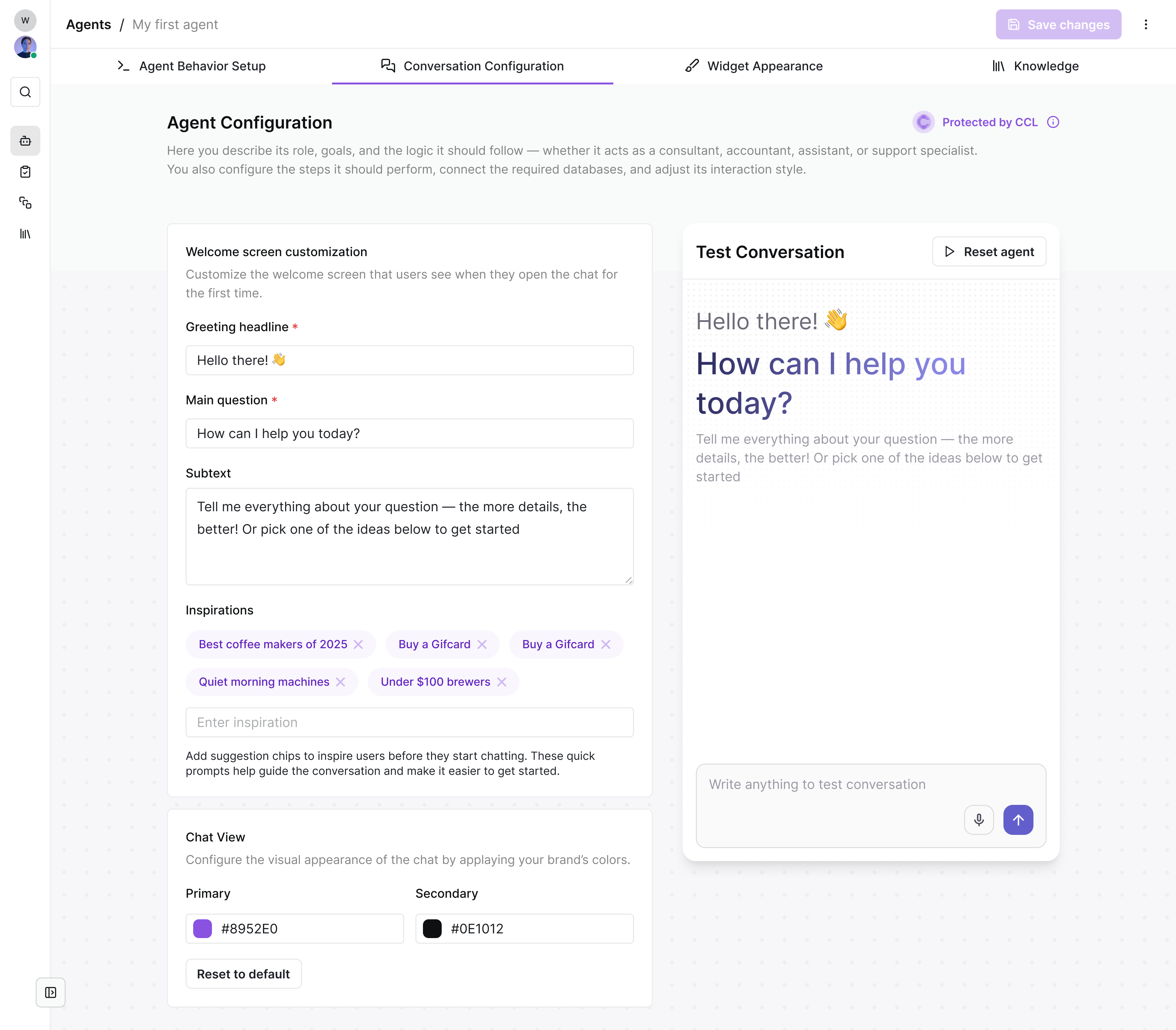
System Integration Depth
Ada integrates well with CX tools but requires custom development for financial or internal systems. CogniAgent offers 2,700+ ready-to-use integrations for ERP, CRM, databases, calendars, and internal services.
- Cross-system data synchronization
- Fewer integration handoffs and delays
- Reduced manual coordination
- Consistent operational logic across platforms
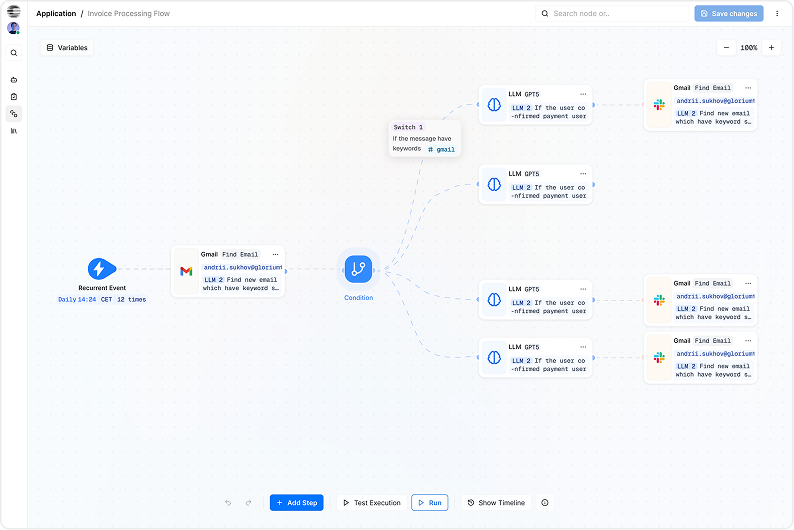
Use Beyond Support
Ada is limited to customer support and cannot manage internal workflows. CogniAgent agents handle sales follow-ups, financial validation, cross-team coordination, and operational tasks.
- Manages internal processes beyond CX
- Supports sales, finance, and operational workflows
- Coordinates cross-team tasks efficiently
- Enables automation across the entire business
Pricing Transparency
Ada doesn’t publish detailed pricing, making it hard to estimate costs. CogniAgent offers tiered plans with published pricing, a free starter option, and a credits-based usage model.
- Clear, published pricing plans
- Free starter option to test the platform
- Tiered upgrades for pro, business, or enterprise needs
- Costs linked to agent actions and usage for easy estimation
CogniAgent vs Ada AI
Comparison Table
| Feature | CogniAgent | Ada AI |
|---|---|---|
| AI Capabilities | Autonomous agents with decision-making | Conversational AI for support scenarios |
| Ease of Use | Requires setup, broader flexibility | No-code setup for CX teams |
| Workflow Builder | Multi-step, logic-driven workflows | Conversation-flow-based automation |
| Scalability | Scales across teams and functions | Scales support volume efficiently |
| Integrations | Deep ERP, CRM, system integrations | Strong CX and CRM integrations |
| Error Handling | Context-aware recovery and retries | Fallbacks and human handoff |
| For Teams | Operations, sales, and finance teams | Customer support and CX teams |
| Best For | Cross-functional operational automation | High-volume customer support automation |
| Agent Autonomy | Independent task execution | Scripted responses and routing |
| Cross-Team Use | Built for multi-team coordination | Limited beyond support |
| Pricing Transparency | Public tiers and usage-based | Custom quotes via sales |
![Top AI Receptionists for Cleaning Services [2026]](https://cogniagent.ai/wp-content/uploads/2026/07/Top-AI-Receptionists-for-Cleaning-Services-2026-300x185.webp)

![Best AI Tools for Auto Repair Shops [2026 Guide]](https://cogniagent.ai/wp-content/uploads/2026/07/Best-AI-Tools-for-Auto-Repair-Shops-2026-Guide-300x185.png)

Frequently Asked Questions about
CogniAgent
Ada calls for ongoing human oversight to manage edge cases. You also need to tune flows and handle escalations as automation scenarios grow more complex. CogniAgent reduces day-to-day supervision. It allows agents to reason through exceptions and complete multi-step tasks, meaning you need only to home in on governance and high-level control.
In Ada, actions in external systems are limited to predefined integrations and often require safeguards or manual approval for anything beyond standard support tasks. CogniAgent is built to trigger actions directly across connected systems, allowing agents to execute approved workflows independently while keeping controls and permissions in place.
You can notice the difference in where each platform fits. Ada is designed mainly for customer-facing interactions, helping you handle support conversations at scale. CogniAgent supports both customer-facing and internal use cases, so you can automate operational work across teams, not just front-line support.
The way you track activity changes depending on the platform. With Ada, you mostly see conversation histories and the actions taken during customer interactions. CogniAgent gives you a wider view, letting you track how agents move through workflows, trigger actions across systems, and make decisions—so you always know what happened and why.
As your workflows become more complex, the effort to keep things up to date starts to differ. With Ada, you typically need to revisit conversation flows, intents, and rules whenever new scenarios appear, which can slow updates over time. With CogniAgent, you can adjust logic and workflows more flexibly, so agents continue working smoothly as your operations change and expand.

No results