What Drives Teams to Replace Relevance AI with CogniAgent
Automation Approach
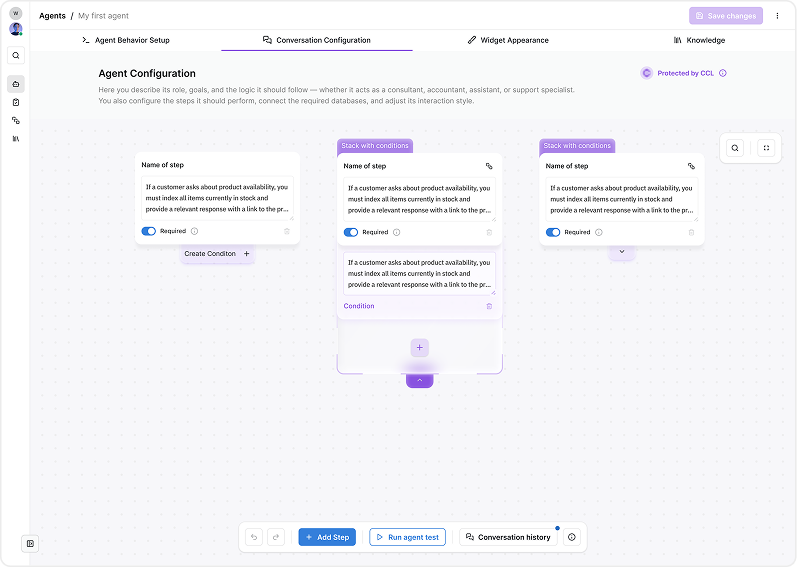
Relevance AI is prompt- and task-driven, while CogniAgent focuses on real business events and end-to-end workflows. It turns events into actions automatically rather than relying on individual prompts.
- Triggers workflows based on status changes, thresholds, or system signals
- Executes multi-step processes without manual intervention
- Ensures event-to-action automation across systems
- Reduces reliance on prompt-based task handling
Integration Breadth & Depth
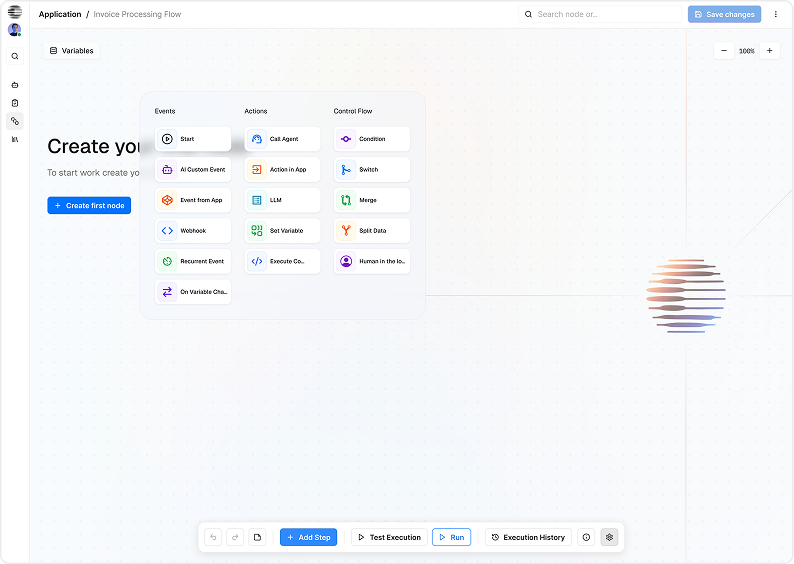
Relevance AI connects to ~2,000 tools, usually via setup-defined connectors, but CogniAgent offers deeper, workflow-native integrations for enterprise processes.
- 2,700+ integrations built directly into workflows
- Direct access to ERP, CRM, ticketing systems, and databases
- Consistent behavior and reliability across workflows
- Easy reuse of integrations across departments and teams
Conversational Intelligence
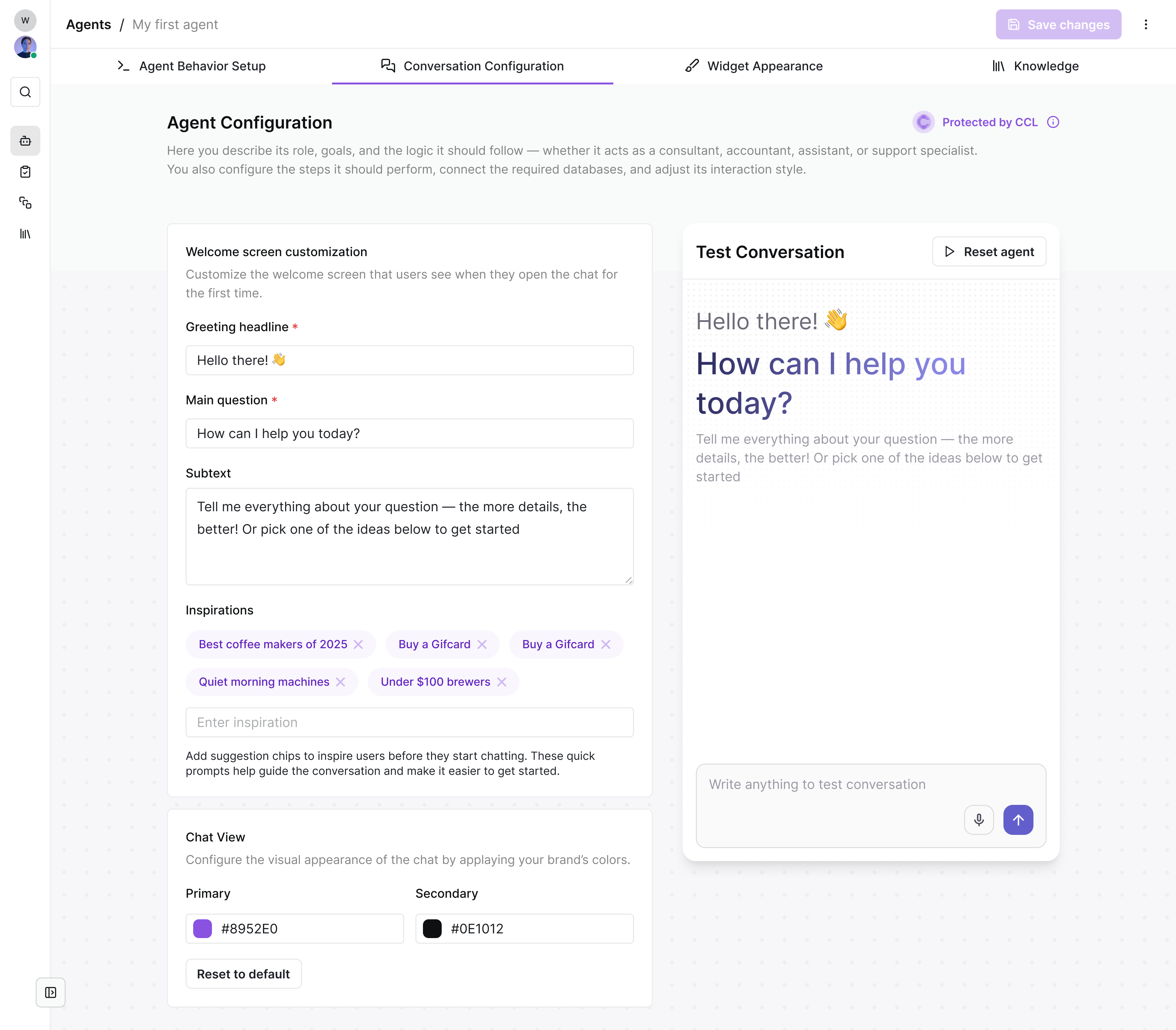
Relevance AI agents respond to tasks via natural language, but CogniAgent supports dynamic, context-aware conversations over time.
- Handles topic changes and follow-up questions seamlessly
- Maintains context across multi-step interactions
- Ideal for complex, customer-facing workflows
- Combines conversational AI with actionable workflow execution
Predictability of Outcomes
Relevance AI agent’s reasoning introduces variability:
- The same task may be handled differently by agents
- Outcomes depend on context and prompts
- Harder to guarantee consistency
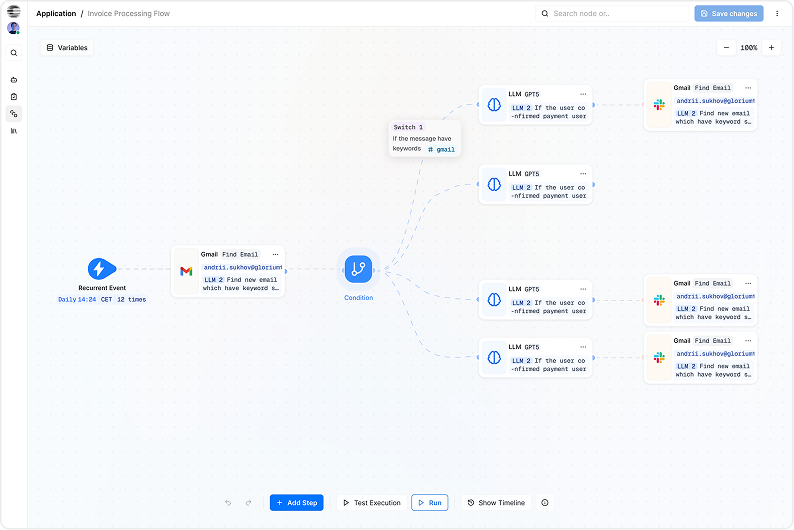
In the case of CogniAgent, execution is deterministic by design:
- Defined inputs lead to defined actions
- Reduced variability in outcomes
- Better fit for operational KPIs
For operations, finance, and supply chain, consistency matters more than creativity.
Scalability Across Teams
Relevance AI scales agent deployments across teams; it may require design iteration as agent complexity increases:
- More agents = more tuning and coordination
- Behavior drifting across teams is common
- Maintenance effort grows with scale
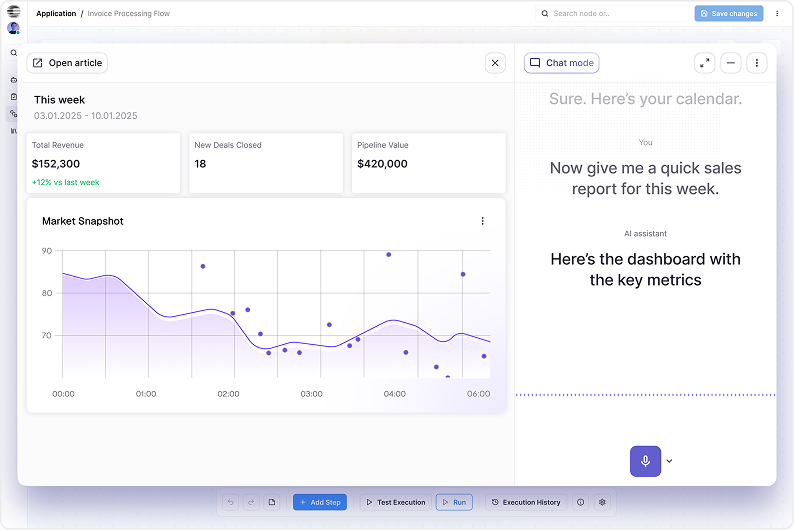
CogniAgent supports scaling operational automation with fewer design constraints, particularly useful for large-scale deployments. Designed for multi-team and multi-process scale, CogniAgent offers:
- Shared workflows across departments
- Centralized logic and rules
- Consistent execution regardless of team size
CogniAgent vs Relevance AI
Comparison Table
| Feature | CogniAgent | Relevance AI |
|---|---|---|
| AI Capabilities | Event-driven AI with process logic | Agent reasoning, task-focused AI |
| Ease of Use | Visual workflows, business-friendly setup | Low-code, agent setup required |
| Scalability | Scales processes across teams | Scales agents, higher coordination effort |
| Integrations | 2,700+ deep ERP/CRM system integrations | 2,000 API-based, tool-level integrations |
| Pricing | Enterprise pricing, workflow-oriented | Usage-based, agent and action-driven |
| Conversational/contextual AI | Strong focus | Good |
| For Teams | Centralized rules and execution paths | Logic embedded in agents |
| Best For | Operations, IT, process-driven teams | AI builders, data, innovation teams |
| Operational, event-driven business automation | AI experimentation and task automation |
AI Industry News and Insights



Frequently Asked Questions about
CogniAgent
Instead of replacing people, both platforms work alongside human teams (just with different collaboration styles). Relevance AI supports collaboration by letting AI agents assist with tasks, research, and execution when team members engage them directly. CogniAgent takes a more process-led approach, embedding AI into shared workflows so teams guide logic, approvals, and decisions while AI handles execution consistently in the background.
If your business runs on multiple approvals, connected systems, and frequent handoffs between teams, CogniAgent is a strong fit. You can define clear workflows, event triggers, and execution rules, so AI can support the way your processes already work. Relevance AI supports flexible, agent-led tasks, but when you need consistency and control across complex internal operations, CogniAgent delivers more reliable results.
When dealing with complex internal processes and workflows, the choice between these two platforms depends on whether your complexity lies in cross-departmental logic (CogniAgent) or independent task scaling (Relevance AI). CogniAgent is better suited for companies where workflows are “entangled”—meaning a single event (like a low-stock alert in an ERP) must trigger actions across Finance, Logistics, and Customer Service simultaneously.
Both platforms AI use credit-based, hybrid pricing models that combine a monthly subscription fee with a consumption-based ‘tax.’ However, they differ significantly in their target audiences. CogniAgent’s value is in the pre-built connectors and its ability to act as a “virtual employee” that understands complex business logic without you needing to build the workflow from scratch.
Relevance AI can work out if you are building a custom “AI workforce” from the ground up. If your tasks involve high-volume processing (like analyzing 10,000 LinkedIn profiles), Relevance AI’s higher credit-to-dollar ratio.
Transitioning from Relevance AI to CogniAgent may take 2 to 4 weeks for a pilot process, though the speed depends on the complexity of your current “AI workforce” and the depth of your ERP integration needs. While Relevance AI is an excellent platform for prototyping and general-purpose automation, CogniAgent is purpose-built for complex business environments. The transition is less about “rebuilding” and more about “re-grounding” your agents into your actual business data.

No results